A door that stops halfway open can quickly become more than an inconvenience. Overhead doors protect vehicles, tools, inventory, tenant access, and the security of a property. When one starts jerking, making grinding noises, hanging unevenly, or refusing to close, the safest move is to stop using it until the cause is identified.
For homeowners, a failed garage door can leave a car trapped inside or a home exposed. For businesses and property managers, it can interrupt deliveries, limit access to loading areas, and create a safety concern for employees and tenants. The right repair is not always the most extensive one, but it should address the actual reason the door is failing.
When Overhead Doors Become a Safety Issue
Garage and commercial door systems carry significant weight. Springs counterbalance that weight, cables keep the door aligned, rollers guide it through the tracks, and the opener controls movement. A problem in any one of those parts can place extra stress on the entire system.
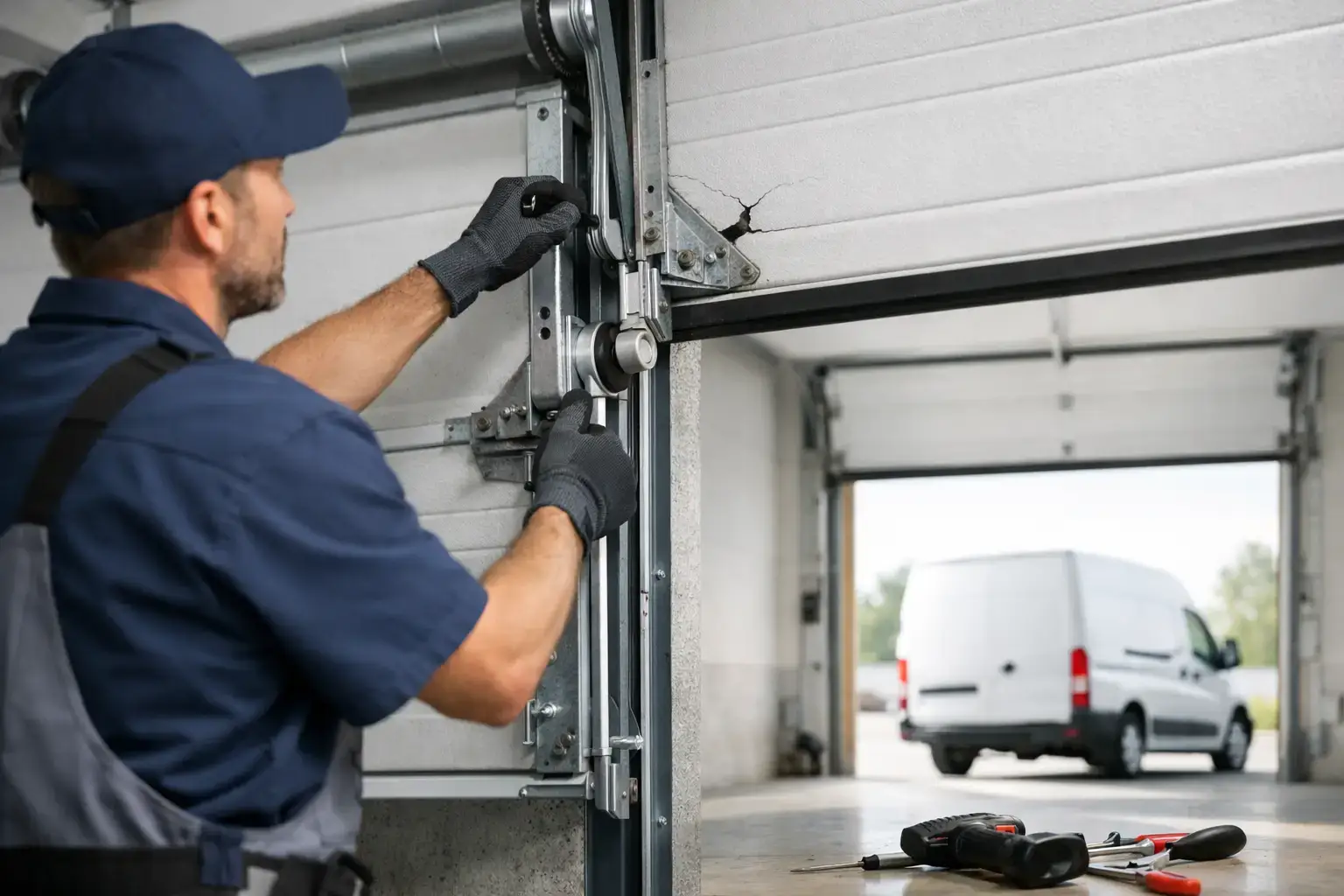
A loud bang from the garage is often a broken spring. The door may still look normal while it is closed, but it can become extremely heavy to lift and may not open with the motor. A snapped cable can leave one side of the door lower than the other. If someone continues operating it, the door can come off its tracks or damage panels, rollers, and the opener.
Do not try to force a stuck or crooked door open. Do not pull on loose cables or attempt to adjust a spring. These parts are under high tension and require the right tools and training. If the door will not secure, keep people away from the opening, avoid using the door, and arrange prompt professional service.
Common Overhead Door Problems and What They Mean
Not every problem calls for a complete replacement. A qualified technician should inspect the moving parts, the door itself, and the opener before recommending a solution.
The door will not open or feels unusually heavy
This is often related to a broken torsion or extension spring. It can also be caused by a cable issue, damaged rollers, or a door that has shifted in the tracks. If the opener hums but the door barely moves, the opener may be responding normally to a door that no longer has proper spring support.
The door moves unevenly or comes off track
A door that is crooked, scraping the track, or shaking as it moves should be taken out of use. Loose hardware, worn rollers, bent tracks, broken cables, and vehicle impact can all cause alignment problems. In many cases, early service can prevent a track repair from becoming a replacement door project.
The opener runs, but the door does not move
The issue may be a stripped gear, a disengaged trolley, a broken drive component, or a problem with the door’s counterbalance system. An opener repair can be the right answer, but only after confirming that the door itself moves safely. Replacing an opener without fixing a heavy or binding door can shorten the life of the new unit.
The door is loud, slow, or unreliable
Squeaking rollers, rattling hardware, delayed response, and intermittent reversing are signs worth checking before the door stops completely. Some noise is normal, especially with older steel doors, but grinding, popping, or repeated banging is not. A tune-up may resolve minor wear, while damaged rollers, hinges, bearings, or springs may need replacement.
Panels are dented, cracked, or separating
A damaged panel does not automatically mean the whole door must be replaced. If the section is available and the remaining door is structurally sound, panel replacement can be a practical repair. Replacement becomes more sensible when multiple panels are damaged, the door has widespread rust, the sections are no longer aligned, or a matching panel is no longer available.
Repair or Replacement: How to Make the Right Call
The best choice depends on age, condition, safety, appearance, and how the door is used. A single broken spring on an otherwise sound door is generally a repair issue. A newer door with one damaged section may also be a strong candidate for a targeted panel repair.
Replacement deserves consideration when repairs are becoming frequent, major components are worn at the same time, or the door no longer provides the security and insulation the property needs. Homeowners may choose a new door after storm damage, repeated panel issues, or a renovation that changes the exterior of the home. A properly selected insulated door can also improve comfort in an attached garage, although the benefit depends on the garage’s overall insulation and how it connects to the home.
For commercial properties, the decision often comes down to uptime. A dock door, warehouse opening, parking garage gate, or service-bay door that repeatedly fails can disrupt operations far beyond the cost of the repair. A replacement system may be the better long-term value when a door is unreliable, undersized for current traffic, or no longer suited to daily operating demands.
An in-person estimate matters here. It gives the technician a chance to measure the opening, inspect the tracks and framing, assess the spring system, and explain whether repair is safe and cost-effective. Clear pricing before work begins helps property owners compare the real options without surprises.
What to Do While You Wait for Service
If a door is stuck open, secure the area and remove vehicles or equipment from the path of travel if it is safe to do so. Do not stand beneath the door or rely on the opener to hold it in place. If the door is closed but will not open, avoid repeated attempts with the wall button or remote, especially if you hear straining or grinding.
Check simple items only if there is no visible damage. Make sure the opener has power, replace a remote battery if needed, and confirm that nothing is blocking the photo-eye sensors near the floor. Clean the sensor lenses gently and make sure they face each other. If the door still will not close, or if it reverses without a clear obstruction, schedule service rather than bypassing safety features.
For an emergency involving a door that cannot be secured, a broken spring, a damaged track, or a door off its cables, same-day or 24/7 service can reduce both safety risks and property exposure.
Maintenance That Prevents Avoidable Breakdowns
Overhead door maintenance is especially useful in Massachusetts, where cold weather, road salt, moisture, and seasonal temperature changes can affect moving components. A garage door does not need constant attention, but it should not be ignored until it fails.
A homeowner can visually inspect the door every few months. Look for loose hardware, frayed cables, worn weatherstripping, rust, cracked rollers, and gaps around the perimeter when the door is closed. Listen for changes in sound and watch whether the door moves evenly. Keep tracks clear, but do not apply heavy grease inside them. Tracks need to guide the rollers, not hold buildup that attracts dirt.
A professional tune-up provides a deeper check of spring balance, cable condition, roller wear, opener force settings, safety sensors, hinges, brackets, and lubrication points. For commercial doors with frequent cycles, scheduled inspections are even more valuable. Preventive maintenance helps catch worn parts before a busy loading area or tenant entrance becomes unusable.
What Good Door Service Should Look Like
A proper service visit starts with diagnosis, not a rushed quote based on one symptom. The technician should inspect the system, explain what failed, identify any related safety concerns, and distinguish between work that is necessary now and work that can be planned later.
Ask whether the technician is licensed and insured, whether pricing is provided upfront, and what parts are being replaced. You should also receive clear guidance on operation, maintenance, and any warranty coverage. A reputable local provider will not pressure you into replacing a door that can be safely repaired, and will not promise a low price only to add unexpected charges after arriving.
Triple A Garage Doors Inc. provides repair, installation, maintenance, and emergency support for residential and commercial door systems throughout Greater Boston. Whether the issue is a broken spring at home or an unreliable commercial opening, the goal is the same: restore safe, dependable access without guesswork.
A garage or commercial door rarely fails without warning. Responding to unusual sounds, uneven movement, or delayed operation early can protect the door, the opener, and the people who depend on it. When a problem feels unsafe or the door cannot secure the property, treat it as a service call rather than a weekend repair project.
Leave A Comment