
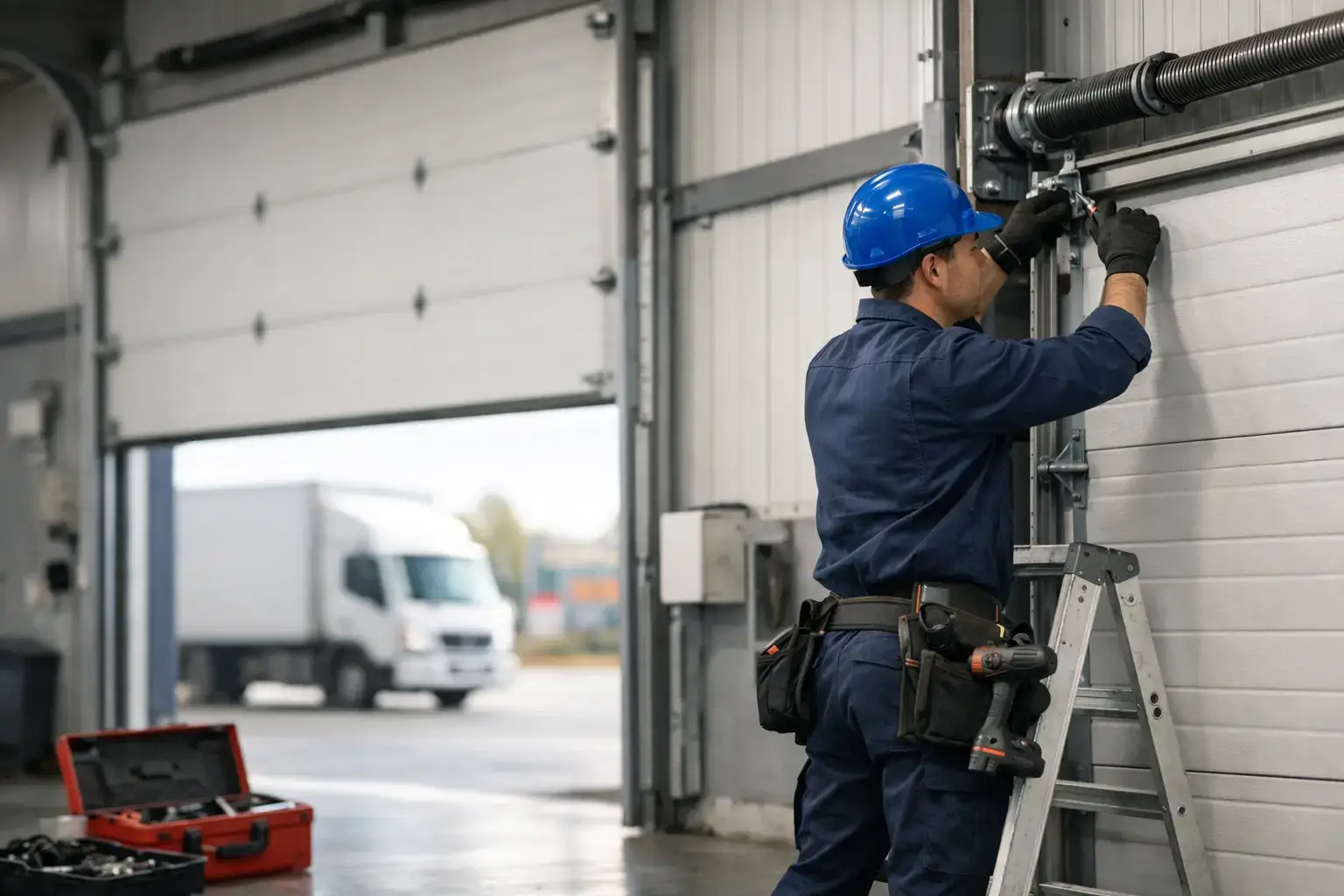
A loading dock door that will not close at 7 a.m. can delay deliveries, leave inventory exposed, and put an entire shift behind schedule. A commercial garage door maintenance plan gives facility managers and business owners a practical way to catch developing problems before they become an emergency call.
For Greater Boston properties, maintenance matters even more. Road salt, winter moisture, temperature swings, heavy daily cycles, and vehicle traffic all add wear to overhead doors, rolling steel doors, operators, tracks, cables, and safety devices. The right plan is not about servicing a door on a calendar just to check a box. It is about knowing what doors you have, how hard they work, and when a small repair needs attention.
What a Commercial Garage Door Maintenance Plan Should Cover
A useful plan starts with an inventory of every door at the property. Record the door type, size, location, manufacturer when available, operator model, estimated age, and how often it cycles each day. A warehouse door used for constant shipping activity needs a different service schedule than a rear receiving door that opens a few times per week.
This inventory also prevents a common property-management problem: discovering that a critical door has an obsolete operator, damaged bottom section, or unavailable replacement part only after it fails. Keeping the information together makes budgeting and repair decisions much easier.
Your plan should identify who performs routine visual checks, when professional inspections occur, how issues are reported, and who is authorized to approve repairs. It should also include a clear record of past service, replaced parts, safety concerns, and recommendations. Documentation is especially helpful for multifamily properties, retail centers, and facilities with several managers or maintenance teams.
Match the Service Frequency to Door Use
There is no single maintenance interval that fits every commercial door. A lightly used storage-area door may only need a professional inspection once or twice a year. A busy loading dock, parking garage, automotive shop, or distribution facility may need quarterly service or more frequent checks.
Cycle count matters. Each opening and closing cycle adds wear to springs, rollers, hinges, cables, bearings, and operator components. Door weight matters too. A large insulated sectional door or rolling steel door puts more demand on its moving parts than a smaller service door.
Weather exposure is another factor. Doors facing prevailing wind, snow buildup, direct rain, or road-salt spray often develop corrosion and track contamination sooner. If a door protects a secure storage area, tenant parking space, or a building entrance, its security role may justify a more proactive schedule even when daily usage is moderate.
Routine Checks Your Team Can Handle
Employees or on-site maintenance staff should not try to adjust springs, cables, drums, or counterbalance systems. These components carry high tension and require qualified service. But staff can recognize early warning signs and report them before the door becomes stuck or unsafe.
A simple visual check every week or two can focus on whether the door opens and closes smoothly, whether the opening area is clear, and whether the tracks show obvious damage. Staff should also watch for new grinding, rattling, squealing, jerking movement, or a door that stops before reaching the fully open or closed position.
If the door has photo-eye sensors or other entrapment protection, keep the sensor lenses clean and the area in front of the door free of pallets, trash, ice, and parked equipment. A door that reverses unexpectedly may be responding to an obstruction, a misaligned sensor, a force-setting issue, or a more serious mechanical problem. It should be inspected rather than repeatedly forced through its cycle.
Operators should also be instructed to report visible frayed cables, loose hardware, bent tracks, damaged panels, broken windows, water intrusion, or gaps around the perimeter. These symptoms can affect both safety and building security.
What a Professional Inspection Should Include
A qualified commercial garage door technician can inspect parts that should not be handled by untrained staff. The inspection should look at door balance, spring condition, cables, drums, shafts, bearings, hinges, rollers, track alignment, mounting brackets, and fasteners. The technician should check the operator, controls, limits, chain or belt components, electrical connections, and safety systems as appropriate for the door.
Lubrication is part of maintenance, but it needs to be done correctly. Hinges, rollers, bearings, and other moving components may need approved lubricant. Tracks generally need to be kept clean rather than coated with lubricant, which can collect grit and make operation worse. The right approach depends on the door design and manufacturer guidance.
A professional visit is also the right time to inspect seals, bottom retainers, weatherstripping, panels, locks, and closing alignment. A worn bottom seal may seem minor, but it can allow water, cold air, pests, and debris into the building. At a loading dock or vehicle bay, damaged seals can also contribute to energy loss and unsafe wet floor conditions.
For fire-rated doors, high-speed doors, dock equipment, or doors connected to access-control systems, maintenance requirements can be more specialized. Your service provider should identify those requirements and coordinate with the appropriate fire, electrical, or facility professionals when needed.
Build Clear Repair Priorities Into the Plan
Not every issue requires the same response. A good plan separates immediate safety and security concerns from repairs that can be scheduled. A door with a broken cable, failed spring, severely bent track, damaged bottom section, or unreliable reversing function should be taken out of service until it is assessed. Continuing to use it can damage the operator, create a falling-door hazard, or leave the facility unsecured.
Other concerns may be less urgent but still worth scheduling promptly. Examples include noisy rollers, worn weatherstripping, a slow operator, minor panel damage, or a door that needs repeated remote-control resets. Handling these items early often costs less than waiting for a complete failure during a busy workday.
It helps to define who should be called first after hours and what information they will need. Keep the door location, symptoms, access instructions, and any safety measures already taken in the service record. If a door is stuck open, secure the area and keep people clear of the opening until a technician can evaluate it.
Use Maintenance Records to Plan Your Budget
A maintenance record should do more than list a service date. It should show what was inspected, what was adjusted, which parts were replaced, and what may need attention in the future. Photos of damage or wear can be valuable for owners who are not on site and for property managers reporting to clients or boards.
Over time, these records reveal patterns. If one door regularly needs roller replacement, suffers vehicle impact, or loses alignment, the answer may be different from another quick repair. You may need a stronger bottom section, protective bollards, a different operator setup, staff training, or a planned door replacement.
Replacement is not always the most economical choice, and repair is not always the responsible choice. The decision depends on the condition of the door, the availability of parts, the frequency of failures, security needs, energy performance, and the cost of downtime. A clear in-person assessment helps avoid surprise recommendations and gives you a realistic choice between repair and replacement.
Questions to Ask a Maintenance Provider
Before agreeing to ongoing service, ask what the inspection includes, how often the provider recommends visits, and how they document findings. Ask whether the technician will provide clear repair priorities and upfront pricing before non-routine work begins. You should also know how emergency calls are handled if a door fails outside normal business hours.
For facilities with multiple doors, ask whether the provider can maintain a door-by-door service history. This saves time when a manager changes, a tenant reports a problem, or an owner needs to plan capital improvements. Licensed and insured technicians, clear communication, and a provider willing to explain the condition of each door are worth more than a vague low-price maintenance offer.
Triple A Garage Doors Inc. helps commercial properties throughout Greater Boston inspect, repair, maintain, and replace overhead door systems with clear recommendations and no bait-and-switch pricing. A planned visit can address smaller concerns before they interrupt operations, while 24/7 emergency support is available when a door problem cannot wait.
A commercial door does not need to be visibly broken to deserve attention. If it has become louder, slower, uneven, difficult to close, or less secure, put it on the maintenance schedule now. A short service visit during normal operations is usually far easier to manage than a failed door when your building needs to open.
Leave A Comment