
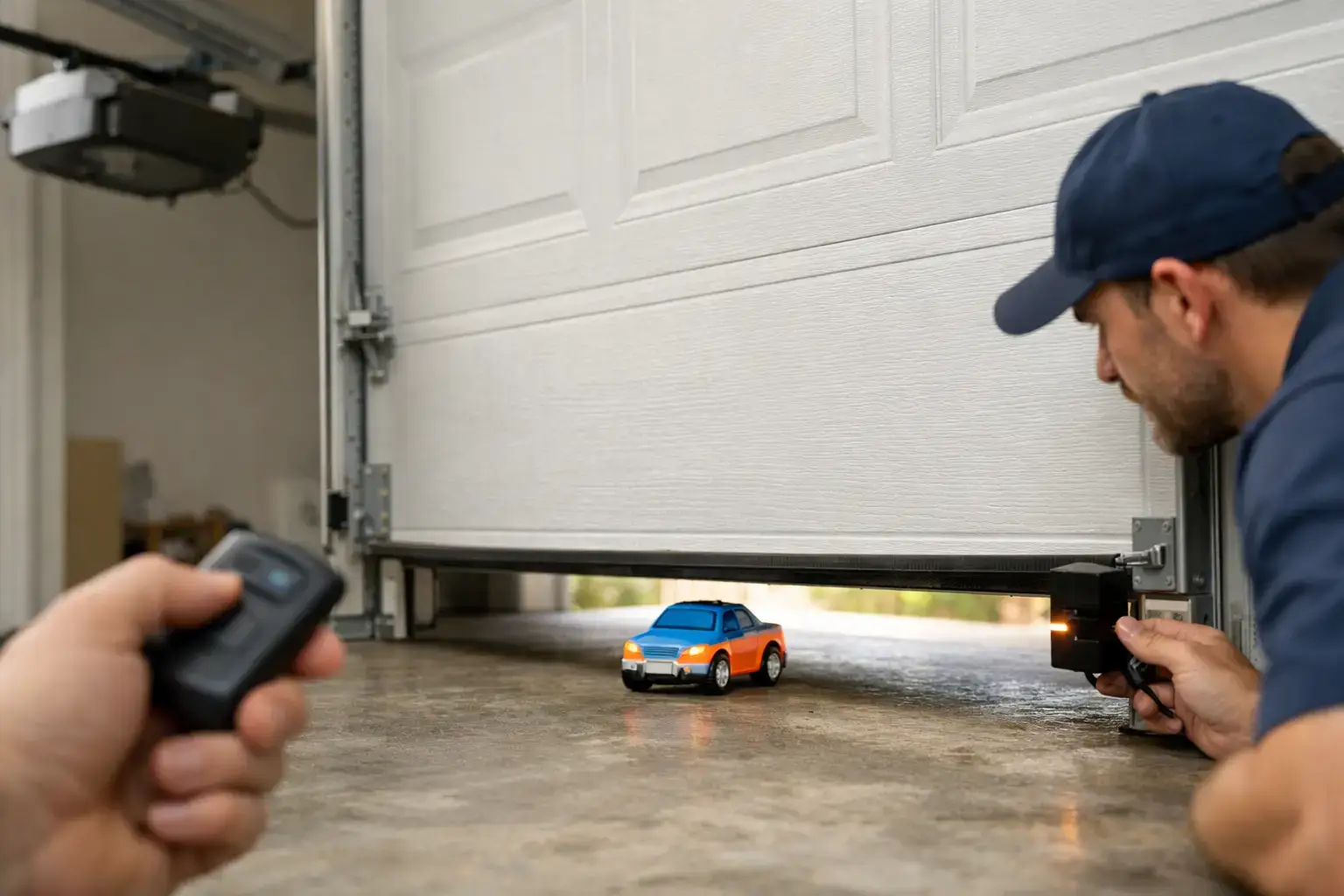
A garage door that starts closing, then suddenly reverses, is doing more than causing an inconvenience. It can leave your home exposed, interrupt your morning, and signal a safety issue that needs attention. Understanding common door reversal causes can help you recognize whether a quick cleanup may solve the problem or whether it is time to schedule a professional repair.
Garage doors are designed to reverse when they sense an obstruction or unusual resistance. That safety feature prevents the heavy door from closing on a vehicle, person, or object. The challenge is that several different problems can make the system think something is in the way when the opening is actually clear.
Garage Door Reversal Causes You May Notice First
The most useful clue is when the door reverses. A door that reverses immediately after moving a few inches can have a different issue than one that reaches the floor, touches down, and then opens again. Pay attention to the pattern, the sounds you hear, and whether the opener lights flash.
Blocked or misaligned safety sensors
Photo-eye safety sensors are among the most common reasons for an unexpected reversal. These small devices sit near the bottom of the tracks on both sides of the garage door opening. They send an invisible beam across the opening. If that beam is interrupted, the opener will not allow the door to close normally.
A box, bike tire, trash can, or even a low pile of leaves can block the beam. Dirt, cobwebs, moisture, and road salt can also collect on the sensor lenses, especially through a Massachusetts winter. Wipe both lenses gently with a clean, soft cloth, then make sure nothing is sitting near the door opening.
The sensors must also face each other correctly. A loose bracket, bumped sensor, or vibration from normal use can shift one sensor out of alignment. Most sensor units have indicator lights. A steady light often means the sensor is aligned, while a blinking or unlit indicator can point to a beam or wiring problem. Avoid forcing brackets or cutting into wiring. If simple cleaning and clearing the area do not restore normal operation, a technician can verify alignment and inspect the circuit.
Something is catching in the tracks
Your garage door travels on rollers inside metal tracks. When a roller binds, a track bends, or debris collects in the path, the opener may sense excessive resistance and reverse the door.
Look from a safe distance for obvious leaves, gravel, packed snow, loose hardware, or a visibly bent section of track. You may also hear scraping, popping, or grinding as the door moves. Do not try to straighten a track with a hammer or loosen track hardware while the door is under tension. A door that comes out of alignment can become unstable quickly.
Closing force is set too low
Garage door openers use force settings to determine how much resistance is acceptable while the door closes. If the down-force setting is too sensitive, the opener may interpret normal door movement as an obstruction and reverse before the door reaches the floor.
This can happen after an opener installation, an adjustment, a power outage, or a change in weather. Cold temperatures can stiffen rollers and lubricants, making an already marginal setting more noticeable. The correct setting depends on the door, opener, springs, and overall condition of the system. Increasing force without identifying the underlying problem can create a safety risk, so it is best treated as a diagnostic adjustment rather than a shortcut.
Limit settings need adjustment
If the door reaches the floor and immediately opens again, the close-limit setting may be telling the opener to travel too far. Once the door presses harder against the floor than expected, the opener may reverse as a safety response.
A changing floor surface, worn weatherstripping, a replacement opener, or prior adjustment can contribute to this issue. Limit settings are different from force settings, and they should not be adjusted interchangeably. A qualified technician can set both correctly while confirming the door is balanced and closing evenly.
Mechanical Problems That Can Trigger Reversal
Not every reversing door problem starts at the opener. A garage door is a connected system, and mechanical wear can create drag that the opener detects.
Worn rollers, hinges, or bearings
Rollers and hinges support a door through hundreds of open-and-close cycles. As they wear, they can become noisy, stiff, or loose. A worn roller may resist movement at one point in the track, while a damaged hinge can pull a section of the door out of its normal path.
Lubrication can help certain moving metal parts, but it is not a cure for cracked rollers, damaged hinges, or loose brackets. Also, avoid applying heavy grease to the tracks. Tracks need to remain clean so rollers can move freely rather than collect dirt and grit.
Broken or weak springs
Garage door springs carry most of the door’s weight. The opener is meant to guide a balanced door, not lift a full door weight by itself. When a torsion spring breaks or weakens, the opener may struggle to move the door and reverse because of the added resistance.
Common signs include a loud bang from the garage, a door that feels unusually heavy, a gap in the torsion spring above the door, or an opener that hums without lifting the door properly. Do not attempt a spring repair yourself. Springs and cables are under extreme tension and require the right tools and training to service safely.
Damaged panels or a shifted door section
A dented panel, impact damage from a vehicle, or a loose reinforcement strut can affect how the door travels. Sometimes the problem is subtle: the door may appear normal when closed but bind halfway down because one section no longer folds or tracks correctly.
Panel damage does not always require a full door replacement. It depends on the door’s age, the availability of matching parts, and whether the damage has affected the structural integrity of the system. An in-person inspection gives you a clearer answer than guessing from the outside.
What You Can Safely Check Before Calling
Start with the simple items that do not involve tensioned parts or electrical disassembly. Clear the door opening, clean the photo-eye lenses, and check whether the sensor lights appear normal. Then watch one closing cycle from a safe position inside the garage, without standing under the door.
Notice whether the door reverses at the same spot every time, whether it touches the ground first, and whether the opener flashes a diagnostic light. Those details help narrow down the problem. If the door is crooked, visibly damaged, making harsh noises, or will not close securely, stop using it until it is inspected.
Never disconnect the opener and manually operate a door that has a broken spring, loose cable, or door section out of the track. A heavy door can drop suddenly. The same caution applies to adjusting springs, cables, track brackets, and opener force settings when you are unsure of the cause.
When a Professional Repair Is the Right Next Step
A recurring reversal is worth addressing promptly, particularly if it prevents the garage from closing at night or affects access to your home. For commercial properties, a reversing overhead door can delay deliveries, compromise security, and create an unsafe work area.
A trained technician can inspect sensor alignment and wiring, test the opener’s safety systems, check travel and force settings, and examine the tracks, rollers, cables, springs, and door balance. That full-system approach matters because a force adjustment may hide a mechanical problem for a while without fixing it.
For Greater Boston homeowners and property managers, Triple A Garage Doors Inc. provides in-person assessments, upfront pricing, and repair recommendations based on what the door actually needs. If a reversal is caused by a worn part, a misaligned sensor, or a balance issue, the goal is to restore safe, reliable operation without surprise work or unnecessary replacement.
A reversing garage door is often trying to protect you, but it should not become a daily guessing game. Clear the easy obstructions, observe the symptoms, and arrange service when the door still will not close smoothly and consistently.
Leave A Comment