
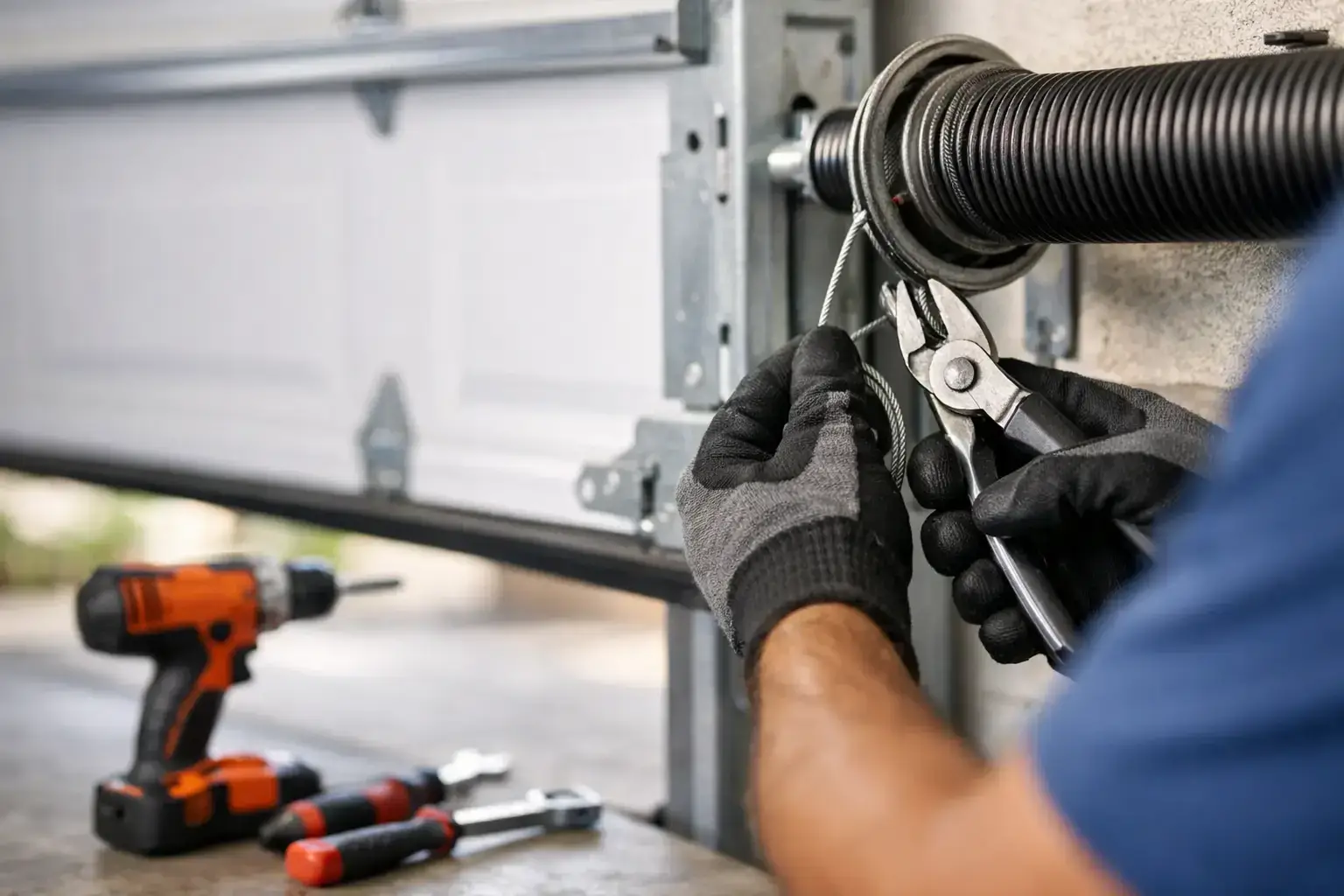
A garage door that hangs crooked, stops halfway, or comes off its track can turn a normal morning into a safety problem fast. If you are searching for garage door cable repair near me, the right next step is usually to stop using the door and have a qualified technician inspect the full counterbalance system. A loose or broken cable is rarely just a cosmetic issue.
Garage door cables work under heavy spring tension. They help lift and lower a door that may weigh hundreds of pounds, and when one cable slips, frays, or snaps, the door can become unstable without much warning. Trying to force it closed with the opener or pull it down by hand can create more damage and put people, vehicles, and property at risk.
What a Broken Garage Door Cable Looks Like
Cable trouble does not always begin with a loud snap. In many cases, homeowners first notice that the garage door is moving unevenly or making a new scraping, popping, or grinding sound. One side may sit lower than the other, especially when the door is open.
Common signs include:
- The garage door is crooked or uneven when opening or closing.
- A cable is visibly loose, tangled, frayed, or wrapped around the drum above the door.
- The door has come off one or both tracks.
- The opener hums, but the door will not move properly.
- The door closes partway, reverses, or leaves a gap along the floor.
A cable may also come off its drum after the door hits an object, a roller binds in the track, or a spring breaks. The cable itself may not be the original cause. That is why replacing or resetting only the cable without checking the springs, drums, rollers, tracks, and bottom brackets can lead to another failure soon after.
Why Garage Door Cable Repairs Should Not Be DIY
There are plenty of household repairs that make sense to handle yourself. Garage door cables are not usually one of them. The cable is connected to a system designed to carry and control significant force. Torsion springs above the door and extension springs along the tracks can release stored energy suddenly if handled incorrectly.
The bottom bracket where the cable attaches is especially dangerous. It is under spring tension when the door is closed. Removing bolts from that bracket without the proper tools and training can cause the cable, bracket, or spring system to move forcefully.
There is another practical reason to call for service: a cable that came off may signal a deeper alignment issue. A technician can determine whether the door is still safe to repair, whether the track has bent, whether a bearing plate is worn, or whether a failing spring caused the imbalance. That diagnosis helps avoid paying for the same problem twice.
What to Do While You Wait for Garage Door Cable Repair Near Me
First, stop operating the door. Do not keep pressing the opener button to see if it will straighten itself out. The opener is designed to move a balanced door, not pull a jammed or hanging door back into position. Continued operation can strip opener gears, bend the track, damage panels, or pull the door completely off its tracks.
If the door is open and it is safe to do so, keep people and vehicles away from the opening. Do not stand beneath a hanging door or attempt to brace it with lumber, a ladder, or your vehicle. If the door is partially open, avoid pulling the emergency release unless a technician tells you otherwise. Releasing the opener can allow an unbalanced door to drop.
Take a quick look from a safe distance. A photo of the loose cable, off-track roller, or damaged section can help explain the issue when you call. You do not need to identify every part correctly. Describing what the door did before it failed is often more useful: whether it made a bang, moved crookedly, stopped mid-cycle, or was hit by a car or object.
If the garage is your only entry point into the home, the door will not close, or your business cannot secure its loading area, request emergency service. A technician can assess the situation, stabilize the door, and restore safe operation when possible.
What a Proper Cable Repair Visit Should Include
A good cable repair is more than putting a cable back on the drum. The technician should first inspect the door’s position and secure it before working on the counterbalance system. From there, the repair process depends on the cause of the failure.
For a frayed or broken cable, replacement is typically the right answer. Cables wear over time from normal cycles, corrosion, misalignment, and contact with damaged drums or tracks. A cable that is visibly fraying should not be reused simply because it has not snapped yet.
When a cable has slipped off but remains intact, the technician needs to identify why. The door may have been out of level, a spring may have lost tension or broken, a drum may be worn, or a roller may have seized. The door should be reset, balanced, and tested through a full open-and-close cycle before the job is considered complete.
A qualified repair visit should also include a check of the opener’s force settings and safety reversal system. The opener may not have caused the cable problem, but it can be affected by it. Once the door is properly balanced, the opener should move it smoothly without straining.
Repair or Replacement: Which One Makes Sense?
It depends on the condition of the door and its hardware. A newer door with one damaged cable may need a straightforward cable replacement and adjustment. If the cables are old, the springs are near the end of their service life, and the rollers or drums show heavy wear, replacing related parts during the same visit can be the more reliable choice.
For example, replacing one broken cable while leaving a worn spring in place may get the door moving again, but the spring could fail soon afterward. On the other hand, not every cable issue requires a major overhaul. An honest diagnosis should explain what is necessary for safe operation, what is recommended to prevent a repeat problem, and what can reasonably wait.
For commercial overhead doors, the decision can involve downtime as much as repair cost. A door serving deliveries, vehicles, equipment access, or tenant security may need same-day stabilization even if a larger replacement is planned later. Property managers and facility operators benefit from documented findings and a clear repair plan that keeps operations moving.
Questions to Ask Before Scheduling Service
When you need a local garage door repair company, look for clear answers rather than vague promises. Ask whether the company provides in-person estimates, whether technicians are licensed and insured, and whether emergency service is available if the door is stuck open or unsafe.
It is also reasonable to ask what the quoted repair includes. Cable work may involve labor, replacement cables, spring adjustment, drum resetting, track alignment, and safety testing. Upfront pricing matters because the condition of the door cannot always be confirmed from a phone description alone. A reputable company should explain the findings before moving ahead with additional work.
Triple A Garage Doors Inc. provides Greater Boston homeowners, property managers, and businesses with qualified, insured technicians, in-person estimates, and straightforward recommendations without bait-and-switch pricing. Whether the issue is a loose cable, a broken spring, an off-track door, or an opener strained by an unbalanced door, the goal is the same: get the system operating safely and reliably again.
Preventing the Next Cable Problem
Cables do wear out, but routine attention can catch related problems before the door becomes stuck. Listen for new noises, watch whether the door travels evenly, and avoid using the door when a roller is visibly out of the track. Keep the tracks clear of debris, but do not apply heavy grease to them. Rollers need to move through clean, properly aligned tracks.
A professional tune-up can identify worn cables, tired springs, loose hardware, and opener settings that need adjustment. This is particularly useful before winter in Massachusetts, when cold temperatures can make existing wear more noticeable and a failed garage door can leave a home or commercial space exposed.
If your door is crooked, the cable is loose, or the opener is struggling, treat it as a reason to stop using the system rather than a problem to work around. A prompt inspection can protect your door, your vehicle, and the people who rely on that garage every day.
Leave A Comment