
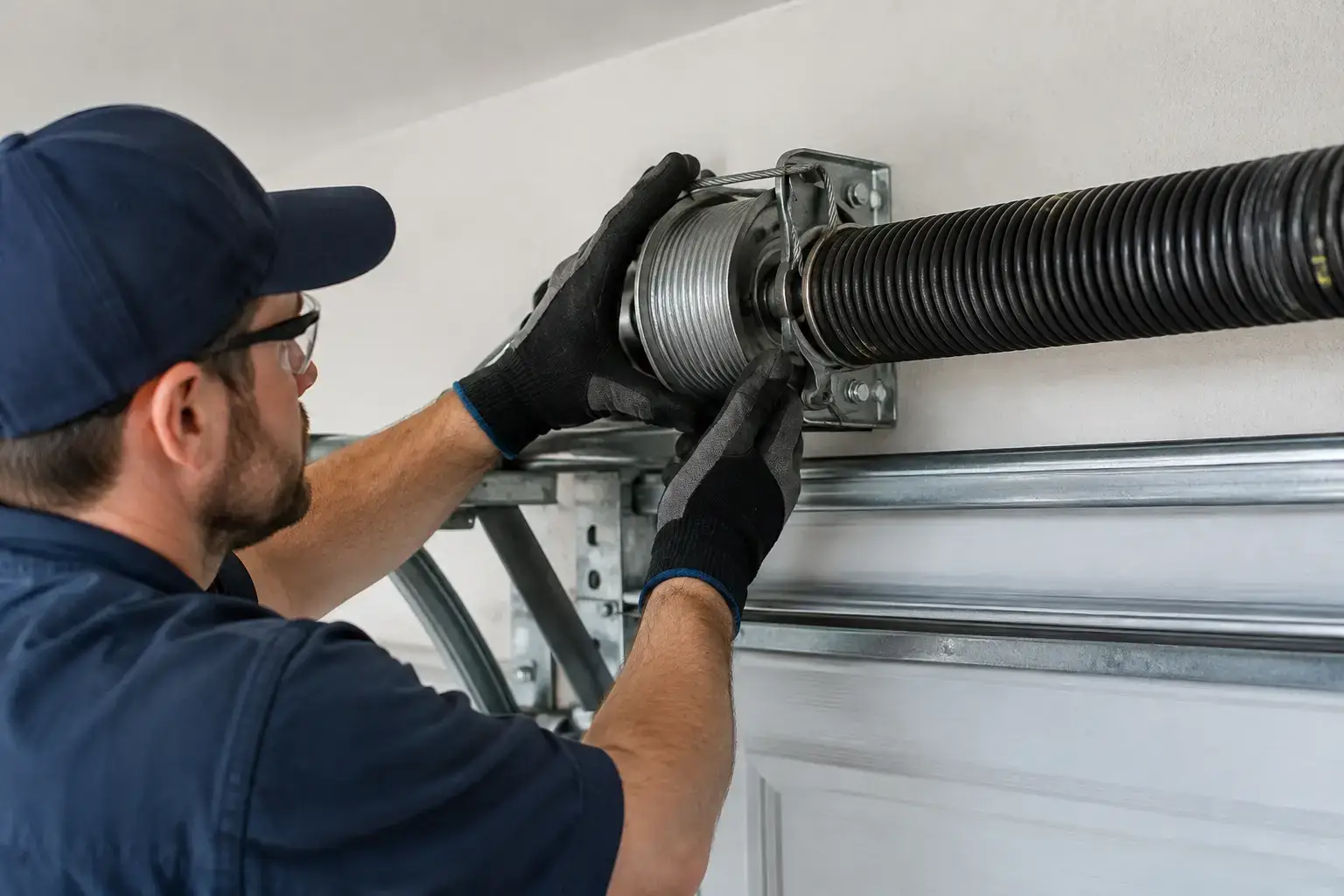
A garage door that hangs crooked, stops partway up, or leaves a loose cable near the track may have a drum problem. Garage door drum replacement is not a routine DIY repair. The drum works directly with high-tension springs and lifting cables, so a worn, damaged, or improperly matched part can turn a working door into a serious safety issue.
For homeowners, property managers, and businesses around Greater Boston, the practical priority is simple: keep people clear of the door, stop using the opener, and have the complete counterbalance system inspected. Replacing only the visible failed part without checking the cables, springs, bearings, shaft, and tracks can leave the same problem waiting to happen again.
What a Garage Door Drum Does
A cable drum is the grooved wheel mounted at each end of the torsion shaft above the garage door opening. As the door opens, the torsion springs transfer stored energy through the shaft. Each drum winds its lift cable, helping raise the door evenly. When the door closes, the cables unwind in a controlled path.
That controlled cable travel matters. The right drum keeps the cable seated in its grooves and helps each side of the door lift at the same rate. A standard residential door usually uses standard-lift drums, while doors with higher tracks, special roof clearances, vertical-lift configurations, or commercial hardware may require a different drum design.
A drum is a small component, but it is selected for the door’s weight, cable size, track arrangement, and lift requirements. Installing the wrong drum can create uneven cable tension, poor door travel, or a cable that repeatedly comes off the drum.
Signs You May Need Garage Door Drum Replacement
A damaged drum is not always easy to spot from the floor, but the door often gives clear warnings. Do not continue cycling the door to test it if you see a cable out of place or the door is visibly uneven.
Common signs include:
- One side of the door rises higher than the other.
- A lift cable is loose, frayed, tangled, or has slipped off the drum.
- The door jerks, binds, or stops before reaching the fully open position.
- You hear grinding, scraping, or a sharp popping sound above the door.
- The door feels unusually heavy or the opener strains to move it.
A cable that has come off its drum does not always mean the drum itself is broken. The cause may be a broken torsion spring, a bent track, an obstacle under the door, worn rollers, a damaged bottom bracket, or an opener that kept pulling after the door bound up. This is why a proper diagnosis matters before any replacement is approved.
Why Drum Problems Should Be Treated as Urgent
Garage door systems carry substantial force. Torsion springs are tightly wound, and lift cables can become unpredictable when they lose tension. Trying to re-seat a cable or loosen a drum set screw without the right training and tools can cause the shaft, spring, cable, or door to move suddenly.
There is also a risk to the door itself. When one cable slips, the door may rack in the opening, bend a top section, damage rollers and tracks, or put excessive force on the opener. On a heavier insulated door or commercial overhead door, continued operation can quickly make a repair more extensive.
If the door is stuck open, do not leave the property unsecured if you can avoid it. Keep vehicles and people out from under the opening, disconnect the opener only if it is safe to do so, and arrange for prompt service. For a door stuck closed, avoid forcing it with the opener or lifting it by hand. A qualified technician can secure the system and determine whether same-day repair is possible.
What a Professional Drum Replacement Includes
A safe garage door drum replacement starts with identifying why the existing drum failed or why the cable came off. A technician should inspect the cable condition, drum grooves, torsion shaft, center bearing, end bearing plates, springs, bottom fixtures, tracks, rollers, and opener settings. The goal is not merely to get the cable back into a groove. It is to restore balanced, reliable travel.
After securing the door and safely releasing spring tension, the technician removes the damaged or incorrect drum and installs the proper replacement. Both drums are checked for matching type and condition. Depending on wear and the system configuration, replacing both drums may be the sensible choice, especially when one has cracked, worn grooves, or corrosion that suggests the other is near the end of its service life.
The cables are then routed correctly, tension is set evenly, and the springs are adjusted to balance the door. A balanced door should stay close to position when operated manually, rather than dropping, shooting upward, or pulling heavily to one side. Finally, the door is cycled and the opener is tested to confirm smooth travel and proper reversal behavior.
This work requires more than a replacement part. It requires correct spring handling, precise cable tension, and a final safety check. That is why licensed and insured garage door technicians are the safer choice for drum and cable issues.
Replacement or Repair: What Makes Sense?
Not every cable-off event calls for a new drum. If the drum grooves are clean, the flange is intact, the shaft is straight, and the cable slipped because the door hit an object or a spring broke, the drum may remain serviceable. In that case, the repair may focus on correcting the underlying issue and resetting the cable properly.
Replacement becomes more likely when a drum is cracked, bent, deeply grooved, rusted, loose on the shaft, or mismatched to the door’s lift system. It is also appropriate when cable wear has cut into the drum channels or when an incorrect prior repair has left the door lifting unevenly.
For commercial properties, the decision may involve more than the immediate part cost. A loading area, retail receiving door, or multifamily garage entrance can lose valuable access when an overhead door is down. Preventive replacement of worn components may be worthwhile when it reduces the risk of an unexpected closure during business hours.
What Affects Garage Door Drum Replacement Cost?
An honest estimate should reflect the actual system, not a one-size-fits-all price. Cost can vary based on whether the door uses standard residential drums or specialty high-lift hardware, the condition of the cables and springs, door size and weight, accessibility, and whether related damage must be corrected.
A simple replacement on a standard system may be straightforward. A cable-off door with a broken spring, damaged track, bent shaft, or worn bottom bracket requires more labor and parts. Emergency timing can also affect service availability. The right provider should explain what failed, show you the affected components when possible, and provide upfront pricing before the repair begins.
Triple A Garage Doors Inc. provides in-person estimates and clear recommendations so customers know whether they need a drum replacement, a cable repair, spring service, or a broader door adjustment. That direct approach helps avoid paying for work that does not solve the root cause.
How to Help Prevent Future Cable and Drum Issues
Most drums last for years when the door is correctly installed, balanced, and maintained. The best protection is periodic inspection rather than waiting for a loud failure. During normal use, watch the door from a safe distance. It should move evenly, the cables should stay seated, and the opener should not strain or shake the door through the tracks.
Keep the tracks clear, never drive into a partially closed door, and avoid pulling on cables or bottom brackets. If a door begins rubbing, jerking, or becoming noticeably louder, schedule service before a small alignment problem becomes a cable-off emergency. Annual tune-ups are especially useful for heavy doors, frequently used garage entrances, and commercial overhead doors.
A garage door should open and close without becoming a daily concern. If yours is crooked, noisy, or stuck, treat it as a mechanical warning, not an inconvenience. Prompt professional service can protect your door, your opener, and the people who depend on the garage for safe access.
Leave A Comment