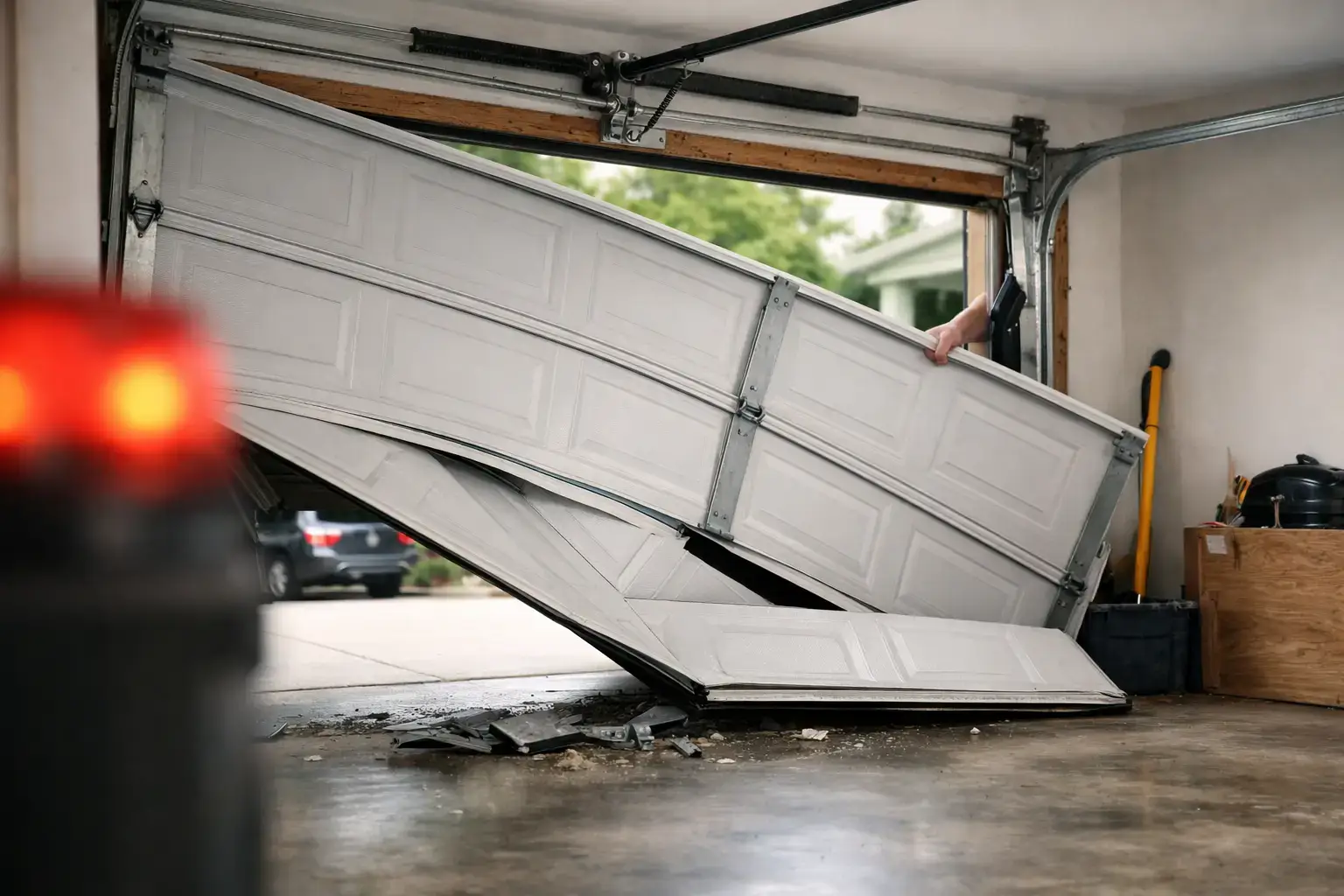
A garage door can weigh well over 100 pounds, and larger insulated or commercial doors can weigh much more. The good news is that a complete collapse is uncommon when the system is properly installed and maintained. Still, homeowners asking, can garage doors collapse, are right to take the concern seriously. A failed spring, broken cable, damaged track, or weakened hardware can let a door drop, lean, bind, or come off its tracks without much warning.
If your door is hanging unevenly, making harsh grinding sounds, or refusing to stay open, stop using it until a qualified technician can inspect it. Trying to force a heavy door into place can turn a repair into an injury or a more expensive replacement.
Can Garage Doors Collapse? Yes, Under Certain Conditions
Garage doors are designed to travel along tracks while springs and cables counterbalance most of their weight. When those components are in good condition, even a heavy door should move in a controlled way. A collapse becomes possible when the system loses that support or the door is no longer securely guided by its tracks.
Sometimes the failure is sudden, such as a torsion spring breaking or a cable snapping. In other cases, the warning signs build gradually. The door may start to move crookedly, hesitate halfway, scrape the track, or appear lower on one side. A door that looks slightly off can become unsafe quickly, especially if someone continues operating it with the opener.
A door does not need to fall all the way to the floor to create a dangerous situation. It can partially drop, hang at an angle, pull out of the track, or fall when a person tries to open it manually. Any uncontrolled movement deserves prompt attention.
What Causes a Garage Door to Fall or Come Off Track?
Broken Springs
Springs carry the lifting load of the garage door. Torsion springs sit above the opening, while extension springs are commonly found along the horizontal tracks on some systems. Both are under high tension.
When a spring breaks, the opener may still hum or try to move the door, but it is no longer lifting a properly balanced load. The door can become extremely heavy and may slam down if it is released. A loud bang from the garage is often the sound of a spring breaking.
Never attempt to adjust, wind, or remove a garage door spring yourself. Spring repair requires the right tools, training, and safety procedures.
Frayed or Broken Cables
Lift cables connect the spring system to the bottom of the door. If one cable frays, slips off the drum, or breaks, the door can lift unevenly. One side may rise while the other remains near the floor, causing the door to twist and bind in the tracks.
A cable issue is especially risky because continuing to run the opener can pull the door farther out of alignment. If you see loose cable, tangled cable, or a door that is noticeably crooked, leave the door alone and schedule service.
Damaged Tracks, Rollers, or Hinges
Tracks keep the door moving in a defined path. A bent track, loose mounting bracket, worn roller, or damaged hinge can prevent that path from staying secure. Vehicle contact is a common cause, but normal vibration, corrosion, and years of use can also loosen hardware.
A door may come off track after striking an object, catching a bicycle or trash bin, or closing on an item left in the opening. The opener can apply enough force to worsen the problem, so do not keep pressing the remote in hopes that it will straighten itself out.
Opener and Safety System Problems
An automatic opener does not hold the full weight of the door. Its job is to move a balanced door. If the door is heavy because of a spring failure, an opener may strain, strip gears, bend parts, or fail while the door is in motion.
Safety sensors help prevent the door from closing on people, pets, and objects, but they do not prevent every type of mechanical failure. A door with damaged springs, cables, tracks, or bottom brackets still needs a hands-on inspection.
Damaged Door Sections or Structural Hardware
Rust, rot, impact damage, loose reinforcement struts, and cracked panels can weaken the door itself. On wood doors, moisture can cause warping and deterioration. On steel doors, severe dents or corrosion may affect how the sections hinge and travel.
Commercial overhead doors have additional wear from frequent cycles, forklifts, delivery traffic, and larger opening sizes. For a business, a damaged door is not only a safety concern. It can interrupt deliveries, affect building security, and leave a facility exposed after hours.
Warning Signs You Should Not Ignore
A garage door rarely needs to be watched constantly, but it should not be unpredictable. Call for service if the door moves unevenly, shakes excessively, makes scraping or popping noises, or reverses without a clear obstruction. You should also take action if it will not stay fully open, appears to sag, closes too fast, or has visible gaps in a spring.
Other red flags include a loose cable near the drum, rollers sitting outside the track, bent vertical tracks, broken hinges, or an opener that sounds strained. Do not assume a noisy door only needs lubricant. Lubrication can reduce normal friction, but it cannot fix a broken spring, a loose track, or a failing cable.
If the door is open and looks unstable, keep people, pets, and vehicles away from the opening. Do not walk beneath it or try to prop it up with boards, ladders, or other temporary supports.
What to Do If Your Garage Door Is Hanging or Has Fallen
First, keep the area clear. Do not stand under the door, touch loose cables, or allow children near the garage. If a vehicle is trapped inside, resist the urge to disconnect the opener and lift the door by hand unless a technician has confirmed it is safe to do so.
If the door is partly open or off track, stop operating the opener. Repeatedly using the wall button or remote can damage panels, tracks, rollers, and the opener itself. If you can do so without approaching an unstable door, unplug the opener to prevent anyone from activating it.
For a door that has fallen, is hanging crookedly, or leaves the property unsecured, request emergency garage door service. A trained technician can secure the opening, diagnose the failed component, and recommend repair or replacement based on the actual condition of the system.
Can You Prevent a Garage Door Collapse?
Preventive maintenance lowers the chance of a sudden failure, although no mechanical system lasts forever. A professional tune-up can identify worn rollers, frayed cables, loose bolts, weak springs, track alignment problems, and opener issues before they become urgent.
Between service visits, watch the door during normal operation. It should move smoothly, remain level, and open and close without heavy shaking. Keep the tracks clear of debris, avoid parking or storing items where they can strike the door, and test the opener’s photo-eye sensors according to the manufacturer’s instructions.
Do not use the door as a substitute for a building wall. Children should not hang from it, and adults should not pull on it when it is moving. If the door feels unusually heavy during a manual operation, stop immediately. That is often a balance problem, not a door that simply needs more force.
For Massachusetts homes, winter weather can add stress. Ice, packed snow, road salt, and moisture can affect bottom seals, hardware, rollers, and tracks. Clearing snow from the opening and addressing corrosion early can help protect the system through repeated cold-weather cycles.
When Repair Makes Sense and When Replacement Is Safer
Many garage door failures can be repaired. A broken spring, worn rollers, damaged cable, misaligned track, or failed opener component may be resolved without replacing the entire door. The right answer depends on the age of the door, the condition of its panels and hardware, and whether the system can be restored to safe, reliable operation.
Replacement may be the better choice when multiple sections are damaged, the door has severe corrosion or structural deterioration, replacement parts are no longer practical, or repeated repairs are adding up. An in-person assessment gives you a clear picture of the issue and the cost before work begins.
Triple A Garage Doors Inc. provides qualified, insured garage door repair and replacement service across Greater Boston, with straightforward recommendations and upfront pricing. If your door is leaning, stuck, or acting unsafe, treat it as a safety issue first. A prompt professional inspection can protect the people and property that pass through your garage every day.
Leave A Comment