A garage door can fail at the worst possible moment: when you are leaving for work, trying to get the kids home, or securing your property at night. This residential garage door guide helps Greater Boston homeowners recognize common problems, understand what can be repaired, and know when to call a qualified technician. The goal is not to turn you into a garage door mechanic. It is to help you make a safe, informed decision before a small issue becomes a stuck door, damaged vehicle, or security concern.
Start With Safety, Not a Quick Fix
A residential garage door is one of the heaviest moving systems in a home. The door itself may weigh hundreds of pounds, while springs, cables, rollers, tracks, and the opener all work together to move it safely. When one part fails, the rest of the system can be under unusual strain.
If the door is crooked, hanging from one side, has a visible broken spring, or will not stay open, stop using it. Do not pull on loose cables, adjust spring hardware, or try to force the opener to lift the door. Torsion and extension springs store significant energy, and incorrect handling can cause serious injury or property damage.
You can safely check a few basics. Make sure the opener is plugged in, look for an obstruction in the photo-eye path near the floor, and confirm that the remote battery has not failed. Beyond that, a hands-on diagnosis is usually the safer choice. A technician can identify whether the problem is the door, the counterbalance system, the opener, or a combination of issues.
Common Garage Door Problems and What They Usually Mean
A garage door rarely fails without giving some warning. Changes in sound, speed, balance, or appearance are worth addressing early, especially before New England weather adds more stress to the system.
The door will not open or only opens a few inches
A door that starts up and stops may have a broken spring, a damaged cable, a seized roller, or an opener that is struggling against an unbalanced door. If you hear the opener motor running but the door does not move, the issue may be with the opener drive system or an emergency-release connection. If the door is heavy when operated manually, do not continue lifting it. That often points to a spring or cable problem.
The door is loud, shaky, or jerky
Squealing, grinding, popping, and rattling are not just annoyances. Worn rollers, loose hardware, dry hinges, bent tracks, and failing bearings can all create noise. Sometimes a tune-up and replacement of worn moving parts will restore quiet operation. Other times, persistent vibration reveals a track alignment or structural issue that needs a closer inspection.
The door reverses before closing
Modern openers use safety sensors near the bottom of the tracks. Dirt, misalignment, direct sunlight, damaged wiring, or an obstruction can make a door reverse. Clean the sensor lenses and make sure nothing is blocking them. If the indicator lights are not working correctly or the door still reverses, a technician should test the sensors and opener settings.
The door is damaged but still operates
A dented panel may seem cosmetic, but it can affect how the door travels through the tracks. Minor surface damage on an otherwise stable door may be repairable. A deeply bent section, cracked panel, damaged reinforcement strut, or door that binds during operation can call for panel replacement or a larger repair. The right answer depends on the door’s age, availability of matching parts, and whether the damage has affected its safe operation.
Repair or Replace? Make the Decision on the Whole System
Homeowners often ask whether replacing one part is enough. There is no one-size-fits-all answer. A newer door with a broken spring, worn rollers, or a failed opener can often be repaired quickly and cost-effectively. A door with repeated breakdowns, widespread rust, multiple damaged sections, or outdated safety features may be better replaced.
Consider the condition of the complete system, not just the part that failed today. For example, installing a new opener on a severely unbalanced door can shorten the life of the new equipment. Replacing a damaged panel may not make sense if the rest of the door is faded, rusted, or no longer supported by available matching sections.
Replacement can also be a practical upgrade when insulation, curb appeal, or security matters. Attached garages and garages beneath living spaces can benefit from insulated doors, particularly during Massachusetts winters. Insulation does not turn a garage into conditioned living space, but it can moderate temperature swings and reduce the cold transfer into adjacent rooms.
A qualified technician should explain the condition of the door, show you the problem where possible, and provide clear options. An in-person estimate is especially useful when damage, door balance, or part compatibility needs to be assessed before work begins.
Choosing the Right Door for Your Home
A new garage door should fit more than the opening. It should suit the home, the way you use the garage, and the local climate.
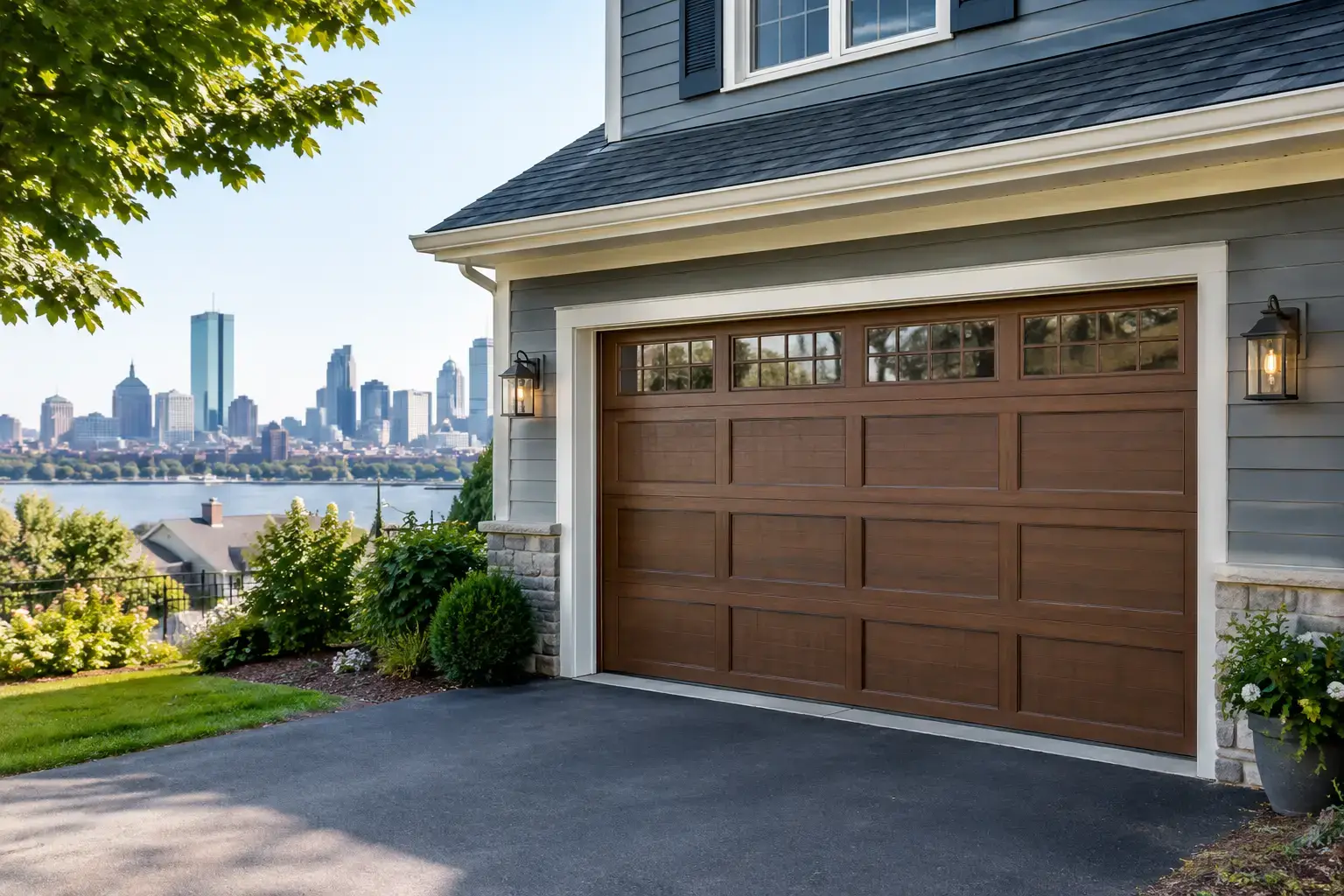
Steel doors are a popular choice because they are durable, relatively low-maintenance, and available in many styles. Insulated steel is often a strong fit for homes with attached garages. Wood offers a classic appearance and can complement historic or custom homes, but it requires more upkeep and can be affected by moisture over time. Aluminum and glass doors provide a clean, modern look, although privacy, insulation, and durability should be considered for the specific location.
Style matters, but construction matters just as much. Look at the door’s insulation value, wind resistance where applicable, hardware quality, window placement, and reinforcement. Windows bring in natural light, but they should be positioned with privacy and security in mind. A door facing a busy street may need a different window layout than one located behind the home.
For many homeowners, the best choice is not the most expensive door. It is the door that performs reliably, complements the house, and fits the budget without compromising safe installation.
Your Residential Garage Door Guide to Openers
The opener is the convenience side of the system, not the lifting side. Springs counterbalance the door’s weight; the opener guides the door through its travel. That is why door balance should always be addressed before blaming the opener for every operating problem.
Belt-drive openers are typically quieter and are often a good choice when there is a bedroom or living area above or beside the garage. Chain-drive models are dependable and may cost less, though they tend to be louder. Wall-mount openers can free up ceiling space and work well in certain garage layouts, but compatibility depends on the door system and available side clearance.
Useful opener features include battery backup, motion-activated lighting, smartphone control, and reliable photo-eye safety sensors. Battery backup is particularly helpful during a power outage, though it does not eliminate the need to know how to use the emergency release safely. If your current opener lacks modern safety features, makes unusual noise, or has become unreliable after repeated repairs, replacement may be the more sensible long-term option.
Maintenance That Helps Prevent Emergency Calls
A professional tune-up is the safest way to evaluate springs, cables, balance, hardware, and opener settings. Between service visits, homeowners can help protect the system with a few simple habits.
Keep the photo-eye area clear and wipe the sensor lenses occasionally. Watch the door as it moves and listen for new noises. Do not let leaves, road salt, or stored items build up around the tracks. Check weatherstripping for cracks or gaps, especially before winter, since worn bottom seals can let in water, cold air, and pests.
Avoid spraying heavy lubricant on every part of the door. The wrong product can attract dust and make certain problems worse. Garage door-specific lubricant applied by a technician to appropriate moving parts is different from trying to grease tracks or spring components yourself. Tracks generally need to stay clean and properly aligned rather than heavily lubricated.
Annual professional maintenance is a reasonable baseline for most homes. Doors used multiple times a day, doors exposed to harsh weather, and doors serving rental or multifamily properties may benefit from more frequent inspection.
When to Call for Same-Day Service
Call for prompt service if the door is stuck open, stuck closed, off track, visibly uneven, or operating with a broken spring or loose cable. These conditions can affect home security and create a safety risk. It is also wise to call when a door repeatedly reverses, makes sudden loud bangs, or requires more and more force to move.
For homeowners in Waltham, Boston, and surrounding communities, Triple A Garage Doors Inc. can inspect the full system, explain the repair clearly, and provide upfront options before work begins. The right service call should leave you with a door that is balanced, secure, and operating smoothly – not just temporarily moving again.
A garage door deserves attention at the first sign of trouble. Addressing a strange noise or slow movement today is often far easier than dealing with a door that will not open tomorrow morning.
Leave A Comment