
A garage door can take up more exterior wall space than any other opening on your home. In a Massachusetts winter, that matters. When comparing insulated versus uninsulated garage doors, the right choice comes down to how you use the garage, how the room above it feels, the condition of the existing door, and what you expect from the investment.
An insulated door is not automatically the answer for every property. A detached garage used only for parking may not need the same level of thermal control as an attached garage below a bedroom, home office, or living room. The goal is to choose a door that performs well for your property without paying for features that will not provide a meaningful return.
What makes a garage door insulated?
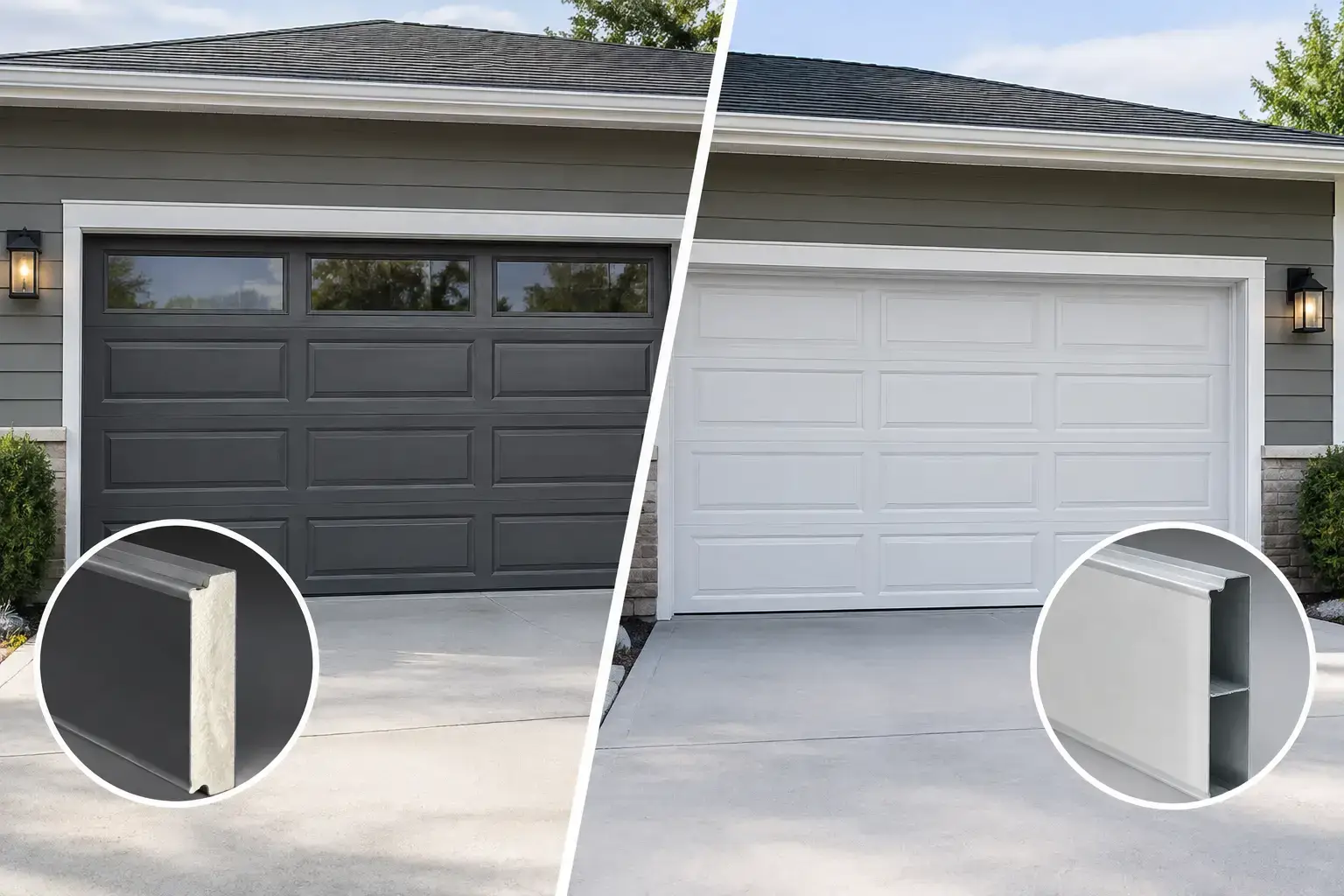
Most insulated garage doors have two layers of steel with insulation placed between them. The insulation is commonly polystyrene or polyurethane. Polystyrene is typically installed in rigid panels and provides solid basic insulation. Polyurethane is injected between the door skins, where it expands and bonds to the steel. It generally offers higher insulating performance and adds structural strength.
Uninsulated doors are usually single-layer steel. They are lighter and often less expensive upfront, but the inside of the door is exposed and provides little resistance to outdoor temperatures. They can still be a practical option, especially for a detached garage with no finished space nearby.
Garage door insulation is measured by R-value. A higher R-value means greater resistance to heat transfer. It is useful information, but it should not be the only number driving your decision. A high-R-value door with worn bottom seals, gaps around the tracks, or a poorly adjusted fit will not perform as well as it should.
Insulated versus uninsulated garage doors: the real differences
The most noticeable difference is usually comfort. An insulated door helps slow the transfer of cold and heat between the garage and outdoors. In Greater Boston, this can make an attached garage less bitterly cold in winter and less overheated during humid summer weather.
That does not mean an insulated garage will become a heated living space without a heating system. It means the temperature changes more gradually. If the garage shares walls, ceilings, or ductwork with conditioned rooms, that improvement can reduce drafts and help nearby rooms feel more consistent.
Energy efficiency depends on the whole garage
Homeowners sometimes expect an insulated door to dramatically cut utility bills on its own. The savings can be worthwhile, but they depend on the rest of the garage. Wall and ceiling insulation, air sealing, windows, side doors, and the connection to the house all affect the result.
The benefit is strongest when the garage is attached and the home loses heat through adjacent surfaces. It can also make sense for a garage that is heated, used as a workshop, or frequently occupied. For a detached, unheated building used for vehicle storage, the energy savings may be modest. In that case, durability, appearance, and budget may carry more weight than R-value.
Noise and operation can feel different
An insulated steel door often operates more quietly than a thin single-layer door. The added material helps reduce vibration, rattling, and the hollow sound that can occur as the sections move through the tracks. This is especially helpful when a bedroom sits above or beside the garage.
The insulation itself is not a fix for a grinding opener, damaged rollers, loose hardware, or an unbalanced door. Those are service issues that need a proper inspection. But with a well-maintained system, a heavier insulated door generally has a more solid feel during operation.
Strength and dent resistance matter in active driveways
Many insulated doors use steel on both the exterior and interior faces. That sandwich construction can make the sections more rigid than a single-layer door. For households with active driveways, basketballs, bikes, snow equipment, or frequent deliveries, that extra stiffness can be valuable.
Still, no residential door is dent-proof. Thin-gauge steel can be damaged whether it is insulated or not, and a severe impact can bend a section, affect the track, or put strain on the opener. When comparing door models, look at the steel gauge, panel construction, reinforcement, and warranty – not just the advertised insulation level.
When an insulated door is worth the added cost
An insulated garage door is usually the better long-term choice when the garage is attached to the home. It is particularly worthwhile when there is a finished room above the garage or when the garage is used for projects, storage, exercise equipment, or regular work.
It is also a sensible choice for homeowners replacing an old, noisy door that has become dented, drafty, or unreliable. If the existing door requires major panel work and has outdated hardware, a full replacement can be more practical than putting money into a door near the end of its service life. Choosing insulation at that point adds comfort and structural value while the system is being updated.
For commercial properties, insulation can be useful where overhead doors separate a working area from outdoor loading zones or where employees work near the door. However, the right commercial door depends on traffic volume, opening size, wind exposure, security needs, and operational demands. A higher R-value is only one part of the specification.
When an uninsulated door makes sense
An uninsulated garage door remains a reasonable option for a detached garage with no heating, no finished room above it, and limited day-to-day use. It can also be a good fit when the primary need is a dependable replacement at the lowest practical installed cost.
For some investment properties, utility buildings, and basic storage garages, spending more on insulation may not create enough comfort or energy benefit to justify the upgrade. A quality uninsulated door that is correctly sized, professionally installed, and fitted with good weather seals can be a better decision than a poorly installed insulated door.
Weight is another consideration. Insulated doors are heavier, which means the spring system must be sized correctly for that specific door. Never reuse springs based only on the old door if the replacement has a different weight. An incorrectly balanced door can overwork the opener, create unsafe operation, and increase the chance of a spring or cable problem.
Do not overlook weather sealing and installation
The door itself is only part of the barrier between your garage and the weather. Bottom weatherstripping, perimeter seals, track alignment, and a level floor all make a difference. If daylight is visible around the edges of a closed door, or if leaves and water enter during storms, insulation inside the panels will not solve the entire problem.
Proper installation also affects safety. A garage door should sit evenly, travel smoothly, reverse correctly when required, and remain balanced when disconnected from the opener. The springs, cables, rollers, hinges, and tracks work as one system. Because springs and cables are under significant tension, repairs and adjustments should be handled by qualified technicians.
At Triple A Garage Doors Inc., an in-person estimate allows the technician to assess more than the door style. They can measure the opening, inspect the framing and headroom, identify weather-sealing concerns, and make sure the new door, springs, and opener are matched correctly. That helps avoid surprise changes after installation begins.
How to choose the right door for your property
Start with how the garage affects the rest of the building. If the garage is attached, has a room above it, or regularly feels like a source of cold air, an insulated door is likely worth serious consideration. If it is detached and used only for occasional parking or storage, an uninsulated model may meet your needs well.
Then consider the door’s daily workload. A busy family garage benefits from a rigid, quieter door and dependable hardware. A garage that opens only a few times each week may place more value on straightforward function and lower upfront cost. Appearance matters too, particularly on a front-facing garage where the door has a major effect on curb appeal.
Ask for clear pricing that separates the door, installation, hardware, removal of the old door, and any opener work. You should also know what R-value is being quoted, what type of insulation is used, and whether the existing opener is appropriate for the replacement door. Clear answers before work begins are the best way to make a confident choice.
A garage door should protect access to your home, operate safely, and suit the way you actually use the space. Whether insulation is a practical upgrade or an unnecessary expense becomes much clearer once the garage, surrounding rooms, and complete door system are evaluated in person.
Leave A Comment