
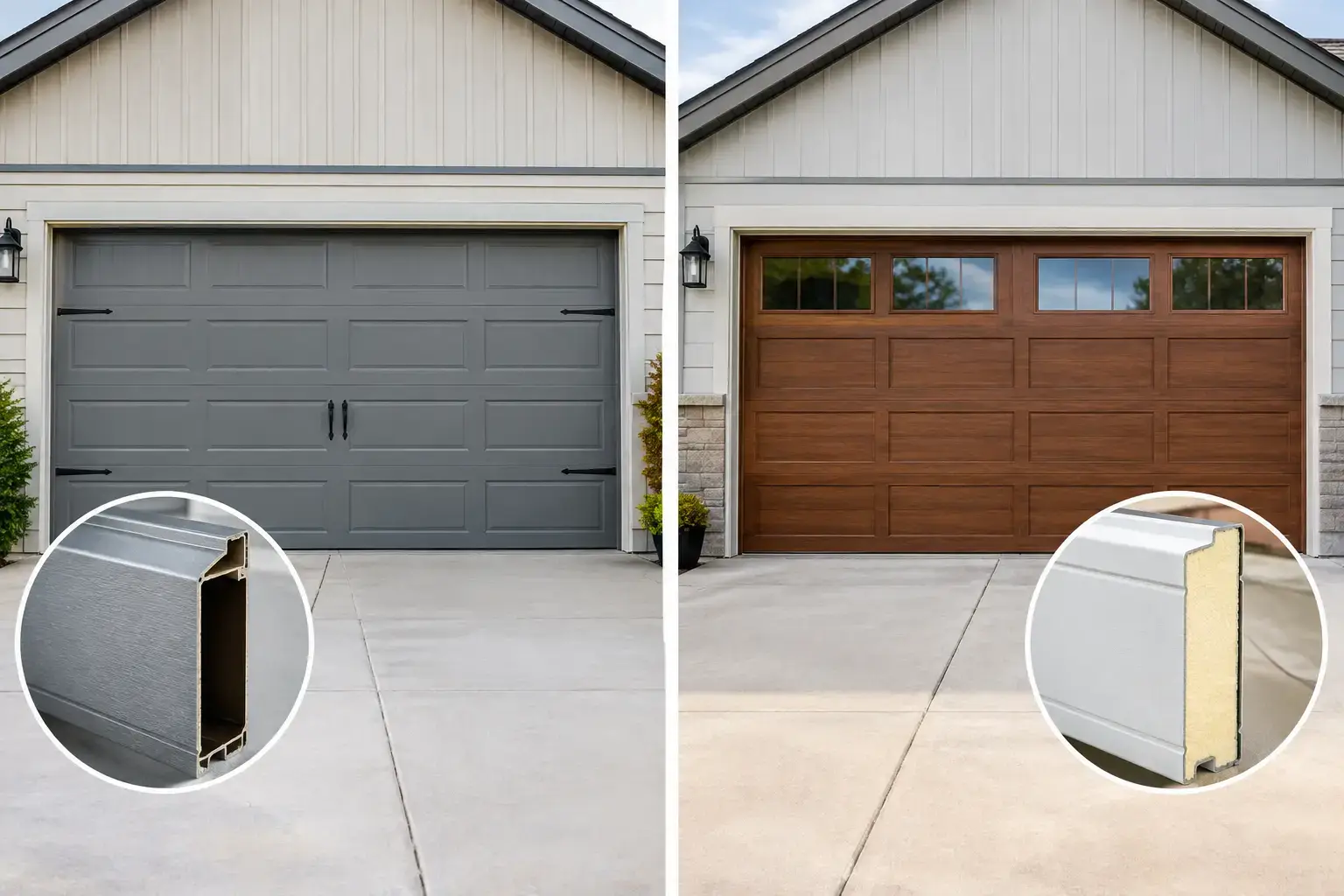
A garage door is one of the largest moving parts in your home, and in Massachusetts, it also sits between your garage and winter cold, summer humidity, road noise, and wind. Choosing between insulated versus noninsulated garage doors is not simply a question of buying the most expensive option. The right choice depends on how you use the garage, what is above or beside it, and whether the existing door is due for replacement.
For some homeowners, a basic noninsulated door is the sensible, cost-conscious answer. For others, an insulated door makes the garage noticeably more comfortable, quieter, and more durable. The key is understanding what insulation changes and what it does not.
Insulated Versus Noninsulated Garage Doors: The Main Difference
A noninsulated garage door is usually a single layer of steel, aluminum, wood, or another exterior material. It creates a secure barrier when closed, but it offers limited resistance to temperature transfer. On a cold Waltham morning, the inside surface of a noninsulated steel door can feel almost as cold as the outdoor air.
An insulated garage door has insulation installed between layers of door material, commonly steel. Many residential insulated doors use polystyrene panels or injected polyurethane foam. The insulation is measured by R-value, which indicates resistance to heat flow. A higher R-value generally means better insulation performance, although the complete door construction matters too.
A door with insulation will not turn an unheated garage into finished living space. Heat can still escape through walls, windows, the floor, gaps around the door, and an uninsulated ceiling. It can, however, reduce the sharp temperature swings that make an attached garage uncomfortable and affect nearby rooms.
When an Insulated Door Is Worth the Added Cost
Insulated garage doors are often a strong investment for attached garages in Greater Boston. If there is a bedroom, family room, kitchen, or home office above or next to the garage, the door is part of the home’s thermal envelope. A better-insulated door can help reduce the cold that reaches those adjacent areas, especially when the garage ceiling and shared walls are insulated as well.
It also makes sense when the garage is used for more than parking. Homeowners who use the space for a workshop, gym, hobby area, storage, or frequent entry may appreciate a garage that is less bitter in winter and less hot during summer. You may still need supplemental heat for long periods of occupancy, but an insulated door gives that heat less outdoor air to fight.
Noise is another practical advantage. Insulated doors tend to vibrate less than thin, single-layer doors. That can reduce the rattling sound created when the door opens, closes, or faces wind. It will not eliminate opener noise caused by worn rollers, loose hardware, or a failing motor, but it can make the door itself feel and sound more solid.
Strength and everyday durability
The insulation is not the only reason insulated doors feel sturdier. Many are built with two or three layers: an exterior steel skin, insulation core, and interior backing. That sandwich-style construction can resist dents better than a thin single-layer door. It also gives the inside of the garage a cleaner finished appearance.
Still, construction varies by model. An insulated door is not automatically dent-proof, and a noninsulated door is not automatically weak. Steel gauge, panel design, reinforcement, wind-load rating, and hardware quality all affect long-term performance. A technician can help compare actual door specifications rather than relying on insulation alone.
When a Noninsulated Garage Door Makes Sense
A noninsulated door can be the right choice for a detached garage used mainly for vehicle storage, lawn equipment, or seasonal items. If the building is not heated, not connected to the home, and not used as a workspace, the comfort benefit of insulation may be limited.
Upfront cost is the clearest advantage. Single-layer doors generally cost less to purchase and may be the practical fit when a homeowner needs a straightforward replacement after impact damage, corrosion, or panel failure. They are also lighter, although that does not mean they are maintenance-free or easier to install safely.
For a detached garage, spending the difference on a quality opener, new weather seals, stronger rollers, or needed structural repairs may deliver more immediate value than paying for a high R-value door. It depends on the building and how often the door is used.
A noninsulated door can also work well in a mild-use garage when appearance is the priority. Today’s steel doors are available in raised-panel, carriage-house, and modern designs, so selecting a basic door does not mean settling for an unattractive one.
Consider the Whole Garage, Not Just the Door
Garage door insulation matters, but it is only one part of the picture. A well-insulated door with damaged bottom weatherstripping can still let in cold air, water, leaves, and pests. Gaps along the sides or top of the opening also reduce comfort and efficiency.
Before deciding on a new door, look at the garage’s existing conditions. Is the door properly sealed? Is the ceiling below a bedroom insulated? Are there drafts around old windows? Does the door close evenly, or is it leaving a visible gap at one corner? These details may affect your results as much as the door’s insulation rating.
For attached garages, the door leading into the home should also seal and close correctly. That interior door helps separate garage air from the living area. If you notice exhaust odors, persistent cold floors, or drafts in rooms near the garage, it is worth evaluating the full setup instead of assuming the overhead door is the only issue.
Weight, Springs, and Opener Compatibility
An insulated garage door is typically heavier than a comparable noninsulated door. That additional weight is normal, but the spring system must be correctly sized for it. Springs counterbalance the door so it can be lifted safely by hand and so the opener is not forced to do work it was never designed to handle.
This is especially important when replacing an existing noninsulated door with a heavier insulated model. Reusing old springs without checking their capacity can lead to poor balance, loud operation, premature opener wear, or a door that becomes difficult to operate when a spring fails.
A qualified technician should measure the opening, confirm the track and header condition, select the proper springs, and test the balance after installation. The door should stay near its position when disconnected from the opener and lifted halfway. If it races upward, drops quickly, or feels unusually heavy, do not try to adjust the springs yourself. Garage door springs carry significant tension and require proper tools and training.
Choosing the Right Insulation Level
More insulation is not always better for every property. A moderate-R-value door is often enough for an attached garage that is used normally but not conditioned as living space. A higher-R-value door may be more appropriate when the garage is heated, used as a workshop, or directly below finished rooms where comfort is a recurring concern.
Polyurethane-insulated doors usually offer higher R-values in a thinner profile because the foam fills the panel cavity. Polystyrene-insulated doors can still provide meaningful improvement and may be a more budget-friendly option. The better choice depends on your goals, preferred door style, and budget.
Ask for an in-person estimate that covers more than the door price. A clear proposal should identify the door construction, insulation level, windows if included, hardware, tracks, springs, removal of the old door, and any work needed to bring the system into safe operating condition. That helps prevent surprises and makes it easier to compare options fairly.
A Practical Decision for Massachusetts Homeowners
Choose an insulated garage door if your garage is attached to the house, sits below living space, is used regularly as a work or activity area, or if you want a quieter and more substantial door. Choose a noninsulated door if the garage is detached, lightly used, unheated, and you need a dependable replacement at a lower initial cost.
Either type needs correct installation, weather sealing, balanced springs, and periodic maintenance. A quality door will not perform well if the track is bent, rollers are worn, cables are fraying, or the opener safety system is not working properly.
If you are weighing options after a damaged door or a recurring repair issue, have the full system inspected before making a decision. Triple A Garage Doors Inc. can provide an in-person assessment and upfront explanation of what fits your garage, your daily use, and your budget. The best door is the one that closes securely, operates smoothly, and makes your home a little easier to live in through every Massachusetts season.
Leave A Comment