A garage opener humming while the door stays put is more than an annoying sound. It often means the opener is receiving power and trying to work, but something is preventing the motor, drive system, or door from completing the cycle. In Greater Boston, this problem can show up suddenly after a cold snap, a power interruption, or a door that has gradually become harder to lift.
The right response depends on what the door is doing along with the hum. A closed door that will not open presents a different issue from a door that opens by hand but will not move under opener power. Avoid forcing the door or repeatedly pressing the remote. That can turn a manageable repair into a damaged motor, stripped gear, or unsafe door system.
Why Is Your Garage Opener Humming?
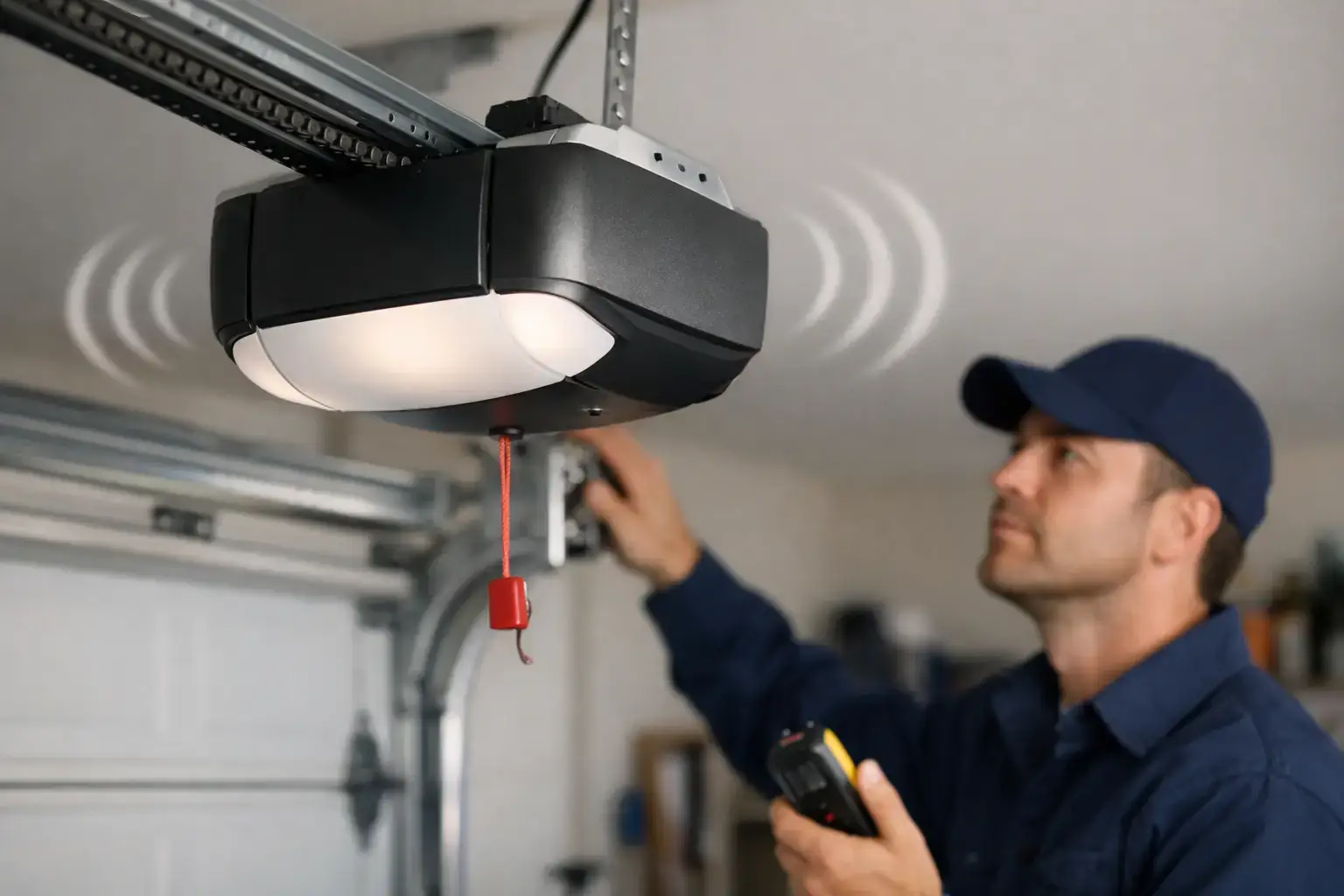
Most openers use an electric motor to pull or push a trolley, belt, chain, or screw drive. When you hear a hum, the motor may be energized but unable to turn properly. The resistance could be inside the opener, in the drive rail, or in the garage door itself.
A garage door is heavy, and the opener is not designed to do all the lifting. Springs counterbalance the door’s weight. If a spring breaks, cables come off, rollers bind, or the tracks become damaged, the opener may strain and hum instead of moving the door. This is why a humming opener should always be treated as a full door-system concern, not just an opener problem.
The door is binding or too heavy
A door that is stuck in the tracks, frozen to the floor, or badly out of balance can overload an opener. Massachusetts winters make this especially common. Ice, packed snow, road salt, and a hardened bottom seal can hold the door in place. A warped track, worn roller, or bent hinge can also create enough resistance to stop movement.
If the door feels unusually heavy when operated manually, the springs may have lost tension or broken. A broken torsion spring may leave a visible gap in the coil above the door. Extension springs, located along the horizontal tracks, can also break or come loose. Do not attempt to adjust or replace either type yourself. Springs are under extreme tension and require proper tools and training.
A stripped gear inside the opener
Many residential openers contain a plastic drive gear that transfers motor power to the sprocket or drive assembly. Over time, that gear can wear down, especially when the door has been operating out of balance. The motor may hum, the opener light may come on, and you may hear a grinding sound, but the chain, belt, or trolley does not move.
A stripped gear is usually repairable on an otherwise sound opener. However, replacing the gear without correcting the underlying door balance problem can lead to the same failure again. A technician should inspect the springs, rollers, tracks, and door weight before deciding whether a gear repair makes sense.
The capacitor or motor has failed
The capacitor helps the motor start and run. When it weakens or fails, the motor may hum but lack the starting force needed to turn. In some cases, the motor may become hot, trip an internal thermal protector, or work intermittently before failing completely.
Motor problems are more common in older units and openers that have been repeatedly forced to lift an unbalanced door. Depending on the opener’s age, safety features, condition, and parts availability, repair may be practical or replacement may provide better long-term value.
A jammed chain, belt, screw, or trolley
Drive components can jam for several reasons. A chain may be too loose or damaged, a belt may slip, a screw drive may need lubrication, or the trolley may be caught in the rail. On some models, the trolley can disengage or break internally.
Do not lubricate every part you see with household oil. Too much of the wrong product can collect dirt and make the issue worse. Garage door tracks generally need to stay clean rather than heavily lubricated. Rollers, hinges, bearings, and certain drive systems need specific lubrication applied in the right amount.
What You Can Safely Check Before Calling
Start by standing clear of the door and keeping children, vehicles, and pets away from the area. If you smell burning insulation, see smoke, or hear a loud electrical buzz, unplug the opener if it is safe to reach the plug without going under the door. Then arrange service promptly.
For a basic check, make sure the opener is plugged in and the circuit breaker has not tripped. Look for ice, tools, storage items, or debris blocking the door’s path. Check whether the emergency release cord has been pulled. If it has, the opener may run while the trolley is disconnected from the door.
You can also test the door manually, but only when the door is fully closed. Pull the emergency release handle, then lift the door slowly from the bottom. A properly balanced door should move with reasonable effort and remain near the halfway point without crashing down or shooting upward. If it is very heavy, crooked, stuck, or difficult to control, stop immediately. That points to a door or spring issue that needs professional repair.
Do not manually test a door that is open, partly open, off its tracks, or supported only by the opener. Do not pull on cables, touch spring hardware, loosen brackets, or try to reset a cable drum. These are common injury points when a garage door system fails.
When a Humming Opener Needs Same-Day Service
A humming sound can become urgent when the garage door is your primary entry, your vehicle is trapped, or the door cannot close and secure the property. It also deserves prompt attention if the opener hums continuously, trips the breaker, gives off a burning smell, or causes the lights to dim.
Call for professional service right away when you notice a broken spring, loose cable, bent track, hanging door section, damaged rollers, or a door that moves unevenly. Continuing to operate the opener in these conditions can damage panels, bend the rail, or cause the door to come off track.
For commercial properties, a humming overhead door opener or operator can interrupt deliveries, tenant access, and site security. A quick diagnosis matters because commercial doors have heavier components, different operator systems, and safety requirements that should not be handled as a residential repair.
Repair or Replace the Garage Door Opener?
The best answer is not always replacement. A relatively new opener with a failed capacitor, worn gear, bad start component, or jammed trolley may be a good repair candidate. If the door itself is in good condition and properly balanced, a targeted repair can restore reliable operation without unnecessary expense.
Replacement may be the better choice when the opener is older, parts are discontinued, the motor has failed, or the unit lacks modern safety and security features. Newer openers can offer battery backup, quieter belt drives, smartphone control, improved lighting, and more dependable safety sensors. For homes with bedrooms above or beside the garage, a quiet belt-drive opener can be worth considering.
An in-person inspection helps separate a minor opener repair from a door-system problem. It also gives you a clear explanation of the work needed before repairs begin. Triple A Garage Doors Inc. provides upfront pricing and qualified, insured service for homeowners and businesses that need the door and opener checked together.
A humming opener is often the system’s way of telling you to stop and look closer. Turn off the opener if it is straining, keep the door area clear, and have the cause identified before one stuck door becomes a larger repair.
Leave A Comment