A garage door that will not open at 7 a.m., closes halfway, or suddenly starts grinding can disrupt far more than your routine. Effective garage door troubleshooting starts with recognizing the symptom, checking the few safe items within reach, and knowing when a heavy moving door needs professional attention. For Greater Boston homeowners and property managers, that distinction can prevent a small repair from becoming a safety issue or a full replacement.
Start Garage Door Troubleshooting With Safety
A typical residential garage door can weigh well over 100 pounds, and commercial overhead doors may weigh much more. Springs, cables, rollers, tracks, and opener systems work under significant tension. If a door is crooked, hanging from one cable, moving unpredictably, or has a visible broken spring, stop using it.
Do not pull, cut, loosen, or attempt to reset springs or cables yourself. A broken torsion spring can release stored force without warning, while a slipped cable can cause the door to fall or bind in the tracks. Keep children, vehicles, and employees away from the opening until the system is inspected.
If the door is stuck open and the property cannot be secured, or it is stuck closed and blocking essential access, treat the issue as urgent. This is especially true for businesses that depend on an overhead door for deliveries, equipment access, or building security.
1. Check Whether the Opener Has Power
When the garage door does not respond at all, begin with the opener rather than the door itself. Look for a light or display on the motor unit. Confirm that the opener is plugged into a working outlet and check whether a tripped circuit breaker or GFCI outlet has cut power.
If the wall button works but the remote does not, replace the remote battery first. A dead battery is simple, common, and easy to mistake for an opener failure. If neither control works but the opener has power, the issue could involve the wall control, wiring, logic board, or safety system.
Some openers also have a lock or vacation mode that disables remote operation. Check the wall control for a lock symbol or indicator light before assuming the opener needs replacement.
2. Look at the Safety Sensors Near the Floor
Modern garage door openers use two photo-eye sensors mounted close to the floor on either side of the opening. If the door starts down and immediately reverses, or refuses to close with the remote but closes while you hold the wall button, the sensors are a likely cause.
Make sure nothing is blocking the sensor path. Leaves, snow, storage items, tools, or a vehicle tire can interrupt the beam. Wipe each lens gently with a soft cloth, then look for a loose bracket or sensor that has been bumped out of alignment.
Most sensors show a small indicator light. A steady light usually means the sensors are aligned, while a blinking or unlit light can point to misalignment, a wiring issue, or a failed sensor. Massachusetts winters make this check particularly useful because moisture, road salt, and debris can affect the area around the door opening.
3. Inspect the Tracks and Rollers Without Touching Hardware
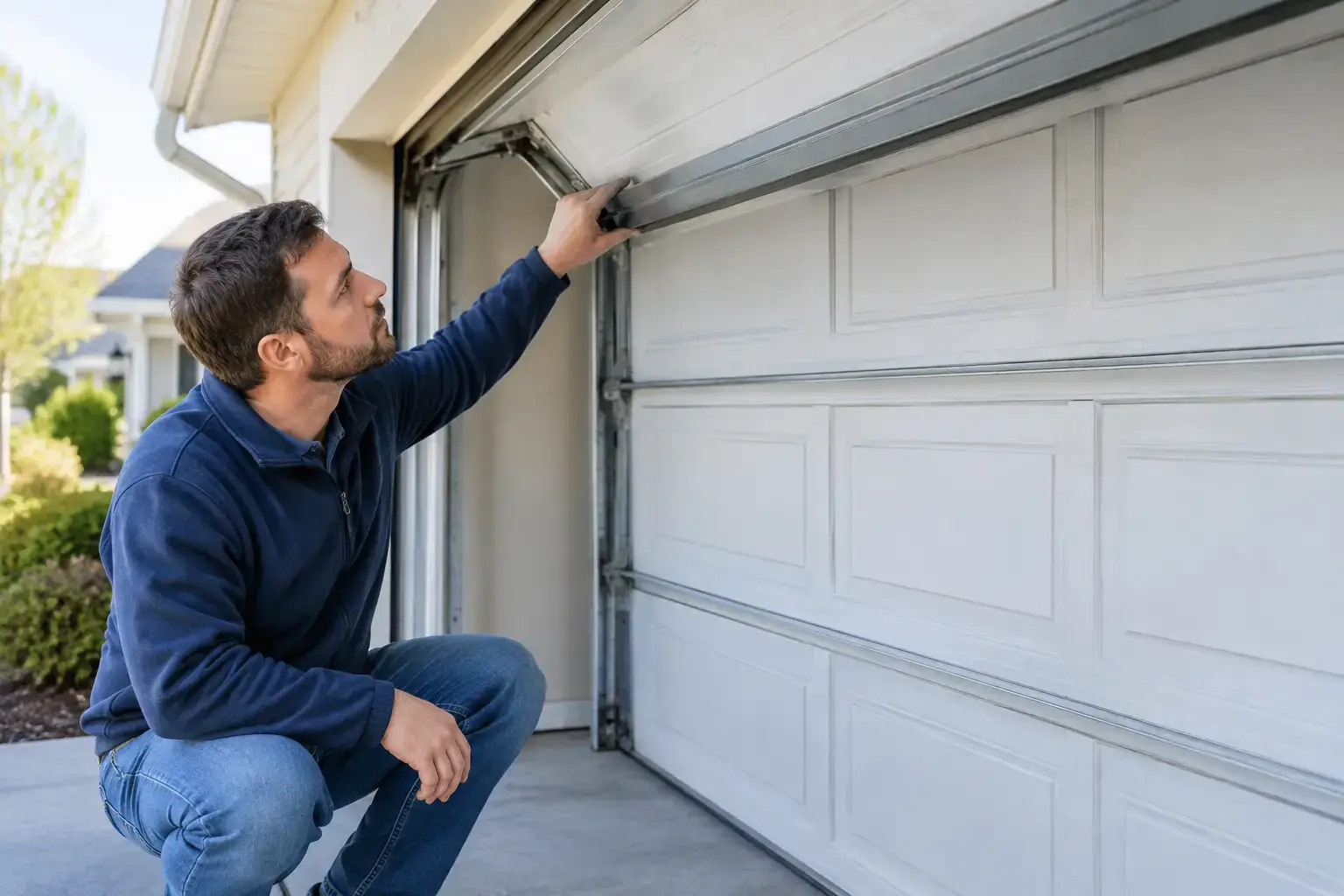
A noisy, jerky, or uneven door may have dirt in the tracks, worn rollers, or a track that has shifted. With the door fully closed, inspect the visible tracks for leaves, hardened grease, small objects, or obvious dents. Do not place your hands inside a track while the door is moving or attempt to bend track sections back into place.
Listen to the type of noise. A light squeak may be caused by dry rollers or hinges, while scraping metal, popping, or a grinding sound deserves a closer inspection. Steel rollers can become noisy as they wear. Nylon rollers are often quieter, but they can still crack or seize over time.
Tracks should not be heavily lubricated. Excess grease attracts dirt and can make operation worse. Garage door-specific lubricant belongs on appropriate moving parts such as rollers, hinges, and springs, but a door that is binding or shaking should be diagnosed before lubrication is used as a quick fix.
4. Check the Door Balance Only if It Is Safe
An opener is designed to guide a balanced door, not lift the full weight of one. If your door feels unusually heavy, opens only a few inches, or the opener strains and hums, a failed spring may be the reason.
A safe balance check is only appropriate when there are no broken springs, loose cables, bent tracks, or damaged panels. With the door closed, pull the emergency release cord to disconnect the opener. Lift the door manually to about halfway and carefully let go. A properly balanced door should stay near that position rather than dropping rapidly or flying upward.
If the door is too heavy to lift, does not stay in place, or moves unevenly, reconnecting the opener will not solve the underlying issue. Do not continue operating it. Spring adjustment and replacement require the right tools, training, and safety procedures.
5. Notice What the Door Is Telling You
The symptom often narrows down the likely repair. A door that moves a few inches and stops may have a broken spring, seized roller, damaged track, or opener force setting issue. A door that reverses before reaching the floor may have dirty sensors, an obstruction, or a problem with travel limits.
A loud bang from the garage followed by a door that will not lift is frequently a broken spring. You may see a visible gap in a torsion spring above the door, but do not touch it. A door that hangs lower on one side may have a cable issue and should remain closed if possible.
If the opener motor runs but the door does not move, the drive gear, trolley, chain, belt, or emergency release may be involved. If the door itself moves smoothly by hand but the opener struggles, a technician can determine whether repair or opener replacement makes better financial sense.
6. Check for Weather and Panel Damage
Cold temperatures can make metal components less forgiving and thicken old lubricant. Ice at the threshold can also prevent a door from closing properly. Clear ice and packed snow from the bottom seal area carefully, but do not chip at the door, tracks, or cables with a sharp tool.
A bent or cracked panel may look cosmetic, but the trade-off depends on where the damage is located. Minor surface damage may be repairable or limited to one replacement panel. Damage near hinges, reinforcement struts, or the bottom section can affect how the door travels and may place extra strain on the opener.
For commercial doors, impact damage from forklifts, delivery vehicles, or loading activity should be addressed promptly. Continued use can turn a panel repair into track, cable, or operator damage and create a security concern after business hours.
7. Know When a Service Call Is the Right Next Step
There is no advantage to forcing a garage door open when it is fighting the system. Call a qualified, insured technician when you see a broken spring, loose cable, bent track, damaged rollers, severe noise, a door that will not stay open, or an opener that repeatedly reverses after basic sensor checks.
A professional diagnosis should explain what failed, what repair is recommended, and whether replacement is truly necessary. Ask for clear, upfront pricing before work begins. For older doors and openers, the practical decision may depend on the condition of the whole system, the availability of replacement parts, safety features, and how reliably the door serves the property.
Triple A Garage Doors Inc. provides in-person estimates and repair recommendations for residential and commercial door systems throughout Waltham and nearby Greater Boston communities. The goal is straightforward: identify the actual problem, complete the repair safely, and restore dependable access without surprise charges.
A garage door rarely picks a convenient time to fail. If your checks point to anything beyond power, a remote battery, or sensor alignment, leave the heavy hardware alone and arrange service before the problem affects your safety, security, or daily access.
Leave A Comment