A garage door stuck halfway, fully open, or closed at the worst possible moment is more than an inconvenience. It can leave your car trapped, interrupt deliveries, expose your home or business, and create a real safety concern. Before trying to force it, take a moment to look for obvious signs of what went wrong. Garage doors are heavy systems under tension, and the safest next step depends on the symptom.
For homeowners and property managers across Greater Boston, a quick visual check can help explain the problem. It should not turn into a do-it-yourself repair involving springs, cables, or opener components. Those parts require the right tools, training, and safety procedures.
Why Is Your Garage Door Stuck?
A garage door moves through a coordinated system of tracks, rollers, cables, springs, brackets, and an opener. When one part fails or falls out of alignment, the door may stop moving, bind on one side, reverse unexpectedly, or hang unevenly.
The issue may be as simple as an object blocking the safety sensors. It can also be a broken spring, a slipped cable, a damaged roller, or an opener that no longer has the power to lift the door. The door’s position matters too. A door stuck closed can be inconvenient, but a door stuck open may leave your garage and belongings vulnerable until it is secured.
The opener may not be the real problem
Many people assume the opener has failed when the wall button or remote does nothing. Sometimes that is true. A tripped circuit breaker, dead remote battery, unplugged opener, or failed motor can stop normal operation.
But if you hear the opener running while the door does not move, the problem may be mechanical rather than electrical. A broken spring can prevent the opener from lifting the door. A stripped drive gear or disengaged trolley can also cause the motor to run without moving the door. Continuing to press the button will not fix those issues and may place more strain on the opener.
Broken springs are a common cause
Garage door springs carry much of the door’s weight. When a torsion spring breaks, you may hear a loud bang in the garage, notice a visible gap in the coil above the door, or find that the door will only lift a few inches before stopping. Extension springs, which run along the sides of the door, can also break or stretch out.
Never attempt to remove, wind, or replace a garage door spring yourself. Springs are under extreme tension and can cause serious injury or property damage if handled incorrectly. A qualified technician can identify the correct spring size, replace it safely, and check the rest of the system for wear.
Cables, rollers, and tracks can make the door bind
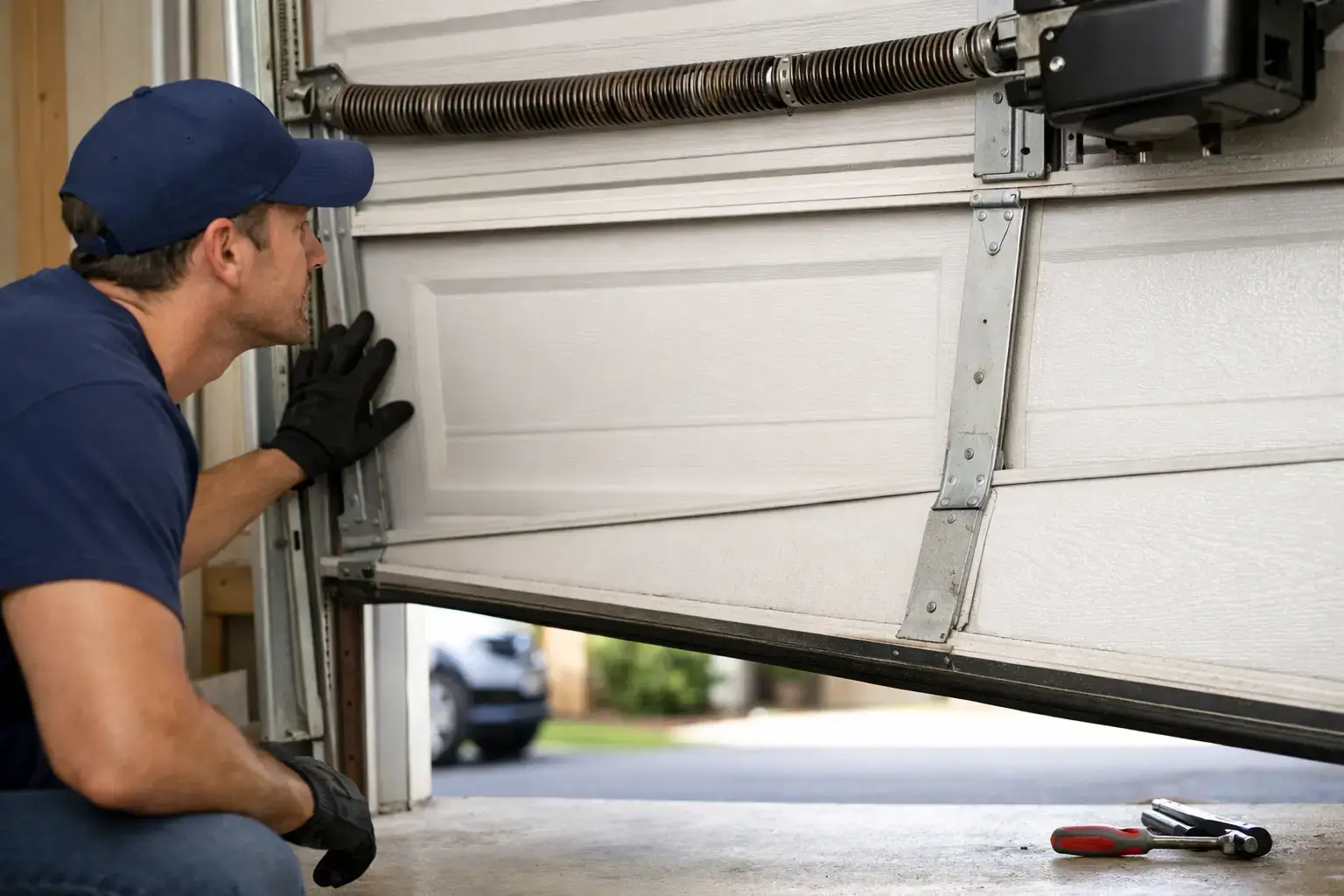
If one side of the garage door is lower than the other, a cable may have slipped off its drum or snapped. If the door is crooked, hanging from one track, or making a grinding sound, stop using it immediately. Trying to operate a door with a cable issue can pull rollers out of the track and turn a repair into a larger problem.
Bent tracks, loose brackets, damaged rollers, and debris in the track can also prevent smooth movement. Massachusetts weather adds another layer of wear. Road salt, moisture, freezing temperatures, and seasonal expansion can affect hardware, lubrication, and alignment over time.
Safe Checks When a Garage Door Is Stuck
Start with the controls and the area around the door. Confirm the opener is plugged in, check the breaker if there is no power, and try the wall button after replacing the remote battery if needed. If the door begins to move but quickly reverses, inspect the opening for boxes, tools, ice, or other objects in its path.
Next, look at the photo-eye safety sensors near the bottom of each track. Their lenses can become dirty, bumped, or misaligned. Wipe the lenses gently with a soft cloth and make sure nothing is blocking the beam. A steady indicator light generally suggests the sensors are aligned, while a blinking light can point to an alignment issue. Sensor behavior varies by opener model, so the owner’s manual can help with model-specific signals.
If the door is frozen to the ground, do not keep activating the opener. The opener can strain against the ice, and the bottom seal or internal components may be damaged. Use a safe method to clear loose ice around the threshold, but do not chip aggressively against the door or use open flame near the garage.
You can also visually inspect the tracks from a distance. Look for a broken spring, loose cable, bent rail, damaged hinge, or roller that has come out of place. Do not touch cables, spring hardware, or brackets at the bottom of the door. Those brackets are connected to high-tension cables.
What Not to Do With a Stuck Garage Door
A stuck door creates pressure to get moving quickly, especially when you need to leave for work or receive a delivery. A few common shortcuts can make the situation less safe.
Do not force the door by hand if it feels heavy, crooked, or jammed. A balanced door should not feel like dead weight. If it does, a spring may be broken. Do not pull the emergency release while the door is open unless you understand how the door will be secured. Releasing an open door with a failed spring can allow it to fall suddenly.
Avoid loosening bolts on tracks, cable drums, spring brackets, or the bottom fixtures of the door. These are not adjustment points for a quick repair. Do not ask someone to hold a damaged door in place while another person works around it. Keep children, pets, vehicles, and employees clear of the opening until the system is stable.
If your vehicle is trapped inside, it may be tempting to disconnect the opener and lift the door. That can be appropriate only when the door is fully closed, the springs and cables appear intact, and the door lifts smoothly without unusual weight or binding. When there is any doubt, wait for professional service.
When to Call for Garage Door Repair Right Away
Some symptoms call for immediate professional attention: a door that is off track, a visible broken spring or cable, a door hanging unevenly, loud popping or grinding sounds, or an opener running while the door stays still. Call promptly if the door is stuck open and you cannot secure the property, particularly at a commercial site where inventory, equipment, or access control is involved.
A trained technician should inspect more than the visible failure. A broken spring, for example, may be part of a larger wear pattern involving rollers, bearings, cables, or the opener’s force settings. The right repair restores operation while helping prevent the next breakdown.
Triple A Garage Doors Inc. provides in-person assessments, upfront pricing, and qualified, insured service for residential and commercial doors throughout Waltham and nearby Greater Boston communities. Whether the repair is a failed spring, damaged cable, malfunctioning opener, or a door that has come off track, the goal is to get the system back to smooth, reliable operation safely.
Prevent the Next Stuck Door
Most garage door failures give warning signs before the door stops completely. Slower movement, squeaking, shaking, a growing gap at the bottom seal, intermittent opener response, and a door that no longer sits level are all worth addressing early.
Schedule periodic professional maintenance, especially for doors used multiple times a day. A proper tune-up includes checking spring balance, cable condition, roller wear, track alignment, safety sensors, hardware, and opener settings. Lubrication can reduce noise and friction, but it will not correct a broken spring, worn cable, or bent track.
For commercial properties, preventive inspections are particularly useful because a stuck overhead door can delay shipments, block vehicles, and affect tenant or employee access. Repairing worn components before failure is often less disruptive than responding to an emergency shutdown.
A garage door should open and close with controlled, even movement. If yours suddenly will not move, resist the urge to force it. A careful inspection, a secure area, and prompt repair will protect the people, vehicles, and property on the other side of the door.
Leave A Comment