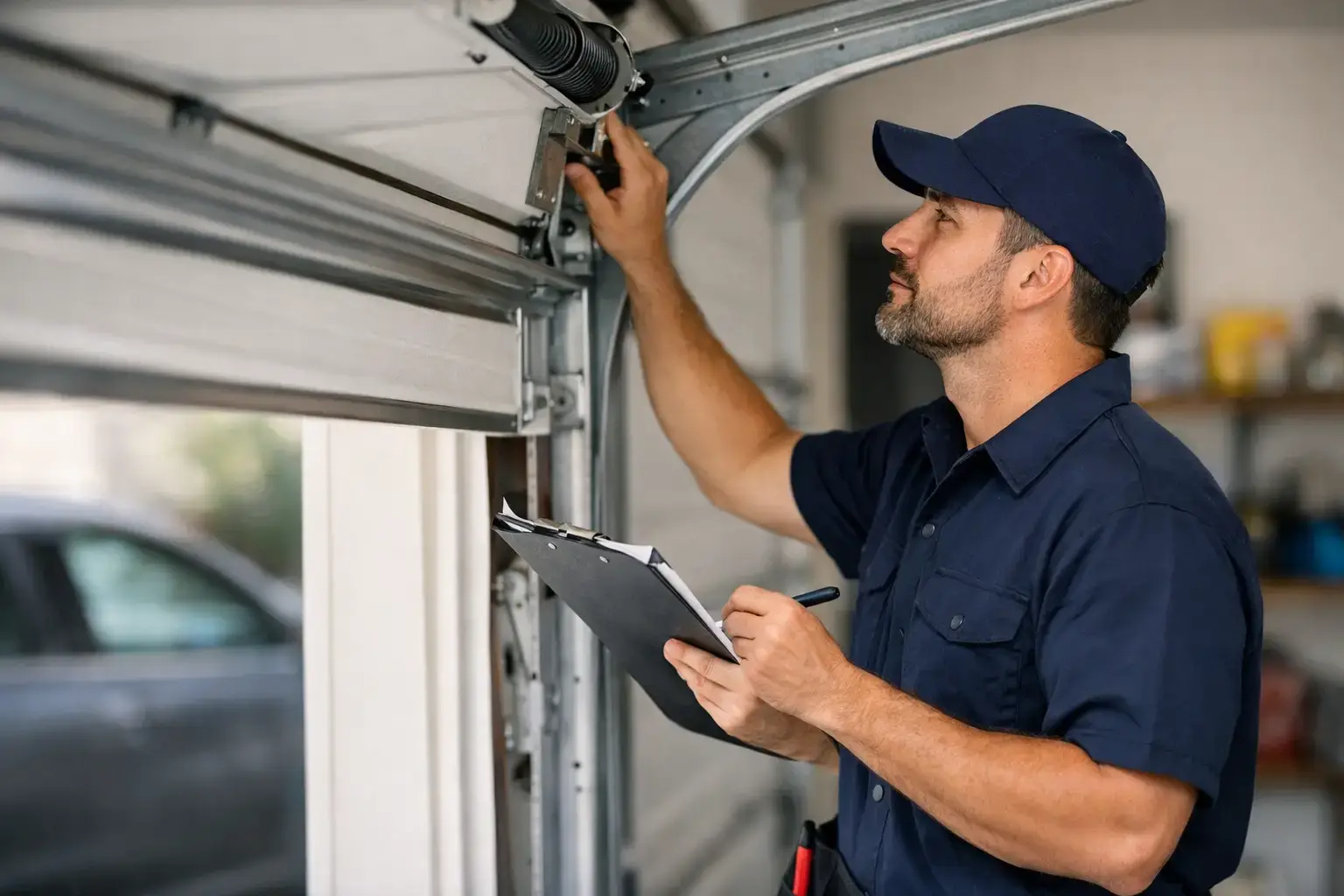
A garage door can weigh several hundred pounds, move multiple times a day, and still look fine from the driveway while a critical part is wearing out. A professional garage door safety inspection service looks beyond appearance to find problems that can affect your family’s safety, your property’s security, and the door’s reliable operation.
For homeowners and businesses across Greater Boston, inspections are especially useful before a breakdown forces an urgent repair. They give you a clear picture of the door’s condition, what needs attention now, and what can be monitored over time. That means fewer surprises, safer operation, and a more informed repair decision.
What a Garage Door Safety Inspection Service Checks
A safety inspection is more than applying lubricant or listening for a noisy roller. A qualified technician checks the complete system because every moving part affects how the door opens, closes, and stays in place.
Springs, cables, and hardware
Garage door springs carry most of the door’s weight. When they weaken, break, or lose proper tension, the opener may strain and the door may become difficult or dangerous to operate. Extension springs should have safety cables installed, while torsion springs need to be checked for wear, correct balance, and secure mounting.
Cables deserve equal attention. Frayed cables, loose drums, corrosion, or a cable that has slipped off its track can lead to a crooked or stuck door. Technicians also inspect brackets, hinges, tracks, rollers, and fasteners for looseness, wear, damage, or misalignment. These smaller components often create the grinding, popping, rattling, or uneven movement owners notice first.
A door with a broken spring or damaged cable should not be handled as a DIY project. These parts are under significant tension. Professional service protects you from injury and prevents further damage to the door and opener.
Door balance and travel
A properly balanced garage door should move smoothly and stay in place when opened partway manually, with the opener disconnected. If the door drops, shoots upward, or feels unusually heavy, the spring system may need adjustment or replacement.
Balance matters because an opener is designed to guide a door, not lift its full weight. Continuing to use an unbalanced door can wear out gears, motors, belts, chains, and other opener parts sooner than expected. During an inspection, the technician checks whether the door travels evenly, stays within the tracks, and stops in the correct positions.
Opener, photo eyes, and auto-reverse protection
Modern openers include safety features that need regular testing. Photo eyes near the bottom of the tracks should stop the door from closing if an object crosses the beam. Dirty lenses, loose wiring, sun exposure, or misalignment can cause the system to fail or make the door reverse unexpectedly.
The auto-reverse setting also needs testing. When the closing door meets resistance, it should reverse direction. If it does not, the door can create a serious hazard for children, pets, people, vehicles, or stored belongings. An inspection can identify whether the issue is related to force settings, the opener itself, the door’s balance, or another mechanical problem.
The technician may also review the wall control, remote controls, keypad, manual release, backup battery, and opener mounting. A secure opener installation and a working manual release are particularly valuable during power outages or emergency access situations.
Signs You Should Schedule an Inspection Soon
You do not need to wait for a door to stop working completely. In fact, the best time to schedule service is when the system is still operating but showing a change in behavior.
Call for an inspection if the door shakes, moves unevenly, makes new grinding or banging sounds, reverses for no clear reason, or leaves a gap when closed. A door that opens slowly, feels heavy when operated manually, or has visible fraying on a cable needs prompt attention. The same applies if you see bent tracks, cracked panels near hinges, loose brackets, or a spring with a visible gap.
For property managers and commercial facilities, warning signs can also include a door that delays deliveries, will not close securely after business hours, or requires employees to force it into position. Overhead doors protect inventory, equipment, and access points. A small operating issue can quickly become a security and workflow problem.
If a spring breaks, a cable comes off, or the door is stuck open or partly open, stop using it and arrange service right away. Avoid pulling on cables, loosening hardware, or attempting to force the door shut. Keeping people clear of the opening is the safer choice until a technician can evaluate it.
How Often Should a Garage Door Be Inspected?
For most residential doors, a professional inspection once a year is a practical baseline. Homes with multiple drivers, frequent daily use, heavy wood doors, older hardware, or Massachusetts weather exposure may benefit from more frequent checks. Seasonal temperature changes can affect lubrication, metal components, weather seals, and door movement.
Commercial doors generally need a schedule based on usage. A warehouse, loading area, auto shop, multifamily garage, or retail facility may operate an overhead door dozens of times per day. High-cycle doors usually require preventive maintenance more often than a typical residential door, sometimes quarterly or semiannually.
There is no one schedule that fits every system. The age of the door, its weight, the type of spring system, opener condition, usage level, and prior repair history all matter. A technician can recommend a maintenance interval based on what they see rather than selling a one-size-fits-all plan.
Inspection Versus a Tune-Up: What Is the Difference?
The two services overlap, but they are not exactly the same. An inspection focuses on identifying safety concerns, wear, and parts that are no longer performing correctly. A tune-up typically includes preventive adjustments and maintenance, such as lubrication, tightening hardware, checking balance, aligning sensors, and confirming safe operation.
Sometimes an inspection finds that a tune-up is all the door needs. Other times, it reveals a worn spring, damaged roller, failing opener gear, cracked hinge, or unsafe cable condition that should be repaired first. Clear findings matter because they let you approve work based on the actual condition of your door.
At Triple A Garage Doors Inc., the goal is to explain the issue in plain language, provide an in-person assessment, and offer upfront pricing before repair work begins. You should know what is urgent, what is recommended, and why before making a decision.
What to Expect During the Appointment
A thorough appointment starts with the symptoms you have noticed. Let the technician know whether the door is noisy, unreliable in cold weather, slow to open, reversing unexpectedly, or behaving differently after a power outage or vehicle impact. Those details help narrow down the cause quickly.
The technician will operate the door, inspect the hardware and opener system, test safety features, and assess the door’s balance and alignment. If repairs are needed, ask which component caused the issue, whether related parts are affected, and how soon the work should be completed. A dependable service provider should be comfortable showing you the concern and explaining the repair options without pressure or surprise charges.
For commercial properties, it also helps to discuss operating hours, access restrictions, delivery schedules, and whether the door is tied to security or tenant access. Planning service around the facility’s needs can reduce disruption while keeping the opening safe and functional.
Simple Checks Owners Can Do Between Visits
You can spot obvious changes without working on high-tension components. Once a month, look at the cables, rollers, tracks, and photo eyes from a safe distance. Keep the photo-eye lenses clean, make sure stored items are clear of the door path, and listen for sounds that are new or getting louder.
Test the photo-eye reversal feature by placing an object in the sensor path while the door is closing. The door should reverse rather than continue down. Do not place hands, feet, or anything valuable beneath a moving door. If the system fails the test, stop using the automatic close function until it is repaired.
Do not adjust springs, cables, bottom brackets, or opener force settings unless you have the training and proper tools. A quick adjustment that seems harmless can make the system less safe or hide a mechanical issue that needs professional attention.
A garage door should protect your home or business without demanding daily thought. Scheduling an inspection when the first warning signs appear gives you the best chance to keep it that way – smooth, secure, and ready to work when you need it.
Leave A Comment