
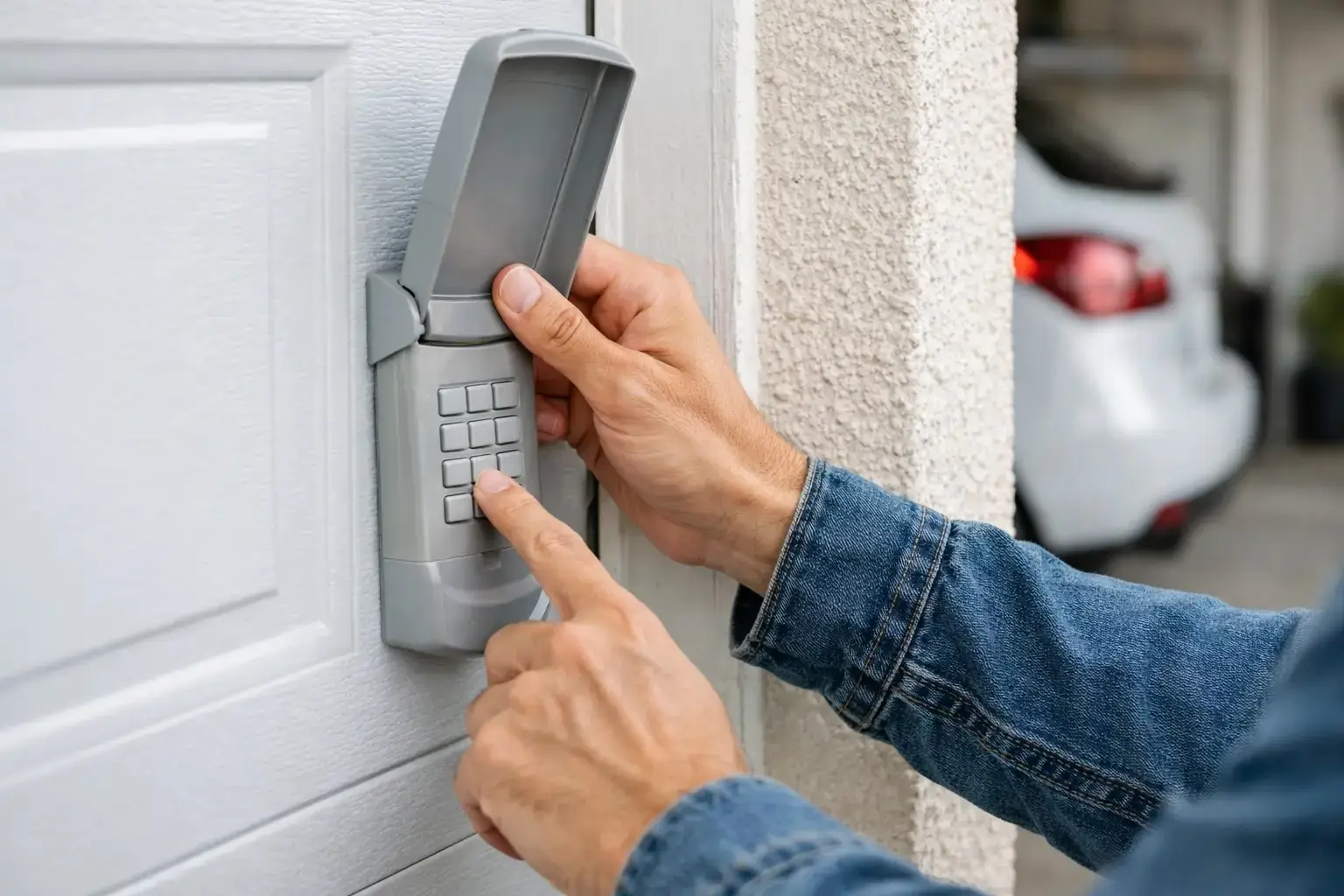
A garage door keypad not working can turn an ordinary morning into a real access problem. You may be locked out without your keys, unable to secure the garage after leaving, or stuck relying on a remote that only works from inside the car. The good news is that many keypad issues come down to a small, fixable cause. The key is knowing which checks are safe to handle yourself and when the problem points to the opener, wiring, or a failing door system.
Start With the Simple Checks
Before assuming the keypad has failed, make sure the garage door itself is capable of moving. Try the wall button inside the garage and a handheld remote, if you have one. If neither works, the keypad is probably not the main issue. The opener may have lost power, the door may be locked, or a mechanical problem could be preventing operation.
If the wall control works but the keypad does not, look at the keypad display or buttons. A dim screen, no backlight, or a keypad that only responds occasionally often means the battery is weak. Replace the battery with the exact type listed inside the keypad cover, then test the code again.
Cold Massachusetts weather can make an already weak battery fail without warning. Moisture, road salt carried into the garage, and years of temperature changes can also affect outdoor keypads. If the keypad works after a new battery but becomes unreliable again soon after, the unit may have corrosion or internal damage.
Make Sure the Door Is Not Manually Locked
Many homeowners overlook the manual slide lock on the inside of the garage door. If it is engaged, the opener may hum or attempt to move, but the door will not open. A keypad can be working perfectly while the door remains locked in place.
Check the interior lock only when you are safely inside the garage and the door is fully closed. Do not force the opener against a locked door. Repeated attempts can strain the opener, damage gears, or make an existing door problem worse.
Check Your Code Before Reprogramming the Keypad
A keypad may stop responding because the access code was entered incorrectly too many times, changed accidentally, or lost during a power interruption. Try entering the code slowly and firmly. Worn buttons can fail to register, especially on older units where frequently used numbers have become less responsive.
If the keypad lights up but the opener does not react, stand close to the garage door and try again. A keypad is a small radio transmitter, and its range can be reduced by a weak battery, interference, or obstruction around the opener antenna.
Avoid repeatedly guessing codes. Many systems have temporary lockout features, and repeated attempts can make troubleshooting harder. If you know the correct code but it no longer operates the door, reprogramming may be the next reasonable step.
When Reprogramming Makes Sense
Most modern garage door openers have a learn or program button on the motor unit. Reprogramming generally involves pressing that button and entering a new or existing PIN on the keypad within a short window. The exact sequence varies by opener brand and model.
Reprogramming is useful after a power outage, a battery replacement, a new opener installation, or an accidental reset. It is also a smart security step after moving into a home, changing tenants at a rental property, or losing a remote.
Use the opener manual for your specific model rather than relying on a generic button sequence. Pressing and holding the learn button too long on some openers can erase every remote and keypad from memory. That is not a dangerous mistake, but it can leave everyone in the household without easy access until each device is programmed again.
Why a Garage Door Keypad May Still Not Work
If you installed a fresh battery, confirmed the door works from the wall button, and reprogrammed the keypad with no success, the problem may be more than a code issue. A keypad has a limited service life. Outdoor units are exposed to rain, sun, freezing temperatures, and constant use, so eventually the buttons, circuit board, or contacts can fail.
Interference is another possibility. LED bulbs in or near the opener can interfere with older radio receivers, as can certain security devices and nearby electronics. If a remote and keypad both work inconsistently, an opener receiver or interference issue is more likely than a failed keypad alone.
A damaged or disconnected opener antenna can also reduce the signal range. The antenna should hang down freely from the opener motor unit. Do not pull, cut, or modify it. If it is damaged, a qualified technician can determine whether the receiver or opener needs repair or replacement.
Do Not Ignore Signs of a Door Problem
A keypad problem can sometimes expose a larger garage door issue. If the keypad activates the opener but the door only moves a few inches, reverses, shakes, grinds, or hangs unevenly, stop using the door until it is inspected.
The opener is designed to move a balanced door. It is not meant to lift a door with a broken spring, frayed cable, bent track, damaged roller, or seized bearing. Continuing to run the opener can burn out the motor or cause additional damage.
Never attempt to adjust or replace garage door springs or cables yourself. These parts are under extreme tension and can cause serious injury if they release unexpectedly. Keep people and vehicles clear of the door, use another entrance if possible, and arrange professional service.
Check the Safety Sensors If the Door Will Not Close
If the keypad opens the door but will not close it, inspect the photo-eye safety sensors near the bottom of the tracks. They should face each other with a clear path between them. Remove leaves, snow, storage items, or cobwebs that may block the beam, and gently wipe the lenses with a soft cloth.
Look for indicator lights on the sensors. A blinking or unlit sensor often signals misalignment, a loose wire, or a failed sensor. You can check for obvious obstructions, but avoid trying to bypass the safety system. The sensors are there to prevent the door from closing on a person, pet, vehicle, or object.
When Replacing the Keypad Is the Best Answer
Replacing the keypad is often more practical than repairing an old unit, particularly when buttons are cracked, the housing is weather-damaged, or the keypad will not hold programming after a new battery. A compatible wireless keypad can restore dependable exterior access without replacing a functioning opener.
Compatibility matters. Not every universal keypad works with every opener, and older openers may require a specific accessory or a receiver upgrade. A technician can identify the opener model, confirm the correct keypad, program it properly, and test the door’s safety features at the same visit.
For homeowners with multiple users, a new keypad may also offer useful features such as temporary PINs for contractors, cleaners, or visiting family. That convenience should still be balanced with security. Choose a code that is not tied to your house number, address, or an easy-to-guess date, and change it when access needs change.
Get Help When Access or Security Cannot Wait
Call for service promptly if you are locked out, the garage will not close, the keypad triggers erratic door movement, or the opener makes noise without moving the door. These situations can affect both home security and safe access to vehicles, tools, and stored belongings.
Triple A Garage Doors Inc. provides hands-on diagnosis for keypad, opener, and garage door problems throughout Waltham and Greater Boston. A qualified technician can determine whether you need a battery, programming correction, replacement keypad, opener repair, or a repair to the door itself. Clear diagnosis matters because replacing parts without finding the underlying issue can add cost without solving the problem.
A keypad should make getting into your garage easier, not leave you wondering whether the door will open or secure properly. If the basic checks do not restore reliable operation, the safest next step is a professional inspection that gets the whole system working as it should.
Leave A Comment