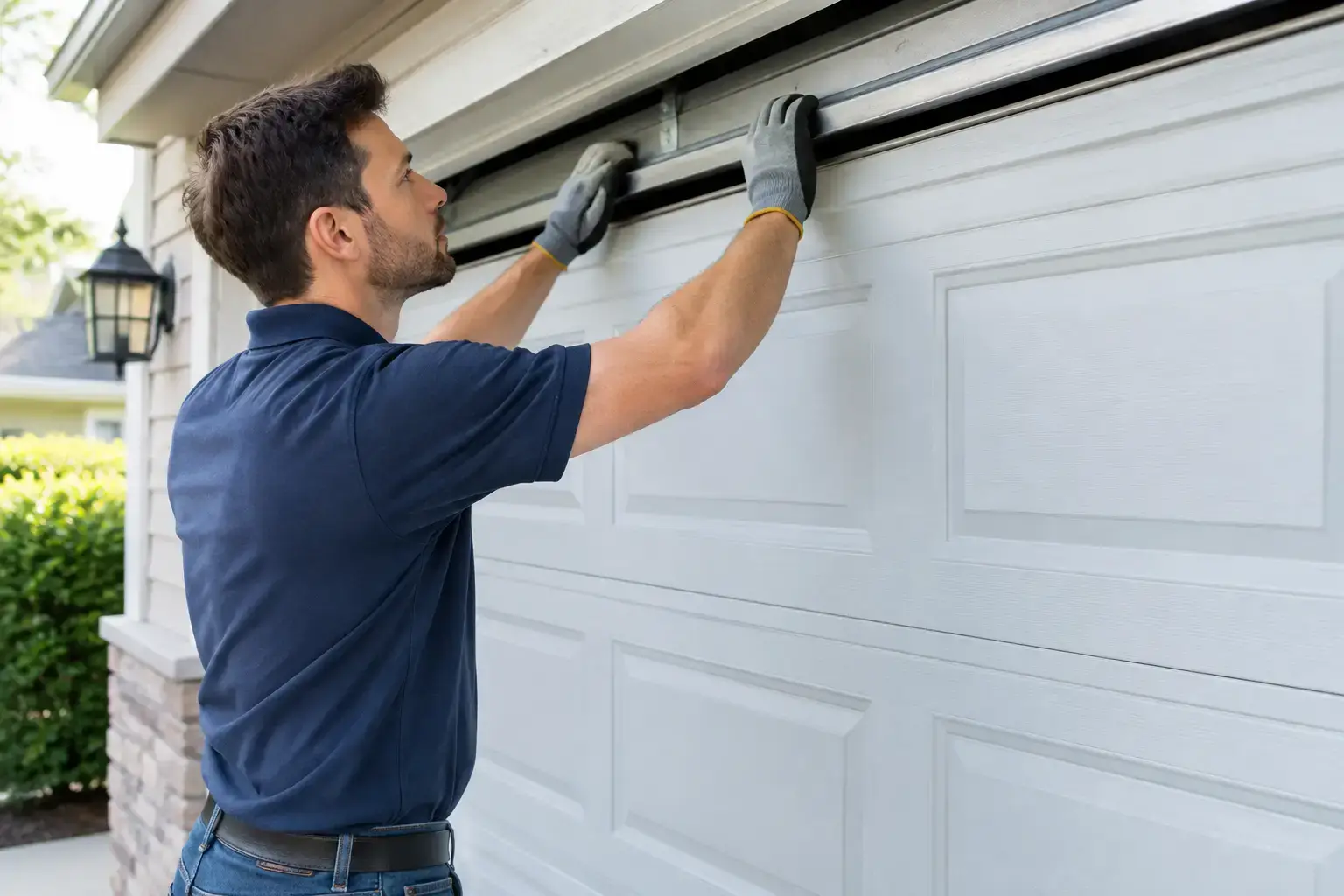
A garage door that stops halfway, will not open, or refuses to close can leave your car trapped and your home unsecured. Before you try to fix a stuck garage door, take a moment to look at what the door is doing – and what it is not doing. That pattern often points to the problem. It also helps you avoid turning a repairable issue into a damaged door, broken opener, or serious injury.
Garage doors are heavy systems under tension. A minor obstruction may be safe to clear yourself. A broken spring, loose cable, bent track, or door that has come off its track is not a do-it-yourself repair. The safest approach is to rule out the simple causes, stop using the door if anything looks unsafe, and arrange service when the system needs hands-on repair.
Start With a Safe Check Before You Fix a Stuck Garage Door
Do not force the door with the wall button, remote, or your hands. Repeatedly running an opener against a jammed door can strip gears, burn out the motor, or pull the door farther out of alignment. If the door is partly open and looks unstable, keep people, pets, and vehicles away from the opening.
First, check whether the opener has power. Make sure it is plugged in, check the breaker, and look for a tripped GFCI outlet if the garage shares one. Replace the remote battery if the wall control works but the remote does not. These checks take only a few minutes and can eliminate an easy cause.
Next, look along both sides of the door from a safe distance. Check for boxes, tools, ice buildup, packed snow, leaves, or other objects blocking the door’s path. In Massachusetts winters, ice can freeze the bottom seal to the concrete or build up in the track area. Clear loose debris carefully, but do not chip ice with sharp tools near the door, weather seal, cables, or tracks.
If you have an automatic door, wipe the photo-eye lenses near the bottom of each track. The two sensors need a clear, aligned path to let the door close. A blinking sensor light, a door that starts down and immediately reverses, or a door that only closes while you hold the wall button can all point to a sensor issue.
What the Door’s Symptoms Can Tell You
A stuck garage door is not one single repair. The way it moves, sounds, or hangs can help narrow down the cause.
The Door Will Not Open and the Opener Hums
When you hear the opener hum but the door does not move, the door may be too heavy for the opener to lift. A broken torsion spring is a common reason. You may notice a visible gap in the spring above the door, but not every broken spring is easy to see.
Do not pull the emergency release and try to lift a door you suspect has a broken spring. Without spring assistance, a double garage door can weigh several hundred pounds. The opener is not designed to compensate for that weight, and neither is one person trying to lift from the bottom.
The Door Opens a Few Inches and Stops
A door that moves only slightly may have a broken spring, a seized roller, a damaged track, or an opener force-setting problem. Listen for grinding, scraping, popping, or a loud bang that occurred before the door stopped working. A bang often indicates a failed spring, while grinding may suggest an opener or roller issue.
You can inspect the visible rollers and tracks for obvious dirt or an object in the way. Do not loosen track brackets, roller stems, cable drums, or any bolts near the spring assembly. Those parts can be under significant tension.
The Door Is Crooked or Has a Loose Cable
Stop immediately if one side of the door sits higher than the other, a cable is hanging loose, or the door is visibly off its track. These are not problems to correct by pushing the door back into place. A door that is crooked can shift suddenly, and a loose cable may indicate a failed spring, damaged drum, or track issue.
Avoid using the opener again. Leave the door in its current position if it is stable, keep the area clear, and call a qualified technician for service. If the door is stuck open and the garage cannot be secured, treat it as an urgent repair.
The Door Will Not Close All the Way
If the door travels down, touches the floor, and reverses, start with the photo eyes and the area beneath the door. Clean the sensors, remove obstructions, and make sure the sensor brackets have not been bumped out of alignment.
A door that reverses even with clear sensors may need limit or force adjustment, but these settings should be approached carefully. Increasing the closing force too far can create a safety hazard. A technician can determine whether the issue is an adjustment, binding hardware, a damaged bottom seal, or an opener problem.
When a Manual Release Can Help
The red emergency-release cord disconnects the door from the opener so the door can be moved manually. It can be useful during a power outage, but only when the door is fully closed and you do not suspect a spring, cable, or track failure.
With the door closed, pull the release cord and lift the door slowly from the bottom. A properly balanced door should move with moderate effort and stay around the halfway point. If it feels extremely heavy, slams shut, catches, or will not stay open, lower it carefully if you can do so safely and stop there. That behavior usually means the door needs professional adjustment or repair.
Never pull the emergency release when the door is open or partly open unless a trained technician has instructed you to do so. Disconnecting an unsupported door can allow it to fall quickly.
Repairs That Should Stay With a Professional
Some garage door problems look simple from the outside but involve stored energy, heavy components, and precise alignment. Spring replacement, cable repair, track realignment, roller replacement near cables, and door-off-track repairs should be handled by an insured garage door professional.
The same applies to opener repairs when the door itself is binding or unbalanced. Replacing an opener without correcting a heavy or damaged door can shorten the life of the new unit. A proper service visit checks the entire system: springs, cables, drums, rollers, hinges, tracks, bearings, safety sensors, opener settings, and balance.
For homeowners and property managers in Waltham and Greater Boston, Triple A Garage Doors Inc. provides in-person assessments and clear, upfront repair recommendations. That matters when a stuck door could be caused by more than one issue. The right repair should address the source of the problem, not just get the door moving for the day.
Prevent Another Stuck Door
Most garage doors give warning signs before they stop completely. New squeaking, jerky movement, a door that feels heavier than usual, delayed opening, or a remote that works only sometimes are all worth addressing early. Waiting can turn a worn roller or weakening spring into a door that will not operate at all.
Keep the tracks free of debris and inspect the photo eyes occasionally. Do not grease the tracks heavily, since excess lubricant collects dirt and can interfere with roller movement. Use a garage-door-rated lubricant on moving metal parts when appropriate, and schedule a professional tune-up to check balance, hardware, spring condition, and safety reversal features.
For commercial doors, preventive maintenance is even more valuable. A stuck overhead door can interrupt deliveries, compromise building security, and create avoidable delays for tenants or employees. Regular inspections help identify worn parts before daily operation is affected.
A garage door should open smoothly, close securely, and operate without strain. If yours is stuck, do the safe checks, resist the urge to force it, and get help promptly when the door is heavy, crooked, noisy, or off track. Fast attention protects your door, your opener, and the people who use the garage every day.
Leave A Comment