A garage door opener can be powerful enough to lift a heavy door and still be the wrong fit for your home. When comparing belt drive versus chain drive openers, the biggest difference is usually not lifting power. It is how much noise the opener makes, where your garage sits in relation to living space, and what you expect from the system over time.
For a detached garage, a dependable chain-drive opener may be an excellent value. For a garage beneath a bedroom, home office, or family room, the quieter operation of a belt-drive unit can make a noticeable difference every day. The right answer depends on the door, the building, and your priorities.
Belt Drive Versus Chain Drive: The Main Difference
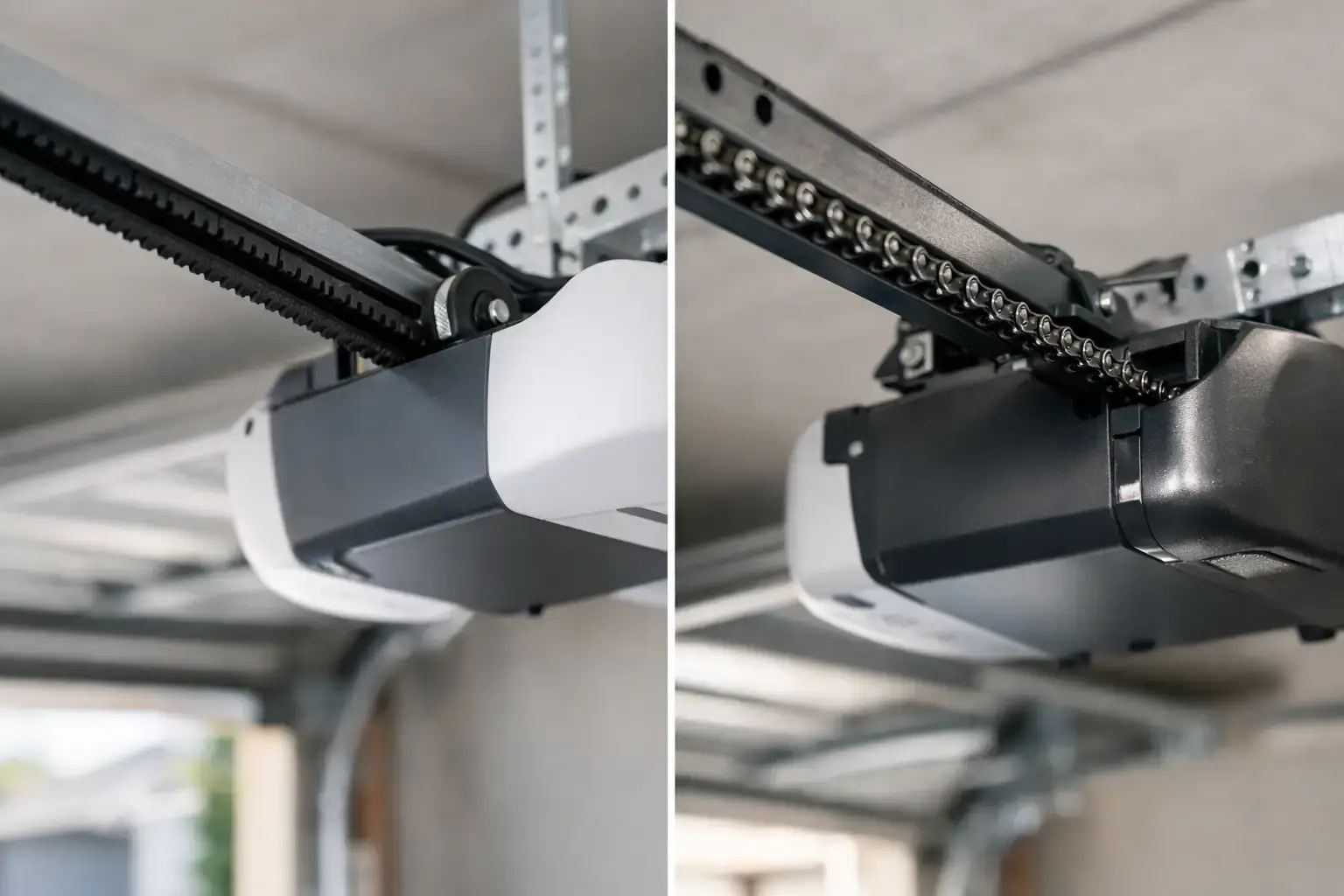
Both types use a rail and trolley system to move the garage door. The opener motor turns a drive mechanism that pulls or pushes the trolley along the rail, opening and closing the door. The difference is in that drive mechanism.
A chain-drive opener uses a metal chain, similar in appearance to a bicycle chain. It is a time-tested design that is known for strength and durability. A belt-drive opener uses a reinforced rubber belt, commonly built with steel or fiberglass cords inside. The belt performs the same job with less metal-on-metal contact.
Neither system should be selected based on the drive alone. A worn-out door with dry rollers, loose hardware, damaged hinges, or an unbalanced spring system will be noisy regardless of the opener installed. Before replacing an opener, a qualified technician should inspect the entire door system and make sure the door moves smoothly by hand.
Noise Level: Where Belt Drive Has an Edge
If a garage is attached to the house, noise is often the deciding factor. Belt-drive openers are generally quieter and produce less vibration than chain-drive units. You will still hear the door move along its tracks, but the opener itself tends to run with a smoother, lower sound.
That matters most in homes where the garage shares a wall with a bedroom, nursery, living room, or home office. In many Greater Boston homes, garages are close to finished living areas or located below bedrooms. A loud opener can become an everyday annoyance, especially for early departures, late arrivals, or households with light sleepers.
Chain-drive openers make more mechanical noise because the chain travels along the rail. A properly installed and lubricated chain drive does not have to be excessively loud. However, it usually will not match the quiet operation of a belt drive.
Noise can also be a warning sign. Sudden grinding, rattling, popping, or banging may point to a loose chain, worn sprocket, damaged rollers, failing hinges, or a door that is out of balance. Do not assume a noisy opener needs replacement until the door and hardware have been checked.
Cost: Chain Drive Is Often the Budget-Friendly Choice
Chain-drive openers usually cost less than comparable belt-drive models. For a detached garage, rental property, storage building, or commercial-style application where sound is less of a concern, that lower upfront cost can make a chain drive the practical choice.
Belt-drive models typically carry a higher purchase price. The added cost often pays for quieter operation, reduced vibration, and, depending on the model, upgraded features such as battery backup, app control, integrated camera options, or stronger lighting. Those features are not exclusive to belt drives, but many premium residential opener packages use belt systems.
It is worth looking beyond the opener price alone. Installation quality, the door’s condition, safety sensor alignment, proper force settings, and spring balance all affect performance. An inexpensive opener installed on an unbalanced door can wear out early and create avoidable repair costs.
Strength and Door Weight: Do Not Judge by the Chain Alone
Homeowners sometimes assume chain drive is automatically stronger. Chain-drive openers have a reputation for handling heavier doors, and they remain a solid option for many oversized or heavy garage doors. But a modern belt-drive opener can also handle most standard residential doors, including insulated steel doors and many wood doors, when it is correctly sized.
The motor rating, rail design, door weight, door height, and spring balance are more important than the fact that the opener uses a belt or chain. A properly balanced garage door should stay near the halfway point when disconnected from the opener. If it drops quickly, rises on its own, or feels difficult to lift, the spring system may need service.
The opener is not designed to compensate for broken springs or a heavy, poorly balanced door. Continuing to operate it under those conditions can strain the motor, damage the gear assembly, bend the rail, or create a safety issue. Garage door springs and cables are under high tension and should be handled by trained technicians.
For extra-wide doors, tall doors, solid wood doors, or doors with added insulation and glass, an in-person assessment is the safest way to match the opener to the actual load. It also helps identify whether the existing tracks, rollers, and reinforcement brackets are suitable for the new system.
Maintenance and Expected Service Needs
Both belt-drive and chain-drive openers need basic attention, but neither should require constant maintenance. A chain may need periodic lubrication according to the manufacturer’s instructions, and it can need adjustment if it becomes too loose or tight. A chain that sags, slaps the rail, or makes a new rattling sound should be inspected.
A belt does not require the same lubrication. It should still be checked for wear, cracking, fraying, or improper tension. Belts are durable, but they are not permanent. Replacing a worn belt before it fails can prevent the door from becoming stuck open or closed.
For either opener type, routine garage door maintenance should include checking the following items:
- Door balance and spring condition
- Rollers, hinges, tracks, and mounting hardware
- Safety sensors and auto-reverse operation
- Emergency release function and opener force settings
- Remote controls, wall button, keypad, and backup battery if installed
Do not lubricate the opener rail unless the manufacturer specifically calls for it. Many modern rails are designed to operate without grease, and applying the wrong product can attract dirt and make the system run poorly. A garage door technician can service the moving parts with products suited to the door and opener.
When a Belt-Drive Opener Makes Sense
A belt drive is usually the better fit when quiet operation is a priority. It works especially well for attached garages, garages beneath bedrooms, and homes where vibration carries through the structure. It is also a strong choice for homeowners replacing an older, loud chain-drive unit and looking for a more comfortable day-to-day experience.
Belt drive can be a worthwhile upgrade when you use the garage as your main entrance. If the opener runs several times a day, the lower noise level becomes more than a convenience. It helps the garage feel like a functioning part of the home instead of a mechanical disruption.
When a Chain-Drive Opener Is the Better Choice
A chain drive remains a smart option for detached garages, budget-conscious replacements, and doors where noise is not a major concern. It is proven, readily serviceable, and well suited to many residential applications.
It may also be a good fit for a heavy door, but only after confirming the opener is properly rated and the door is balanced. A chain drive is not a substitute for correct spring tension or sound door hardware. The system should be selected as a complete package, not as one part in isolation.
For commercial overhead doors, the answer may be different altogether. Commercial operators are selected based on door size, cycle count, mounting configuration, and daily operating demands. A residential belt or chain opener is not the right equipment for every business or multifamily property.
Choose Based on Your Garage, Not Just the Price Tag
The practical choice comes down to location and use. Choose a belt-drive opener if low noise and reduced vibration matter most. Choose a chain-drive opener if you want a proven, cost-effective system and the garage is separated from living space.
If your current opener is straining, the door shakes during operation, or the system has become unusually loud, have the full door inspected before deciding on a replacement. Triple A Garage Doors Inc. can assess the opener, springs, rollers, tracks, and door balance in person, then explain the repair or replacement options with upfront pricing. A properly matched opener should do more than open the door – it should restore safe, smooth access to your home every time you use it.
Leave A Comment