A garage door can fail at the worst possible time: when you are leaving for work, getting home after dark, or trying to secure a business after a delivery. If you need emergency garage door repair Waltham property owners can depend on, the first priority is not forcing the door to move. It is protecting people, vehicles, and the property until a qualified technician can diagnose the problem.
A garage door is one of the heaviest moving systems in a home or commercial building. Springs, cables, rollers, tracks, hinges, and openers all work together under significant tension. When one part breaks, the door may become unsafe to operate even if it still appears to move. Fast professional service can restore access, but it also prevents a small failure from turning into a damaged door, a damaged vehicle, or an injury.
When a Garage Door Problem Is an Emergency
Not every noisy door requires a middle-of-the-night call. A light squeak, slow response, or worn weather seal can often wait for a scheduled tune-up. The situation changes when the door cannot safely open or close, leaves your home exposed, blocks a vehicle inside, or interrupts business operations.
A broken spring is one of the most common emergency calls. You may hear a sharp bang from the garage, then find that the opener hums but cannot lift the door. The opener is not designed to carry the full weight of the door by itself. Continuing to press the remote can strain the motor, damage internal gears, or leave the door partially open.
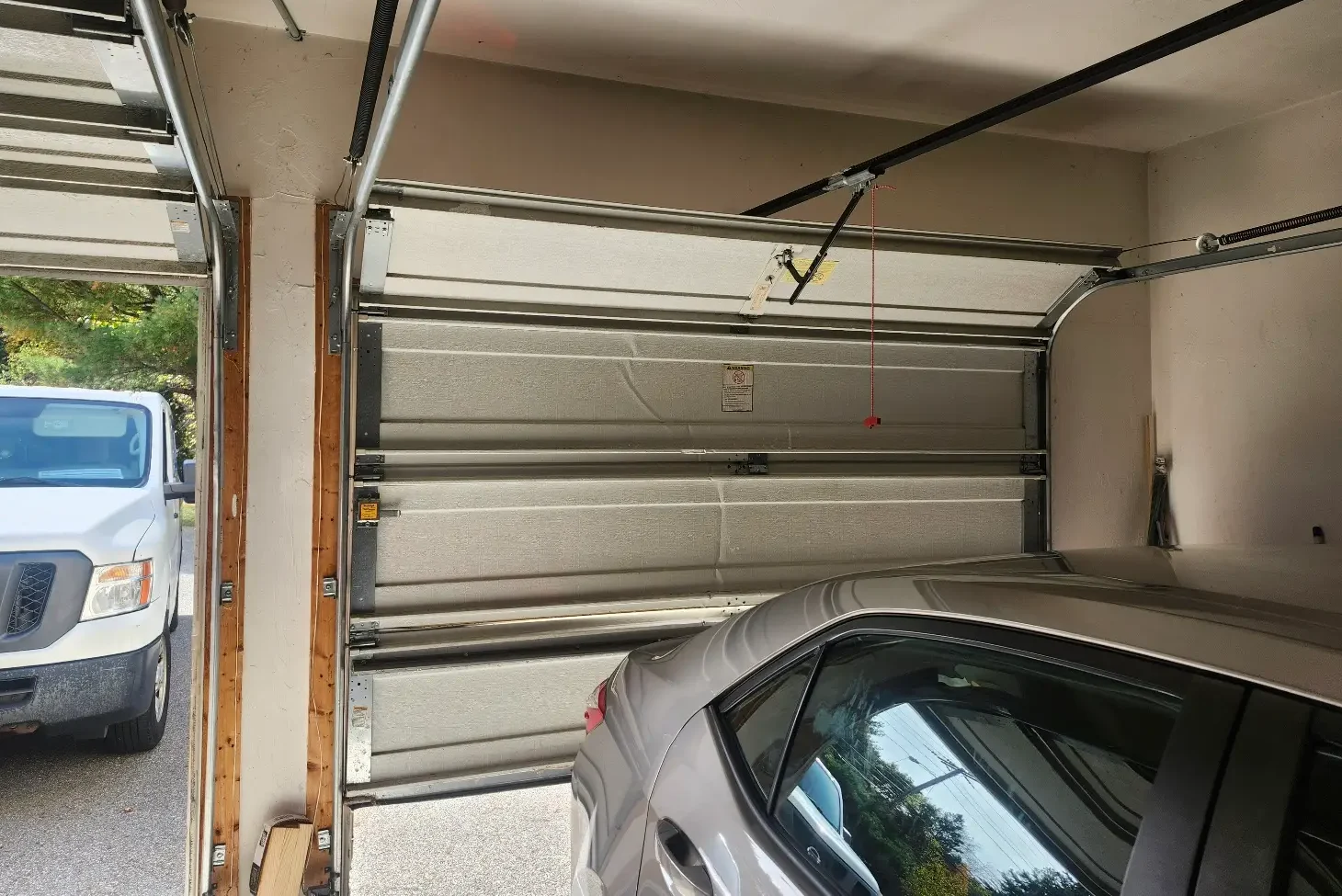
A loose or broken cable is also urgent. Cables help lift the door evenly. When a cable comes off a drum or snaps, one side of the door can drop or tilt. Do not try to pull the door straight by hand. A crooked door can bind in the tracks, fall unexpectedly, or bend panels and hardware.
Other situations that call for prompt service include a door that is stuck open, a door that has come off its track, a vehicle impact that has bent a panel or track, and an opener failure that leaves a commercial overhead door unsecured. For homeowners, an open garage can create a security concern and expose the space to rain, wind, pests, or freezing temperatures. For businesses and multifamily properties, it can disrupt deliveries, tenant access, inventory protection, and daily operations.
What to Do Before Emergency Garage Door Repair in Waltham
The safest response is usually simple: stop using the door and keep people away from it. Avoid trying a quick fix with household tools, especially if the problem involves springs, cables, or a door that is hanging unevenly.
Until help arrives, take these practical steps:
- Keep children, pets, and bystanders away from the door and its moving parts.
- Do not pull on cables, loosen spring hardware, or remove brackets from the bottom of the door.
- Stop operating the opener if the door is crooked, making grinding sounds, or failing to move normally.
- If the door is open and safe to leave in place, secure the area and remove valuables or vehicles from immediate risk when possible.
- Keep children, pets, and bystanders away from the door and its moving parts.
- Do not pull on cables, loosen spring hardware, or remove brackets from the bottom of the door.
- Stop operating the opener if the door is crooked, making grinding sounds, or failing to move normally.
- If the door is open and safe to leave in place, secure the area and remove valuables or vehicles from immediate risk when possible.
If a car is trapped inside and the door is fully closed, resist the urge to force it upward. A door with a broken spring can weigh hundreds of pounds. If the emergency release is used improperly, or if the door is not supported, it can fall quickly. A trained technician can determine whether manual operation is safe and use the right equipment to stabilize the system.
If the issue is electrical, such as an opener that will not respond, check whether the opener is plugged in and whether a breaker has tripped. You can also replace the remote battery if the wall control still works. Those are reasonable checks. Beyond that, avoid opening the motor housing or working around damaged wiring. The problem may be in the opener, safety sensors, logic board, drive system, or a mechanical failure preventing the door from moving.
Why Garage Door Springs and Cables Need Professional Handling
Garage door springs store energy to counterbalance the door’s weight. That is why a properly functioning door feels relatively manageable when disconnected from the opener. It is also why spring repair is not a safe do-it-yourself job.
Torsion springs sit above the door on a metal shaft. Extension springs run alongside the horizontal tracks. Both systems require correct sizing, controlled tension, and secure installation. Using the wrong spring can cause poor balance, premature failure, excessive opener wear, or unsafe movement. Replacing only what is visibly broken may not always be the right answer either. On a two-spring system, the second spring may be near the end of its service life.
Cables deserve the same caution. A cable that has slipped off may be a symptom of another issue, such as a broken spring, worn drum, damaged track, loose bearing plate, or misaligned door. Resetting the cable without correcting the cause can lead to another failure soon after.
A qualified and insured technician should inspect the entire operating system, not just the failed component. That includes the springs, cables, drums, rollers, hinges, tracks, brackets, bearings, opener force settings, and photo-eye safety sensors. The goal is a door that opens smoothly, closes safely, and remains properly balanced.
What a Proper Emergency Repair Visit Should Include
Emergency service should feel clear, not confusing. The technician should assess the door in person, explain what failed, identify any related safety issues, and provide upfront pricing before work begins. This is especially important during an urgent situation, when property owners are understandably focused on getting the door working again.
The repair itself depends on the diagnosis. A technician may replace broken springs, install new cables, reset a door that has come off track, replace damaged rollers or hinges, repair an opener, align safety sensors, or secure a damaged panel until a more complete replacement can be scheduled. In some cases, a door can be repaired the same day. In others, severe impact damage, discontinued panels, or a failing older system may make replacement the more practical option.
There are trade-offs. Repairing a single damaged panel can make sense when the door is otherwise in good condition and the matching panel is available. If several panels are bent, the tracks are damaged, and the hardware is worn, putting money into repeated repairs may not be the best value. An experienced technician should explain both options plainly rather than pushing a replacement that is not necessary.
Triple A Garage Doors Inc. provides 24/7 emergency support with qualified, insured technicians, in-person estimates, and honest upfront pricing. For a homeowner dealing with a stuck door or a facility manager facing an interrupted operation, clear communication matters as much as the repair itself.
Emergency Service for Commercial Overhead Doors
Commercial garage and overhead doors have different demands than residential systems. They may be larger, heavier, used dozens of times each day, and essential to loading docks, vehicle bays, storage areas, retail access, or waste management areas. A door that will not close can compromise security. A door that will not open can stop deliveries and delay crews.
Commercial emergencies may involve broken torsion springs, damaged sections, failed operators, worn rollers, track damage, misaligned photo eyes, or impact from a truck or forklift. The right response depends on the door type, the site conditions, and whether the opening needs to remain accessible during repairs. A professional inspection helps determine whether the door can be safely stabilized and repaired immediately or whether a temporary solution and follow-up replacement are needed.
Property managers also benefit from documenting the failure and the repair. Good service records help track recurring issues, plan maintenance, and show that safety concerns were addressed promptly.
Preventing the Next Garage Door Emergency
Many garage door failures show warning signs before the system stops working. A door that jerks, shakes, gets louder, reverses unexpectedly, or leaves a gap at the floor deserves attention. So does an opener that strains, a remote that works inconsistently, or a door that feels heavy when operated manually by a professional.
Routine maintenance cannot prevent every broken spring or accidental impact, but it can reduce unexpected downtime. During a tune-up, a technician can inspect balance, tighten hardware, lubricate appropriate moving parts, check roller wear, test safety sensors, and identify cables or springs that are nearing failure. For commercial properties, preventive maintenance is particularly valuable because a planned visit is less disruptive than an emergency shutdown.
If your garage door is stuck, hanging unevenly, or leaving your property unsecured, treat it as a safety issue rather than a weekend project. A prompt inspection and a straightforward repair plan can get your access, security, and daily routine back where they belong.
Need same-day garage door service? Our local technicians are ready to help.
One Reply to “Emergency Garage Door Repair Waltham Guide”
Garage Door Stuck? What to Check and Avoid - Triple A Garage Doors inc
08 Sep 2026[…] popping or grinding sounds, or an opener running while the door stays still. Call promptly if the door is stuck open and you cannot secure the property, particularly at a commercial site where inventory, equipment, […]