A garage door that closes every time you leave is easy to forget. A garage door that leaves you wondering whether it closed, refuses to open during a storm, or gives too many people access to your home is another matter. Smart openers bring more visibility and control to one of the largest moving systems in your house, but the right setup depends on your door, your existing equipment, and how you use the garage.
For homeowners across Greater Boston, the value is often practical rather than flashy. You may want to let a dog walker in without sharing a permanent keypad code, check the door after leaving for Logan, or receive an alert when a teenager gets home from school. A smart system can handle those tasks well. It cannot, however, correct a worn spring, damaged cable, misaligned safety sensor, or heavy door that is already straining the opener.
What Smart Openers Actually Do
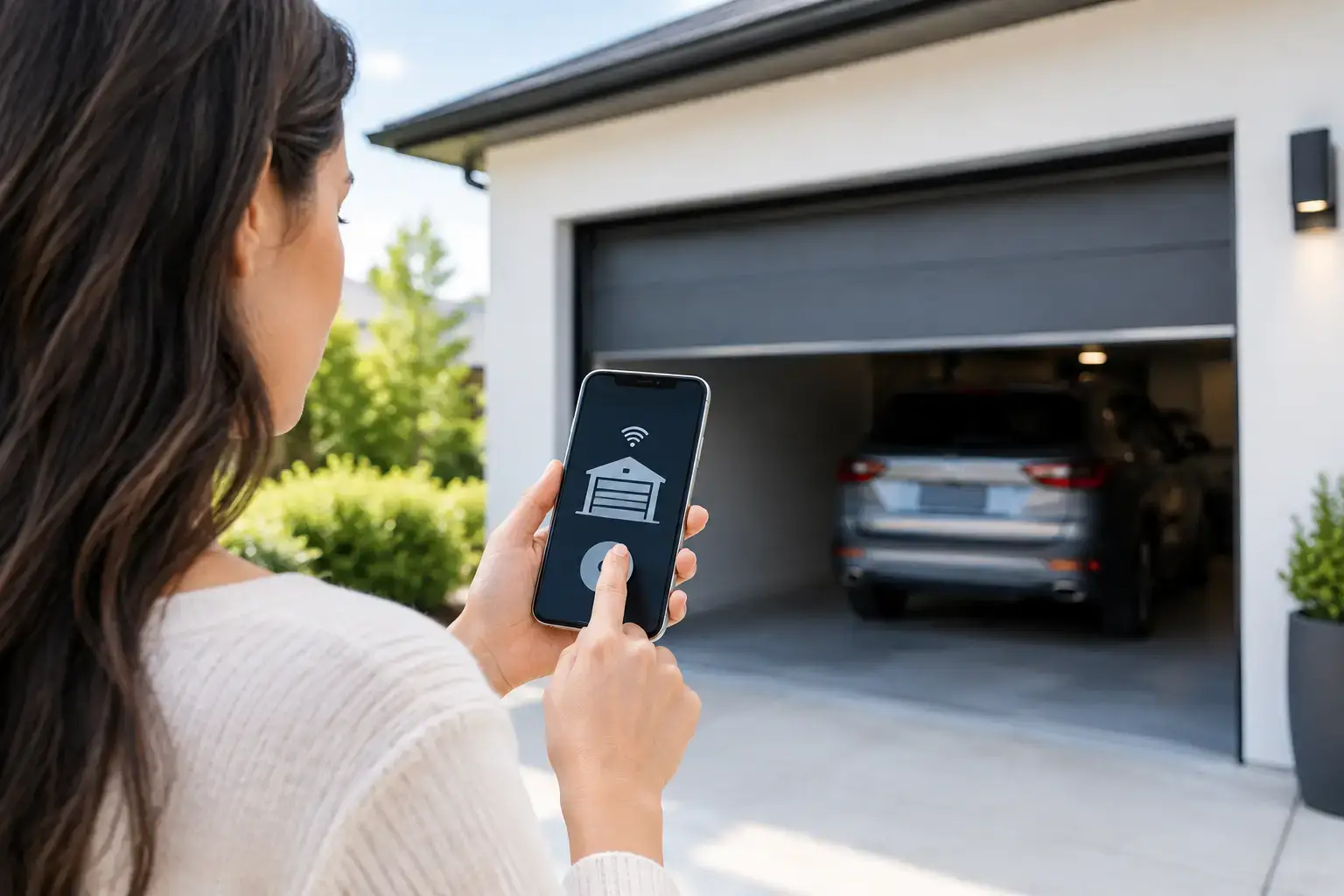
A smart garage door opener connects your opener to a phone app, usually through your home Wi-Fi network. Depending on the model, it can show whether the door is open or closed, send activity alerts, allow you to operate the door remotely, and let you share access with family members or service providers.
Some systems are complete replacement openers with built-in Wi-Fi and smart controls. Others are add-on controllers designed to work with a compatible existing opener. That distinction matters. An add-on device can be a cost-effective choice when your current opener is reliable and has the proper safety features. A full opener replacement is usually the better long-term answer when the motor is noisy, inconsistent, outdated, or unable to support the features you need.
Common features include scheduled closing, temporary guest access, delivery access options, battery backup, integrated cameras, motion lighting, and activity history. Not every feature is necessary for every household. A simple app-controlled opener with reliable close alerts may be more useful than a camera-equipped model if your garage is primarily used for parking and storage.
The Benefits That Matter Most at Home
Remote status checks are often the feature homeowners use most. Instead of turning around halfway to work because you cannot remember whether you closed the garage, you can check the app. If the door is open, you can close it from wherever you are, provided the system has a working internet connection and the area around the door is clear.
Access management is another strong reason to consider smart openers. Rather than giving a contractor, cleaner, relative, or tenant your primary remote, you may be able to create limited or temporary access. That reduces the number of physical remotes in circulation and makes it easier to remove access when circumstances change.
Alerts can also improve day-to-day awareness. You can receive a notification when the door opens, closes, or remains open beyond a certain time. For families, this can be useful for knowing when someone arrives home. For investment property owners, it can help identify activity at a detached garage between visits.
Battery backup deserves special attention in Massachusetts. Power outages can happen during heavy snow, wind, and summer storms. A battery backup allows many openers to operate for a limited number of cycles when household power is out. It does not make the entire garage door system maintenance-free, but it can prevent a frustrating loss of access when you need to get a vehicle out.
Where Smart Features Have Limits
A phone app does not make an unsafe garage door safe. The opener is only one part of the system. Springs carry substantial tension, cables support the door’s movement, rollers and tracks guide it, and photo-eye sensors help prevent the door from closing on a person, pet, or object.
If your door shakes, binds, slams down, opens only partway, or feels unusually heavy when operated manually, smart controls are not the first fix. Continuing to run a door with a mechanical problem can damage a new opener or create a safety issue. A qualified technician should inspect the door, balance, springs, cables, tracks, rollers, and safety reversal system before a new opener is installed.
Wi-Fi reliability is another consideration. A smart opener is still usable from a wall control or remote when the internet is down, but remote app functions may not work until the connection returns. Garages at the far end of a home, detached garages, and properties with weak wireless coverage may need a stronger network signal before app features perform consistently.
Privacy and account security also deserve attention. Use a unique, strong password for the app account and turn on multi-factor authentication if the manufacturer offers it. Remove former residents, employees, and contractors from shared access lists. Treat digital garage access with the same care you would give a house key.
Choosing Smart Openers for Your Door
The best smart opener is not simply the one with the longest feature list. Start with the door itself. A standard single or double sectional door may work well with a belt-drive, chain-drive, or wall-mounted unit, depending on headroom, door weight, noise concerns, and ceiling layout.
Belt-drive openers are often a good choice for attached garages because they are generally quieter. Chain-drive units remain a practical option for many applications and can be a solid value when sound is less of a concern. Wall-mounted openers can free up overhead space and work especially well in garages with high ceilings, storage lifts, or unusual layouts, but they require the correct side clearance and torsion spring setup.
For heavier insulated doors, wood doors, or doors with wind reinforcement, opener sizing and door balance are especially important. More horsepower alone is not the answer. A properly balanced door should move smoothly with minimal effort. Installing a powerful opener on an unbalanced door can mask the real problem for a while, then lead to premature wear.
Before choosing a model, confirm compatibility with your preferred smart platform, remote controls, keypad, battery backup requirements, and vehicle integration. If a camera is important, consider its viewing angle, night visibility, storage options, and whether it will actually cover the area you want to monitor. In some garages, a separate security camera provides better coverage than an opener-mounted camera.
Add-On Controller or New Opener?
An add-on smart controller can make sense if your current opener is in good working condition, has functioning photo-eye sensors, and is compatible with the controller. It may give you app control and alerts without replacing an otherwise dependable motor.
A replacement opener is usually the smarter investment when yours is more than a decade old, operates loudly, lacks safety features, has recurring remote or logic-board problems, or struggles to lift the door. New systems can also provide better lighting, quieter operation, integrated battery backup, improved security controls, and manufacturer support for current app technology.
There is no one-size-fits-all answer. A homeowner with a recently installed, reliable opener may only need an add-on controller. A homeowner dealing with intermittent operation, a loud chain drive below a bedroom, and frequent power outages may benefit much more from a complete replacement.
Installation Is About More Than Mounting the Motor
A proper opener installation includes checking the door’s balance and travel, inspecting the springs and cables, setting the opening and closing limits, aligning and testing photo-eye sensors, and verifying the automatic reversal function. The opener rail, mounting points, emergency release, wall button, and remote controls all need to be installed and tested correctly.
This work is especially important when replacing an old unit. Existing brackets, electrical outlets, wiring, and ceiling supports may not be suitable for the new opener. An in-person assessment helps identify those conditions before work begins, rather than leaving you with surprise changes during installation.
Triple A Garage Doors Inc. can inspect the full door system, explain whether repair, an add-on controller, or a new smart opener makes the most sense, and provide clear upfront pricing before the work starts. For a door that will not close, has a broken spring, or is stuck open, address the mechanical or safety issue first.
Keep the Smart System Reliable
Once installed, test the photo-eye sensors and automatic reversal function regularly. Keep sensor lenses clean and make sure stored items, bikes, trash bins, or snow tools are not blocking the beam near the floor. Replace remote batteries as needed, and review app users a few times each year.
Do not ignore new noises or changes in door movement because the app still says the door is operating. Grinding, popping, jerking, slow travel, or uneven movement are service signals. Smart controls add convenience, but a well-maintained, properly balanced garage door is what keeps that convenience dependable.
The best smart opener is one that fits your daily routine, works with a safe door system, and gives you confidence when you pull away from home. If your garage door has started acting differently, have the mechanical condition checked before adding more technology to the problem.
Leave A Comment