A garage door that groans, shakes, or pauses on its way up is not just an annoyance. It is often an early warning that a moving part needs attention. A regular garage door maintenance tune up helps catch wear before a door becomes stuck, a spring breaks, or an opener is forced to work harder than it should.
For homeowners, that means protecting a daily entry point to the house. For businesses and property managers, it means avoiding interrupted deliveries, tenant access issues, and security gaps. The right maintenance is straightforward, but it needs to focus on the parts that carry weight, control movement, and protect people around the door.
What a Garage Door Maintenance Tune Up Should Cover
A garage door is a system, not just a door panel and an opener. The door itself can weigh hundreds of pounds, while springs, cables, rollers, tracks, hinges, and the opener must work together every time it moves. When one component is worn or out of adjustment, strain moves to the next part.
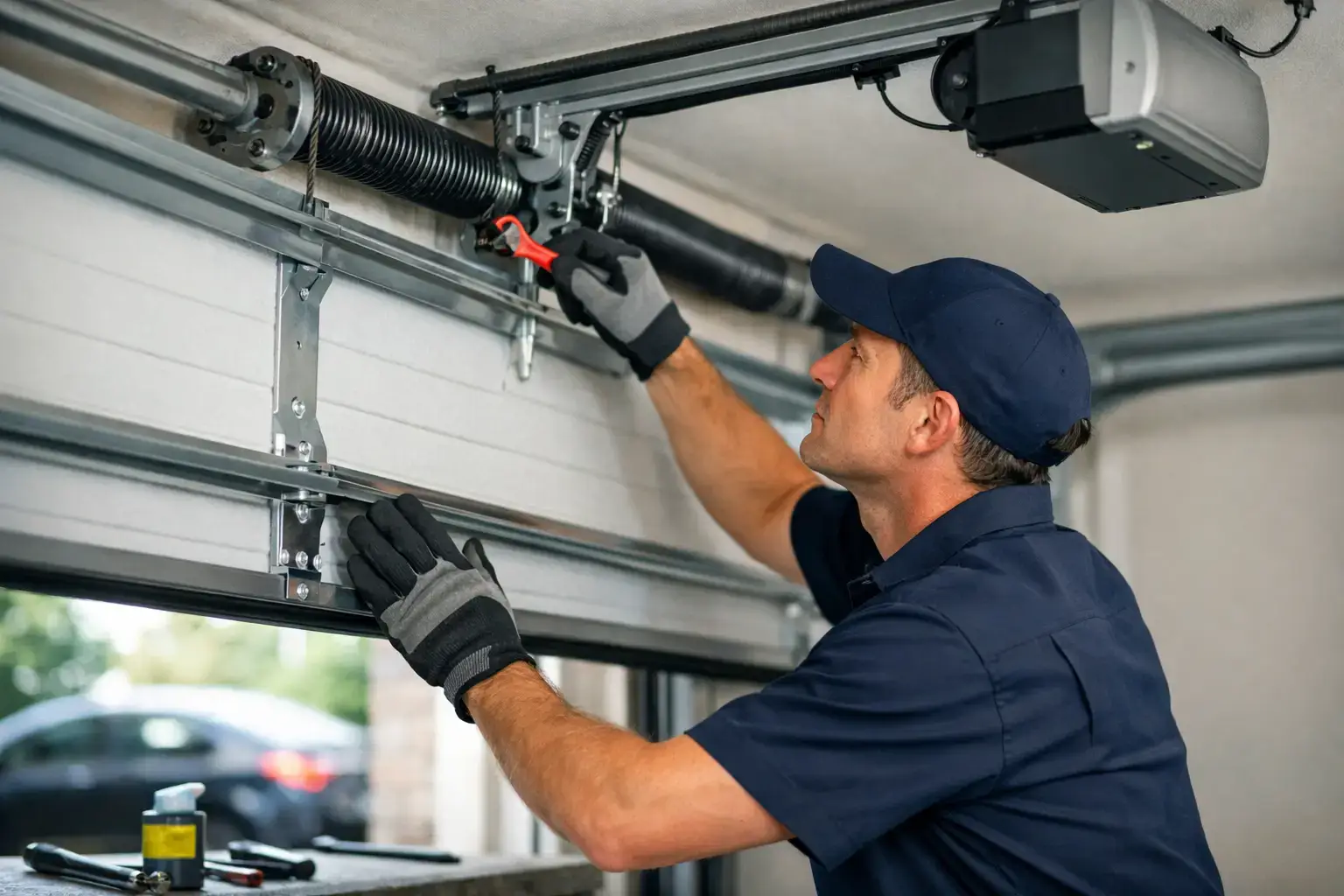
A professional tune-up starts with a visual inspection of the full system. A technician looks for bent track sections, loose fasteners, damaged rollers, frayed cables, cracked hinges, worn weatherstripping, and panel damage. They also check the spring system and lift cables for signs of corrosion or fatigue.
The door is then tested through a full opening and closing cycle. Excessive noise, jerking, binding, slow travel, or a door that does not sit level can point to a balance, track, roller, or opener issue. A careful inspection identifies the cause instead of simply adding lubricant and hoping the noise disappears.
Door Balance and Spring Condition
Springs do the heavy lifting. They counterbalance the door’s weight so the opener can guide it rather than pull the entire load. When springs lose tension or begin to fail, the opener may strain, the door can feel unusually heavy, and operation may become uneven.
Testing door balance usually involves disconnecting the opener and manually checking whether the door stays near the halfway position. This is not a repair task for an untrained homeowner. Extension springs and torsion springs hold substantial stored energy, and an incorrect adjustment can cause serious injury or damage. Spring adjustment or replacement should always be handled by qualified, insured technicians.
Rollers, Hinges, Tracks, and Hardware
Rollers should move quietly through clean, properly aligned tracks. Worn steel rollers can become noisy and rough, while damaged nylon rollers may crack or stop turning freely. Hinges deserve attention too, particularly on older doors where repeated movement loosens hardware over time.
During service, hardware is tightened where appropriate, tracks are inspected for alignment, and moving metal components receive the correct garage door lubricant. Grease, household oil, and general-purpose sprays are not always the answer. Some products attract dust and grit, creating a sticky buildup that makes operation worse. Tracks generally need cleaning, not heavy lubrication.
Opener, Safety Sensors, and Controls
The opener should respond consistently to the wall button, remote controls, and keypad. Its chain, belt, or screw-drive components may need inspection depending on the type of opener installed. A tune-up can also reveal whether an opener is struggling because of its own mechanical problem or because an unbalanced door is placing too much load on it.
Safety features need more than a quick glance. Photo-eye sensors should be clean, aligned, and mounted securely near the bottom of the tracks. The auto-reverse function should also be tested so the door reverses when it meets an obstruction. If the door closes on an object or fails to reverse properly, stop using it until the problem is corrected.
Signs You Should Not Put Off Maintenance
Some garage door issues develop slowly. Others appear without warning. If your door starts acting differently, schedule service before a minor repair turns into a door that will not open at all.
Common warning signs include:
- A squealing, grinding, popping, or banging sound during operation
- A door that opens crooked, shakes, or moves in short jerks
- Slow opening or closing, especially when the opener sounds strained
- Frayed lift cables, loose hardware, bent tracks, or worn rollers
- A door that will not stay open halfway when disconnected from the opener
- Safety sensors that blink, fail to detect objects, or work inconsistently
- Gaps in bottom or perimeter weatherstripping that allow water, pests, or cold air inside
A loud bang in the garage often means a spring has broken. Do not try to lift the door with the opener after that happens. The door may be too heavy for the motor, and continued use can create additional damage. A broken cable, door off track, or visibly separated spring also calls for prompt professional repair.
What Homeowners Can Do Between Tune-Ups
Basic observation goes a long way. Once a month, watch the door open and close from a safe distance. It should move smoothly, stay relatively quiet, and sit evenly on the floor when closed. Keep the sensor lenses clean and remove leaves, salt, dirt, and stored items that interfere with the bottom of the tracks or photo eyes.
You can also inspect weatherstripping and look for loose bolts on accessible brackets. If a fastener is clearly loose, it may be tightened carefully, but avoid any red-painted hardware or components connected to springs and cables. Those areas are commonly under tension.
Do not attempt to repair a cable, reset a roller that has come out of the track, or adjust spring tension yourself. These jobs may look small from the outside, but they involve a heavy moving door and loaded hardware. Calling for service early is usually safer and less expensive than waiting for a complete failure.
How Often Should a Garage Door Be Serviced?
For most homes, an annual inspection and tune-up is a practical baseline. A door used several times daily, exposed to severe winter weather, or showing early signs of wear may benefit from more frequent attention. Massachusetts temperature swings, moisture, road salt, and freeze-thaw conditions can all affect rollers, cables, weather seals, and metal hardware.
Commercial and multifamily doors often need a more frequent schedule because they operate far more often and carry higher operational consequences. A warehouse overhead door, a parking garage gate, or a shared residential garage door may need quarterly or semiannual preventive maintenance depending on usage, door size, and site conditions.
The best schedule depends on cycles, condition, and how critical the door is to daily access. A lightly used residential door may perform well with annual service. A busy commercial door that handles deliveries all day should be inspected before a failure disrupts the property.
Maintenance Versus Repair: When a Tune-Up Is Not Enough
A tune-up is preventive work. It can improve operation, reduce wear, and identify parts nearing the end of their service life. It cannot safely restore a broken spring, frayed cable, cracked panel, damaged track, or failing opener motor without the necessary repair or replacement.
That distinction matters because a transparent technician should explain what was found, what can wait, and what needs immediate attention. If a repair is recommended, ask what symptom led to the diagnosis, what part is affected, and how the price is determined. An in-person estimate is especially helpful when damage is visible or the door has come off track.
Triple A Garage Doors Inc. provides garage door tune-ups, repairs, and preventive maintenance across Waltham and Greater Boston, with qualified and insured technicians who can inspect the whole system and explain the work before it begins. For doors that are stuck, unsafe, or unable to secure a home or business, same-day and emergency service can help restore access quickly.
A well-maintained garage door should not demand your attention every day. Schedule service when it begins sounding or moving differently, and treat safety problems as a reason to act now rather than after the next failed opening.
Leave A Comment