
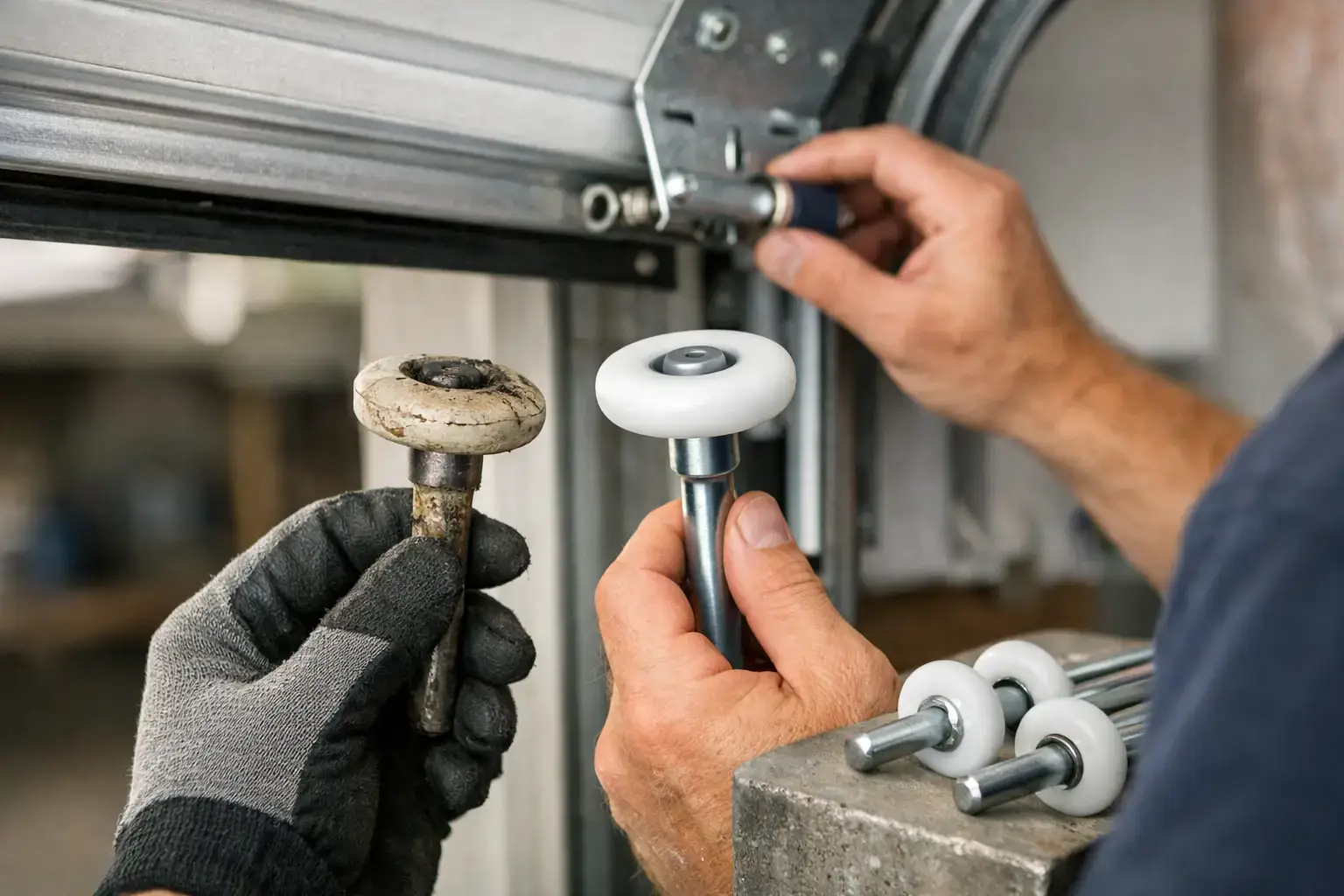
A garage door that rattles through the whole house, jerks on the track, or leaves black dust near the hinges is often telling you something simple: it may be time to replace garage door rollers. Rollers are small parts, but they carry a heavy job every time the door opens and closes. When they wear out, the entire system works harder, gets louder, and can become less safe.
For homeowners in Waltham and Greater Boston, roller trouble can be especially noticeable during cold weather. Lubrication thickens, metal contracts, and a worn roller that seemed manageable in fall can start binding in the track. The right repair depends on the roller type, door weight, track condition, and whether other parts are already under strain.
What garage door rollers do
Garage door rollers sit at the sides of the door and travel inside the vertical and horizontal tracks. They guide each panel as it moves from a closed position to overhead storage. A typical residential door has 10 to 12 rollers, while heavier doors and commercial overhead doors may use more.
A roller has a wheel and a stem. The wheel rides in the track, while the stem fits into the hinge or bottom bracket. Some rollers use steel wheels, some use nylon, and quality varies widely between models. Basic rollers may have no bearings at all; higher-cycle rollers often have sealed bearings that help the door move more quietly and smoothly.
Rollers do not work alone. They rely on properly aligned tracks, secure hinges, correct spring tension, and a balanced door. That is why a noisy door is not automatically a roller-only problem. A technician should look at the complete system before replacing parts.
Signs you should replace garage door rollers
The most common sign is noise. Worn steel rollers can scrape, click, grind, or produce a loud rolling rumble. Nylon rollers usually operate more quietly, so a sudden increase in sound is worth investigating. Lubrication may reduce minor noise, but it will not repair cracked wheels, worn bearings, or bent stems.
Watch how the door moves as well. If it shakes, hesitates, or appears to pull sideways while opening, a roller may be binding or coming out of the track. You may also see a wheel wobbling, a roller sitting crookedly, or pieces of worn nylon near the track.
Other warning signs include:
- Black residue or metal shavings around the tracks and hinges
- Rollers that look cracked, flattened, rusted, or loose
- A door that becomes louder at specific points in its travel
- Repeated opener strain, including reversing or stopping unexpectedly
- A roller that has jumped out of the track
A door can still open with one worn roller, but continuing to use it can create additional damage. The roller may chew up the track, stress the hinges, or cause the opener to work beyond its intended load. If the door is off track, visibly sagging, or difficult to move, stop operating it until it has been inspected.
How long do garage door rollers last?
There is no single replacement schedule because roller life depends on material, quality, door weight, maintenance, and daily use. Low-cost, unsealed rollers may wear out in a few years on an active household door. Better nylon rollers with sealed bearings can last much longer, often through many thousands of cycles.
A cycle is one complete opening and closing of the door. A family that leaves through the garage several times a day puts far more cycles on the system than a homeowner who uses the door only on weekends. A detached garage, rental property, or commercial location may also have different wear patterns.
Rather than replacing rollers strictly by age, pay attention to condition and performance. During an annual garage door tune-up, each roller should be checked for free movement, cracking, stem wear, and alignment. Replacing a full matching set is often smarter than changing one visibly failed roller at a time. It gives the door more consistent movement and avoids a series of separate service calls as older rollers fail.
Choosing the right replacement roller
The best roller is not always the most expensive option. It needs to match the door and the way the property uses it. Standard steel rollers can be practical for some applications, particularly where durability and cost are the main concerns. However, they tend to be louder and can require more maintenance.
Nylon rollers are a popular residential choice because they reduce noise and do not rust like steel wheels. Bearing count also matters. More bearings generally means smoother operation and longer service life, but only when the roller is properly installed and the tracks are in good condition.
For a heavy insulated door, a high-use household, or a multifamily property where noise affects tenants, upgrading to quality sealed-bearing nylon rollers can make a noticeable difference. For commercial doors, roller selection should account for door weight, operating frequency, and the demands of the facility. Using the wrong size or stem length can lead to poor tracking and early wear.
Why roller replacement is not always a DIY job
Some upper and middle rollers can be changed with basic tools by someone who understands garage door hardware. The bottom rollers are different. Their brackets are connected to the lifting cable, which is under significant tension when the door is closed. Removing or loosening a bottom bracket can release the cable and create a serious injury risk.
The door itself is also heavy. A roller replacement can become dangerous if the door is not secured, the track shifts, or a weakened spring fails during the work. Torsion springs and extension springs should never be adjusted as part of a casual DIY repair.
A trained technician can safely secure the door, inspect the roller stems and hinges, replace appropriate rollers, and verify that the door is balanced afterward. That last step matters. If the door is unbalanced, new rollers may move more smoothly for a short time, but the underlying force problem remains.
What a professional roller service should include
A proper service begins with diagnosis, not just swapping parts. The technician should examine the tracks for dents or loose mounting, check the hinges for wear, inspect cables and drums, test spring condition, and look for opener-related issues. If the tracks are dirty or dry, they should be cleaned and lubricated with products suited for garage door components.
After roller replacement, the door should be operated manually and with the opener. It should travel smoothly without binding, excessive vibration, or unusual noise. The technician should also test the opener’s safety reversal system and photo-eye alignment. A door that closes smoothly but does not reverse correctly when it encounters an obstruction is not ready for normal use.
Ask for clear pricing before work begins and an explanation of any additional repairs found during the inspection. A worn roller may reveal a damaged hinge or track problem, but you should understand what is necessary now, what can be monitored, and why. Honest recommendations help homeowners avoid both surprise charges and repairs that only treat the symptom.
Keep new rollers working longer
Once new rollers are installed, regular maintenance helps protect the investment. Keep the tracks clear of debris, but do not pack them with heavy grease. Check for loose hinge bolts and unusual movement during normal operation. Use a garage door lubricant on moving metal components as recommended, and avoid using general-purpose penetrating spray as a long-term lubricant.
Most importantly, do not ignore changes in the way the door sounds or moves. A garage door rarely fails without warning. Early service for a noisy roller or loose hinge is usually simpler and less expensive than repairing a damaged track, broken cable, or overworked opener.
Triple A Garage Doors Inc. can inspect worn rollers as part of a complete garage door repair or maintenance visit, with qualified and insured technicians who explain the condition of the system before work begins. If your door is shaking, grinding, or off track, keep people clear of the opening and arrange service promptly. A quiet, steady door is not just more convenient – it is a sign that the parts protecting your access and security are doing their job.
Leave A Comment