
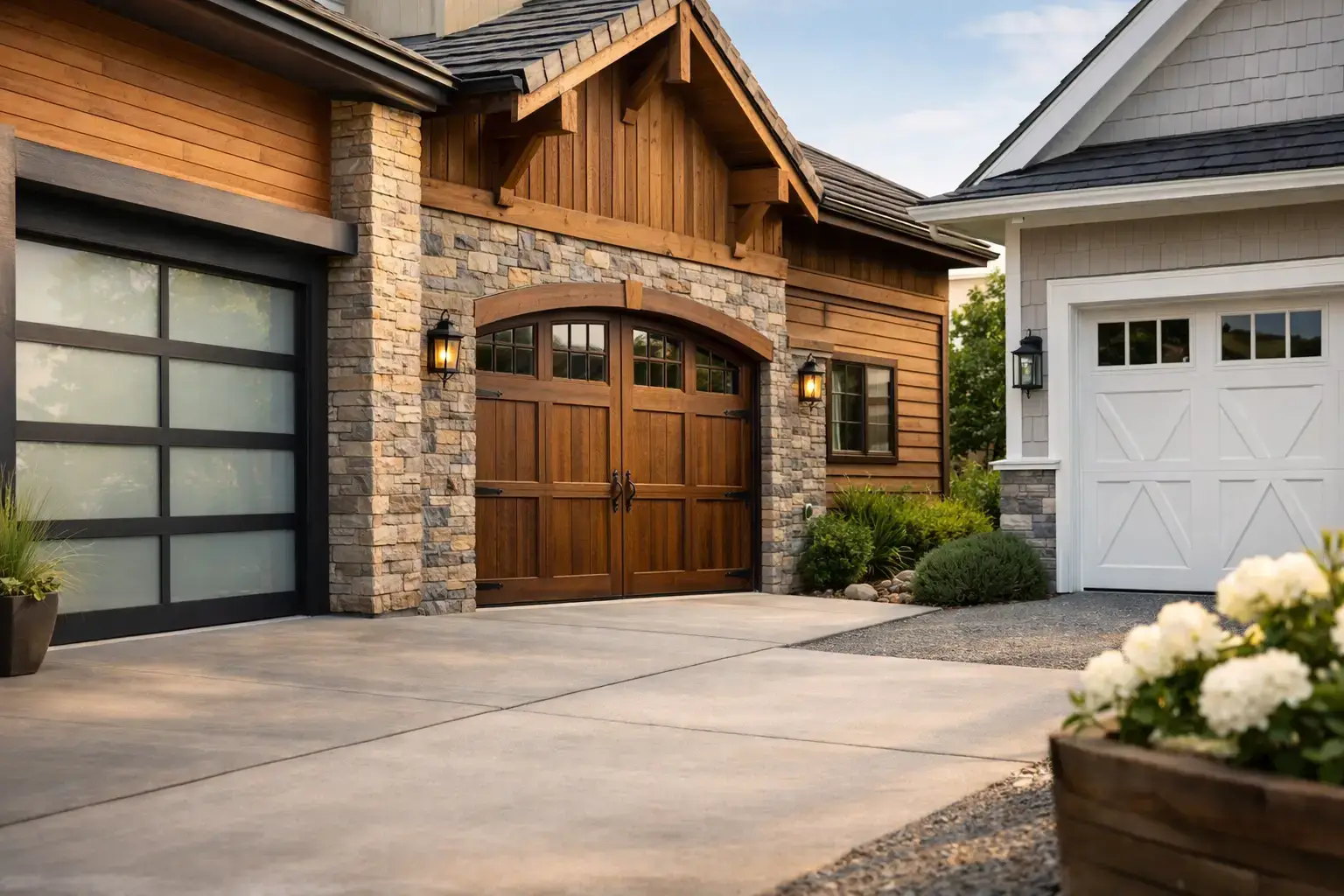
A garage door can take up a large portion of a home’s front exterior, yet many homeowners only think about it when it sticks, rattles, or stops opening. Custom garage doors for homes offer a chance to solve practical problems while giving the property a finished, intentional look. The right door should work reliably in Massachusetts weather, suit the home’s architecture, and fit the way your household actually uses the garage.
A custom door does not always mean an elaborate one. It can be a properly sized insulated steel door in a color that matches the trim, a carriage-house design for an older home, or a modern full-view door for a clean contemporary exterior. What matters is choosing the door system as a whole – door, tracks, springs, opener, weather seal, and safety features – rather than selecting a style from a photo and hoping the rest works out.
Start With How the Garage Is Used
The best design starts inside the garage, not at the curb. A garage used only for vehicle parking has different needs than one used as a workshop, storage area, gym, or entry point for the family. If the garage is attached to the house, insulation and air sealing often deserve more attention because they can affect comfort in adjoining rooms.
Think about daily traffic, too. A household that enters through the garage several times a day may benefit from a quiet belt-drive opener, battery backup, dependable photo-eye sensors, and keypad or smart-access options. A detached garage used occasionally may place more value on security and weather protection than on premium opener features.
Measure the opening and the available headroom before settling on a design. Standard doors fit many garages, but low ceilings, unusual framing, sloped driveways, and limited side room can require custom sizing or special track configurations. This is one reason an in-person estimate matters. A technician can identify conditions that are easy to miss in online measurements.
Custom Garage Doors for Homes Need the Right Material
Material affects appearance, maintenance, insulation, cost, and long-term durability. There is no single best choice for every Greater Boston property.
Steel: Practical and Versatile
Steel is a common choice because it is durable, available in many panel profiles, and can be insulated. It can replicate the look of wood with embossed grain, raised panels, or carriage-house overlays without requiring the same level of upkeep. For many homeowners, an insulated steel door provides a sensible balance of price, appearance, and performance.
The trade-off is that steel can dent if struck by a vehicle, bicycle, or lawn equipment. Quality paint finishes and regular inspection help, but a damaged section may eventually need panel repair or replacement.
Wood and Faux Wood: Strong Character, More Care
Real wood adds depth and warmth that can complement historic homes, craftsman designs, and high-end exteriors. It is also highly customizable in terms of stain, paint, windows, and decorative details. However, New England moisture, temperature swings, and sun exposure require ongoing maintenance. Wood doors need proper finishing and periodic refinishing to prevent warping, cracking, or moisture damage.
Faux-wood steel doors can deliver much of the visual appeal with less maintenance. They are often a better fit for homeowners who want the carriage-house look but do not want the regular upkeep of natural wood.
Aluminum and Glass: Modern but Not Always Private
Aluminum-frame doors with glass panels create a modern, architectural appearance and bring daylight into the garage. They can work especially well on contemporary homes or garages used as studios and workspaces. Frosted, tinted, or obscure glass can improve privacy while still allowing light through.
These doors are not the best choice for every situation. Large glass areas may offer less insulation than a high-quality insulated steel door, depending on the construction. They also require careful consideration if the garage faces a busy street or stores valuable equipment.
Insulation Is About More Than Winter
An insulated door is often worth considering in Massachusetts, especially for attached garages. It can help reduce heat transfer, lessen outside noise, and make the garage more comfortable during both cold winters and hot summer days. The insulation rating, commonly called R-value, indicates resistance to heat flow. A higher number generally means better insulating performance, but the entire system matters.
Gaps around the opening, worn bottom seals, uninsulated walls, and an outdated opener can all affect comfort and efficiency. A high-R-value door will not fix every temperature issue by itself. Still, it can make a noticeable difference when paired with sound weatherstripping and correct installation.
Insulated doors also tend to feel more solid and operate more quietly. That can be helpful for bedrooms, nurseries, or living spaces located above or beside the garage.
Match the Door to the Home, Not Just a Trend
A garage door should support the rest of the facade instead of competing with it. Traditional colonials often look right with raised-panel or carriage-house doors, while ranch homes may benefit from simple long-panel designs. For newer homes with clean lines, flush panels, dark finishes, or narrow window layouts can create a more cohesive appearance.
Color deserves the same care as the panel design. Matching the front door exactly is not always necessary. In many cases, matching shutters, trim, roofing accents, or window frames creates a better balance. Dark colors can look striking, but they may show dust and pollen more easily and absorb more heat in direct sun. Lighter shades can feel less visually heavy on a large door.
Window placement should be selected with both light and privacy in mind. A row of windows near the top can brighten the garage without putting stored items on display. Decorative hardware can reinforce a carriage-house style, but it should be chosen carefully so it looks intentional rather than added on as an afterthought.
Do Not Treat Safety Hardware as an Add-On
A garage door is the largest moving object in many homes. The door may weigh several hundred pounds, and its springs are under significant tension. Custom appearance choices should never come ahead of correct spring sizing, balanced operation, strong tracks, and properly installed safety sensors.
Modern openers should include reversing systems and photo-eye sensors that stop or reverse the door if an obstruction is detected. Battery backup can be valuable during power outages, particularly when the garage is the primary way in and out of the house. If the door is heavy, oversized, or constructed from wood and glass, the opener and spring system must be selected to handle that weight safely.
Never attempt to adjust or replace torsion springs, cables, or bottom brackets yourself. These components can cause serious injury when handled incorrectly. If a door is crooked, has a loose cable, closes unevenly, or will not open, stop using it and schedule a professional inspection.
Budget for the Complete Installation
The price of a custom door is shaped by more than its face material. Size, insulation level, window inserts, decorative hardware, custom paint or stain, track requirements, removal of the existing door, and opener selection all affect the final cost. A lower initial price can become less attractive if the door lacks insulation, needs frequent maintenance, or does not include the hardware needed for safe operation.
Ask for clear, itemized pricing that explains what is included. Homeowners should know whether the estimate covers the door sections, springs, tracks, weather seal, haul-away, opener work, permits if needed, and warranty details. A qualified installer should also explain whether the existing framing and electrical setup are suitable for the new system.
Custom work takes planning, especially when doors are made to a nonstandard size or finish. The wait can be worthwhile, but it is smart to discuss lead times early if you are coordinating exterior painting, a renovation, or a home sale.
Protect the Investment After Installation
A well-installed garage door still needs routine attention. Test the safety reversal system periodically, keep the photo eyes clear, and watch for changes in sound or movement. Squealing, grinding, jerking, or an increasing gap under the door are reasons to arrange service before a minor issue becomes a stuck door or broken spring.
Annual tune-ups can help keep rollers, hinges, cables, springs, and opener settings in proper working order. They are particularly useful after harsh winters, when cold temperatures and moisture can expose worn parts. Regular maintenance also gives a technician the chance to spot loose hardware, damaged weather seals, and balance problems before they affect safe operation.
A custom garage door should make the home easier to live with every day, not just look better from the street. Choose a design that suits the property, build it around the garage’s real use, and have it installed by qualified, insured technicians who can explain the work clearly. For homeowners across Greater Boston, that careful approach is what turns a major exterior upgrade into dependable daily access for years to come.
Leave A Comment