
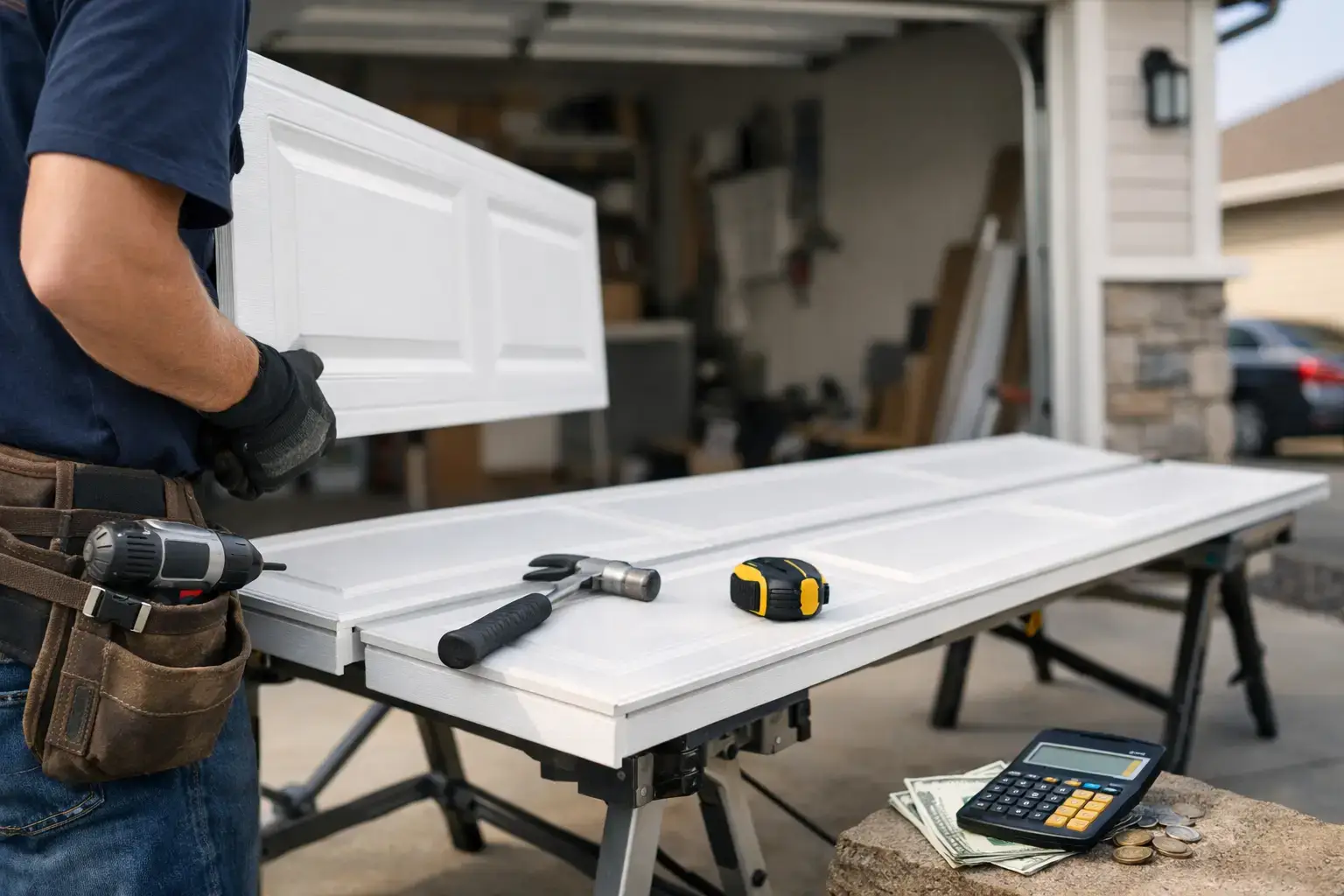
A dented or cracked garage door panel can make an otherwise well-kept home look neglected. More importantly, damage can affect how the door travels, seals, and protects the garage. Garage door panel replacement cost depends on far more than the size of the dent. The door’s material, age, insulation, panel availability, finish, and the condition of the hardware all affect the final price.
For homeowners in Waltham and Greater Boston, the right answer is not always to replace the entire door. A qualified technician should inspect the panel and the complete door system in person, explain what is damaged, and provide clear options before work begins.
What Does Garage Door Panel Replacement Cost?
Most residential panel replacements cost less than installing a complete new garage door, but there is no reliable one-price answer. A basic, uninsulated steel panel that is still in production may be relatively straightforward to source and install. An insulated panel, a wood-look finish, a carriage-house design, or a custom-sized door can cost considerably more.
The panel itself is only one part of the bill. A professional estimate should account for the replacement section, delivery or sourcing, labor, removal and disposal of the damaged panel, hardware adjustments, and testing. If the impact also bent tracks, damaged rollers, shifted hinges, or affected the bottom seal, those repairs may be necessary for safe operation.
As a general planning range, a single standard panel replacement may run from a few hundred dollars to well over $1,000 for specialty, insulated, or hard-to-match sections. A full door replacement can make better financial sense when multiple panels are damaged or matching parts are no longer available. An in-person estimate is the best way to avoid guessing from a photo or a price advertised without seeing the door.
The Factors That Change the Price
Door material and insulation
Steel is the most common residential garage door material, and standard steel sections are often easier to find than wood or custom composite panels. Insulated steel panels cost more because the replacement must match the door’s thickness, construction, and thermal performance. That match matters in Massachusetts, where an attached garage can influence comfort in rooms above or beside it.
Wood doors require a different level of work. A replacement panel may need to be built, shaped, finished, and painted or stained to blend with the existing door. Aluminum and glass doors can also require brand-specific components and careful handling. The more specialized the material, the more likely cost and lead time will increase.
Brand, model, and door age
Garage door panels are not interchangeable. Even two doors that appear similar can have different section heights, joint profiles, hinge locations, reinforcement requirements, and insulation thicknesses. The technician needs the manufacturer, model, dimensions, and often a close inspection before ordering.
A newer door from a current product line is usually easier to match. On an older or discontinued door, the original panel may no longer be made. A close visual match may still be possible, but the result can differ in texture, window layout, color, or embossing. If a matching section cannot be sourced, replacing the full door often produces the cleaner and more dependable result.
Number and location of damaged panels
Replacing one damaged middle section is usually less involved than replacing several sections. Bottom panels deserve special attention because they connect to brackets, cables, and the weather seal. Those components operate under tension and should not be handled as a DIY project.
Damage near the top of the door can also affect the way the door curves into the horizontal track. A technician will check whether the panel is the only issue or whether the impact has changed the alignment of the tracks, hinges, rollers, or opener arm.
Color and finish matching
Even when the correct panel is available, a new section may not perfectly match a door that has spent years in sun, snow, and changing New England weather. Fading, oxidation, and paint wear are common. A replacement panel may need painting, or the homeowner may decide to repaint the full door for a consistent finish.
This is especially relevant for doors with faux wood grain, custom colors, decorative overlays, or windows. A low panel price can become misleading if finishing work is needed to make the repair look right from the curb.
Related repairs found during inspection
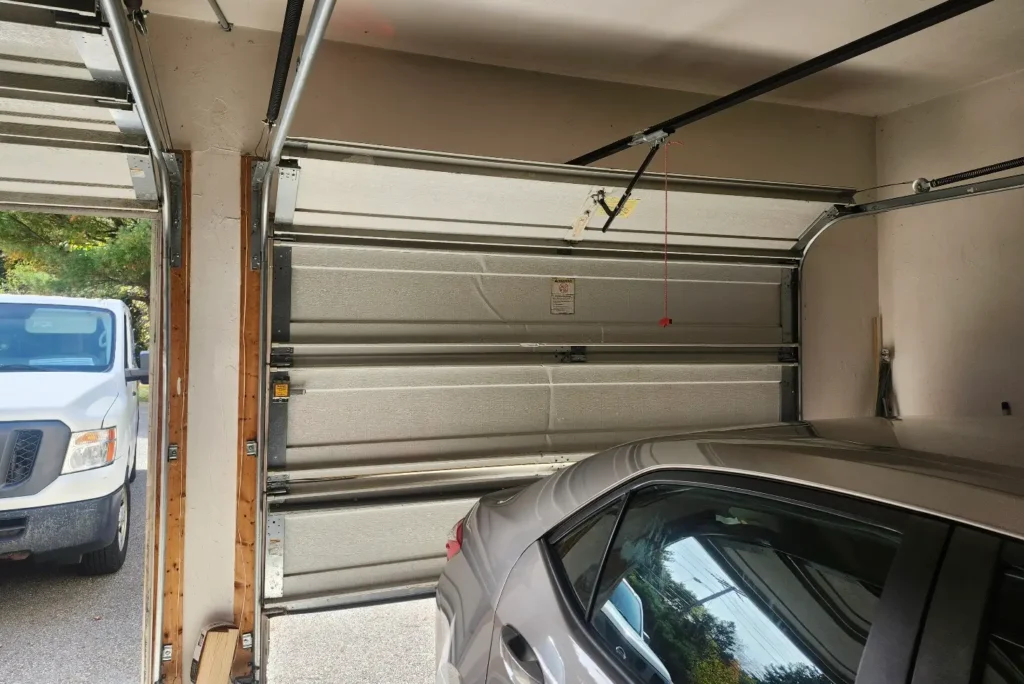
A vehicle strike or storm-related impact can do more than dent a panel. It may loosen hinges, bow a track, damage a roller stem, or cause the door to bind. If the door is heavy, crooked, noisy, or will not open smoothly, the system should be inspected before a new panel is installed.
Springs and cables are separate parts, but they are critical to safe operation. A panel replacement is also a good opportunity to check spring balance, cable condition, lubrication, and opener force settings. Correcting a small alignment issue early can help prevent the new panel from being stressed or damaged again.
When Panel Replacement Makes Sense
Panel replacement is often a practical choice when the door is relatively new, the damage is limited to one section, and an exact match is available. It can preserve a good door, restore curb appeal, and cost significantly less than a full replacement.
It is also a smart option when the door is otherwise operating smoothly and the panels have no widespread rust, rot, delamination, or structural weakness. A technician should confirm that the remaining sections are sound before recommending a single-panel repair.
For rental properties and multifamily buildings, replacing a damaged panel can be a cost-conscious way to restore security quickly while keeping the exterior consistent. For commercial overhead doors, prompt panel repair can reduce exposure to weather, theft, and operational downtime, although commercial panels and hardware often require a more specialized assessment.
When a New Garage Door Is the Better Value
A complete replacement may be the better long-term decision when two or more panels are damaged, the door is discontinued, or the new section will look noticeably different from the rest. It may also be time to replace the full door if the existing system has repeated breakdowns, poor insulation, severe corrosion, or dated safety features.
There is a practical trade-off here. Replacing a single panel usually has a lower immediate cost. Replacing an aging door can reduce the chance of paying for another panel, roller, spring, or track repair in the near future. It also gives homeowners the option to improve insulation, appearance, and security at the same time.
A trusted technician should explain both paths without pressure. The goal is not to sell a new door when a safe repair will do. It is to show the true condition of the door and help you choose the option that makes sense for your home, budget, and expected time in the property.
Why Professional Installation Matters
Garage door sections are connected to a system of hinges, tracks, rollers, cables, and springs. Removing a panel incorrectly can cause the door to shift, fall, or bind. The bottom brackets and cables in particular can be dangerous because of spring tension.
Professional installation also helps protect the investment in the replacement panel. The door should be leveled, aligned, balanced, and tested through a full operating cycle. The opener should reverse properly, the safety sensors should be checked, and the weather seal should meet the floor as intended.
Triple A Garage Doors Inc. provides in-person estimates so customers can understand whether a panel replacement is viable before committing to a repair. Qualified and insured technicians can identify related damage, give upfront pricing, and restore safe, reliable operation without bait-and-switch surprises.
What to Have Ready for an Estimate
If possible, take a clear photo of the full door, the damaged section, and any label on the edge of the door. Note whether the door still opens and closes, whether it makes unusual noise, and whether a vehicle or object struck it. This information can help schedule the right service, but it should not replace an on-site inspection.
If the door is stuck, crooked, hanging from a track, or has a loose cable, avoid operating it. Keep people and vehicles away from the opening until a technician can assess it. For a door that secures a home, business, or attached garage, prompt service is often worth more than waiting and risking additional damage.
A damaged panel does not automatically mean you need a new garage door. Get the door inspected, ask whether an exact match is available, and request a written explanation of the repair and replacement options. That simple step makes it much easier to choose a solution that looks right, operates safely, and fits your budget.
Leave A Comment