A loud bang from the garage can sound like something hit the door. Often, it is a spring breaking. When a garage door spring fails, the door may become too heavy to lift, stop partway, or leave your car trapped inside. Broken garage door spring replacement is not a repair to put off or attempt with a basic tool kit. The spring system carries most of the door’s weight, and stored tension can cause serious injury when handled incorrectly.
For homeowners across Greater Boston, a failed spring is usually an urgent access and safety issue. For businesses, multifamily properties, and facilities, it can also interrupt deliveries, tenant access, and daily operations. Knowing what failed, what to do next, and what a proper repair includes can help you make a safe, informed decision.
How to Tell if a Garage Door Spring Is Broken
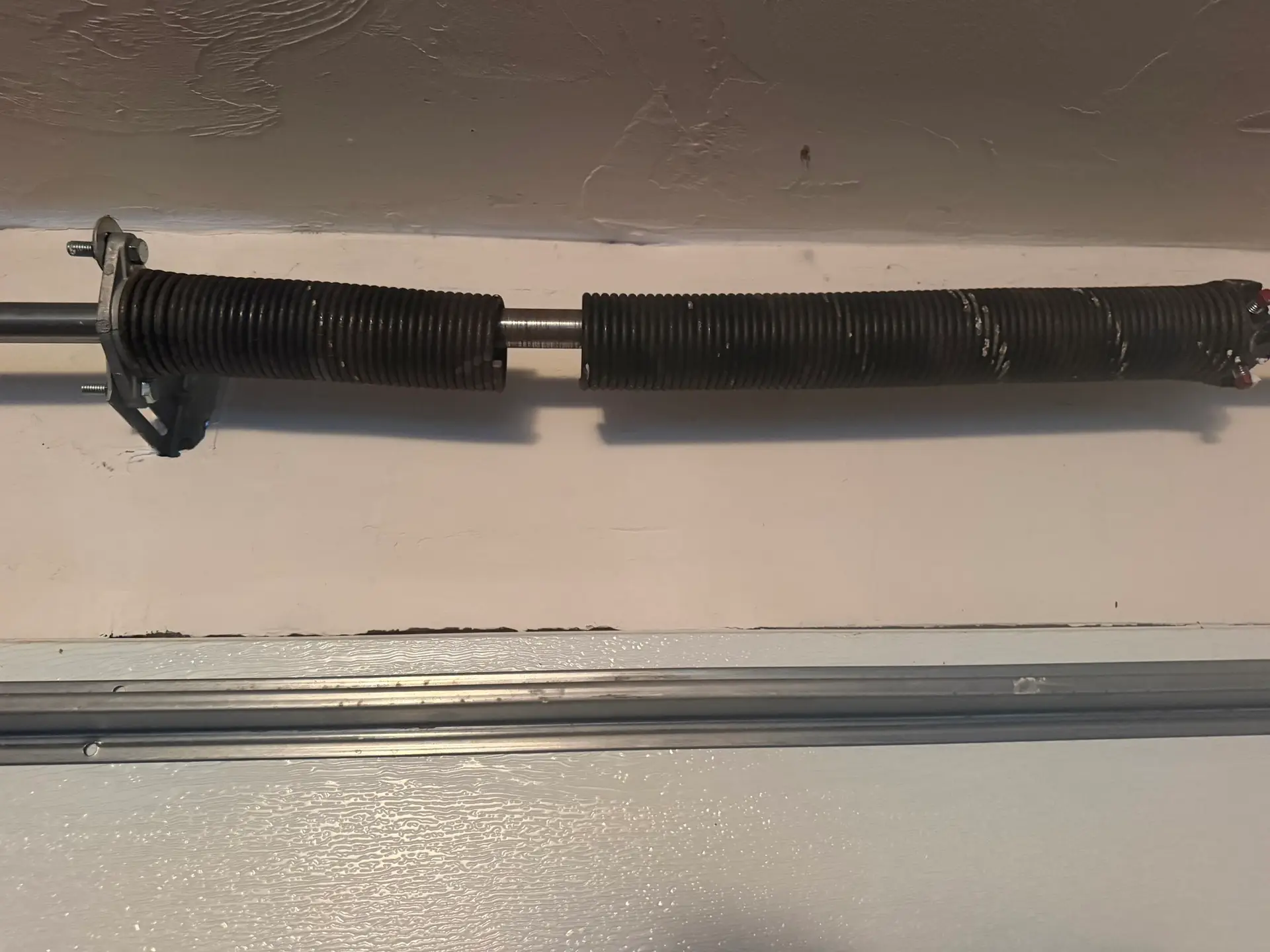
The most recognizable sign is a sharp pop or bang from the garage, sometimes loud enough to be mistaken for a fallen object. Torsion springs, which sit above the garage door opening on a metal shaft, often develop a visible gap when they break. That gap may be only a couple of inches, but it means the spring is no longer supporting the door.
You may also notice that the opener hums but cannot lift the door, or that the door rises a few inches and reverses. A door that suddenly feels extremely heavy when disengaged from the opener is another common symptom. Standard residential doors can weigh well over 100 pounds, and larger insulated or wood doors weigh considerably more.
Extension springs, usually located along the horizontal tracks on each side of the door, can fail differently. One may hang loose, stretch unevenly, or break into a visible section. Regardless of spring type, an unbalanced door may move crookedly, strain the opener, or pull on cables and rollers in ways that create further damage.
A noisy door does not always mean a broken spring. Worn rollers, loose hardware, damaged cables, or an opener problem can make similar sounds. That is why an in-person diagnosis matters. The right repair starts with identifying the actual failed component rather than replacing parts based on a guess.
What to Do When a Spring Breaks
First, stop operating the door. Do not keep pressing the wall button or remote to see whether the opener can force it up. The opener is designed to guide a balanced door, not lift its full weight. Repeated attempts can burn out the motor, strip internal gears, bend the top section, or damage the rail.
Keep people, pets, and vehicles clear of the door. If the door is stuck open, do not walk or drive beneath it unless a qualified technician has secured it. A door without spring support can fall quickly. If it is closed, leave it closed when possible and use another entrance to the home.
Avoid pulling the red emergency-release cord if the door is open or partly open. Releasing the opener may allow the unsupported door to drop. If access is critical, such as a vehicle trapped inside before work or a commercial door blocking operations, arrange prompt professional service rather than trying to lift the door manually.
It is also wise to take a quick look from a safe distance. Note whether the door is open or closed, whether one spring has a visible break, and whether cables appear loose or off their drums. This information helps a technician prepare for the call, but it is not a reason to handle the hardware yourself.
Why Broken Garage Door Spring Replacement Is a Professional Job
Garage door springs are tightly wound to counterbalance the door’s weight. Torsion springs require specialized winding bars, the correct spring size, and careful adjustment. Using screwdrivers, improvised rods, or the wrong tools can cause the bar to slip or the spring to release force suddenly.
The challenge is not simply installing a new part. A technician must match the spring to the door’s weight, height, track setup, and drum system. The door then needs to be balanced, tested by hand, and checked through a full open-and-close cycle. If the balance is wrong, the opener works harder than it should and the new spring may not deliver its expected service life.
A qualified repair also includes an inspection of related components. Broken springs can expose worn cables, bent shafts, cracked hinges, damaged rollers, loose brackets, or an opener that has been compensating for an unbalanced door. Addressing only the obvious break can be less expensive in the moment, but it may leave a safety concern or lead to another service call soon after.
Licensed and insured technicians bring the right equipment and practical experience to this work. They can secure the door, remove the damaged spring safely, install properly sized replacement springs, and verify that the door is operating smoothly before leaving.
Should You Replace One Spring or Both?
Many two-car garage doors use a pair of torsion springs. If one spring breaks, the second has likely completed a similar number of cycles and may be close to the end of its useful life. Replacing both at the same time is often the more reliable choice because it restores balanced support across the system and reduces the chance of another near-term failure.
There are exceptions. Some doors use one spring, and some paired systems may have springs of different sizes because of the door configuration. A technician should inspect the setup and explain the recommendation clearly. The decision should be based on the door’s condition, the age of the remaining spring, and the proper balance of the system, not a one-size-fits-all sales pitch.
For high-use doors, ask about cycle-rated spring options. A standard spring may be appropriate for a typical household, while a higher-cycle option can make sense for a busy family garage, a shared parking area, or a commercial opening that operates many times each day. The upfront cost can be higher, but the trade-off may be fewer interruptions and longer intervals between replacements.
What Affects Spring Replacement Cost?
No responsible contractor should quote a final spring replacement price without understanding the door and spring system. Cost can vary based on the door size and weight, the number and type of springs, spring cycle rating, accessibility, and whether cables, bearings, drums, or other worn parts need attention.
Emergency timing can also affect availability and scheduling. A door stuck open may require more immediate action than a door safely closed overnight. The key is clear communication before work begins. An in-person estimate gives you an opportunity to understand what failed, which parts are being recommended, and what the completed repair will involve.
Triple A Garage Doors Inc. approaches repairs with upfront pricing and a no-bait-and-switch commitment. A technician should be able to explain the problem in plain language, show you the condition of the system when practical, and answer questions before moving ahead.
Preventing the Next Spring Failure
Springs eventually wear out because each open-and-close cycle uses a small portion of their service life. You cannot eliminate that wear, but regular maintenance can help identify problems before they leave the door unusable.
Watch for a door that starts moving unevenly, gets louder, reverses unexpectedly, or feels heavier than usual. Schedule a tune-up if rollers are worn, hardware is loosening, or the door no longer sits level when raised. During service, a technician can check spring balance, cables, rollers, hinges, tracks, bearings, safety sensors, and opener force settings.
Do not apply lubricant or make adjustments to a visibly damaged spring. Light lubrication of approved moving parts may reduce normal friction, but it will not repair a fatigued or broken spring. When a spring reaches the end of its life, replacement is the safe solution.
A garage door should open without drama and close with confidence. If yours suddenly becomes heavy, stuck, or unsafe, protect the people and property around it, leave the spring system alone, and have a qualified local technician restore the door to smooth, reliable operation.
One Reply to “Broken Garage Door Spring? We Can Help.”
Why Your Garage Door Opens Halfway - Triple A Garage Doors inc
01 Sep 2026[…] door springs carry most of the door’s weight. When a torsion spring breaks, homeowners often hear a sharp bang from the garage. The door may still move a short distance with […]