A garage door that will not open at 7 a.m. can stop much more than a car. It can delay work, leave a family without secure access to the house, or prevent a business from receiving deliveries. Same day garage door repair is designed for those moments when waiting several days is not practical or safe. The goal is not simply to get the door moving again. It is to identify the cause, correct it safely, and make sure the system is dependable before the technician leaves.
For homeowners and property managers across Waltham and Greater Boston, a fast repair should still include a careful diagnosis, clear explanation, and upfront pricing. A rushed fix that ignores worn parts or a damaged track can lead to another failure soon after.
When Same Day Garage Door Repair Is the Right Call
Some garage door problems can wait for a convenient appointment. A minor squeak, a remote with a weak battery, or a door that is slightly louder than usual may not require an emergency visit. But certain symptoms call for prompt professional attention because the door is heavy, under spring tension, and connected to moving hardware.
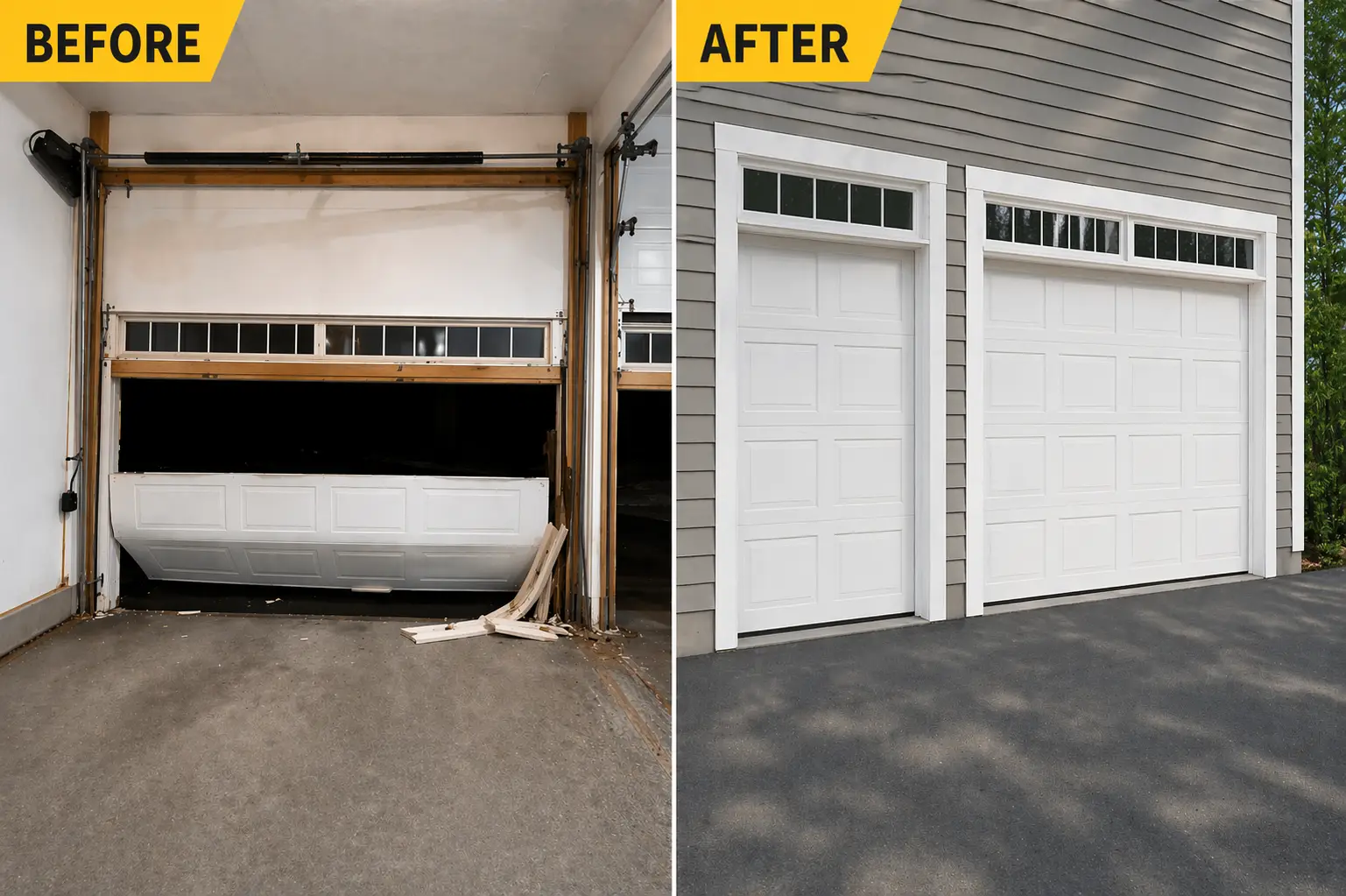
A door that is stuck open is a security concern, especially overnight or when the garage connects directly to the home. A door stuck closed can trap vehicles and disrupt an already busy day. If the door is hanging crooked, has come off its track, or closes only partway before reversing, stop using it. Continuing to run the opener can bend the track, damage rollers, strip opener gears, or cause the door to fall unexpectedly.
Same-day service is also a practical choice after an impact. A vehicle backing into a panel, a broken cable, or a failed spring can make a door unsafe even if it appears to move. Commercial overhead doors deserve the same urgency when they affect loading access, tenant security, inventory protection, or daily operations.
Common Problems That Can Often Be Fixed the Same Day
A qualified garage door technician arrives prepared to diagnose the full system, not just the obvious symptom. Many common repairs can be completed during the first visit when the correct replacement parts are available.
Broken springs
Garage door springs carry most of the door’s weight. When a spring breaks, homeowners may hear a sharp bang from the garage and notice that the opener strains or the door will not lift. Never attempt to replace a torsion spring or extension spring yourself. These components store significant energy, and improper handling can cause serious injury or damage.
A technician will determine the correct spring size and cycle rating for the door, replace the failed component, and balance the door. Proper balance matters because it reduces strain on the opener and helps the door travel smoothly.
Damaged or slipped cables
Cables work with the springs to lift and lower the door evenly. A loose, frayed, or off-drum cable can leave the door crooked or jammed. This is not a situation to solve by pulling on the cable or trying to force the door level. The door can shift quickly when tension changes.
The repair may involve resetting or replacing cables, checking drums and bearings, and confirming that the tracks, rollers, and spring system are working together correctly.
Opener and safety sensor failures
Not every door that will not move has a broken opener. A technician should check the door by hand, inspect the sensors, test the remote and wall control, and examine the opener’s drive system before recommending replacement. Sometimes the issue is a misaligned photo eye, worn gear, failed capacitor, damaged logic board, or a door that has become too heavy for the opener to lift.
If an opener has failed beyond practical repair, same-day replacement may be possible depending on the model, door type, and electrical setup. The right opener should match the door’s weight, usage level, and desired features, rather than simply being the first unit available.
Bent tracks, worn rollers, and damaged panels
A door that shudders, grinds, or moves unevenly may have worn rollers, loose hardware, or a bent track. If the door was hit, a single damaged panel may be replaceable without installing an entirely new door. That depends on the door’s age, manufacturer, color availability, insulation level, and whether the remaining sections are structurally sound.
An honest assessment should explain the trade-off. A panel repair can be cost-effective, but a full replacement may make more sense when multiple sections are compromised or matching parts are no longer available.
What to Do Before the Technician Arrives
The safest choice is usually to stop operating a malfunctioning door. Do not repeatedly press the opener button hoping the system will reset itself. That can turn a repairable issue into a larger one.
Until help arrives, keep people, pets, and vehicles away from the door and its moving parts. If the door is open and can safely remain open without interfering with traffic, avoid standing beneath it or trying to pull it down. If possible, secure access to the home through another entrance.
There are a few useful details to have ready when you call: describe whether the door is open, closed, or crooked; mention any loud bang, grinding sound, or visible damage; and let the dispatcher know if a vehicle is trapped inside. For a commercial property, explain how the failure is affecting deliveries, operations, or building security. This information helps the service team prioritize the situation and arrive prepared.
What a Professional Same-Day Visit Should Include
Fast service should not mean vague answers. A proper repair visit begins with an in-person inspection of the door, springs, cables, tracks, rollers, hinges, opener, and safety features. The technician should explain what failed, what caused or contributed to the failure, and whether other worn components need attention.
You should receive clear pricing before work begins. Ask whether the quote includes labor, parts, service fees, and any warranty coverage. A no-bait-and-switch approach matters most when a customer is under pressure to restore access quickly. You should not feel pushed into a replacement when a safe repair is available, and you should not be promised a low price only to receive unexpected charges after the work starts.
After the repair, the technician should test the door through a complete open-and-close cycle, confirm that the door is balanced, and check that the safety reversal system is functioning. For an opener repair or installation, that includes testing the photo eyes and explaining basic operation. Qualified and insured technicians protect both the property and the people using it.
Repair Now or Replace the Door?
This decision depends on the condition of the entire system. A single broken spring or worn roller usually does not mean the door needs to be replaced. On the other hand, a door with extensive rust, multiple damaged sections, failing hardware, poor insulation, and an unreliable opener may be approaching the point where repeated repairs cost more than a new system.
For Massachusetts homes, insulation can also factor into the decision. An attached garage may benefit from an insulated door that helps moderate temperatures near living spaces. Appearance matters, too, particularly when a damaged door affects curb appeal or a property is being prepared for sale. A technician should present the available options plainly, including the expected cost and timing of repair versus replacement.
Commercial property owners should consider usage frequency and downtime. A heavily used overhead door may justify planned replacement or preventive maintenance before a breakdown interrupts operations. In these settings, the least expensive immediate repair is not always the most economical long-term choice.
Preventing the Next Garage Door Breakdown
Garage doors rarely fail without warning. A door that gets noisier, shakes during travel, reverses unexpectedly, or needs several attempts to close is asking for attention. Scheduling a tune-up before the door stops working can catch worn rollers, loose hardware, fraying cables, weak springs, and opener issues early.
Homeowners can also keep tracks clear of debris, avoid placing objects near the photo eyes, and listen for changes in operation. Leave spring adjustment, cable work, and track realignment to a professional. Lubrication can help certain moving metal parts, but it will not correct a door that is out of balance or an opener that is overloaded.
Triple A Garage Doors Inc. provides same-day and emergency service for residential and commercial doors throughout Greater Boston, with in-person estimates and straightforward recommendations. When a garage door becomes a safety, access, or security problem, the right next step is simple: stop using it, protect the area, and have a qualified technician assess the full system. A careful repair today can keep a small failure from becoming a bigger interruption tomorrow.
Leave A Comment